

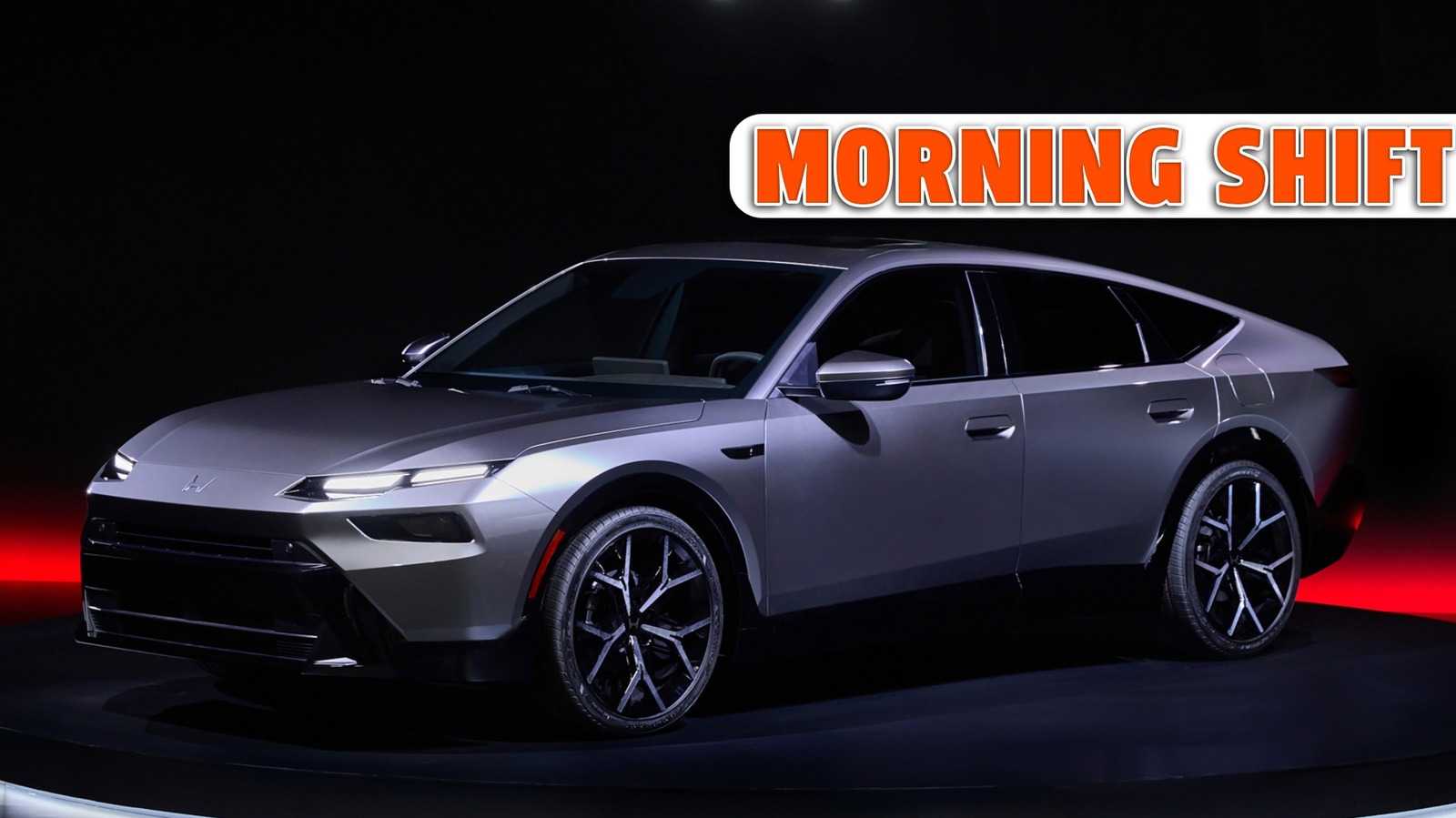
Honda’s EV plans flopped hard and cost the Japanese automaker big time. Now, it’s pivoting to hybrids in a huge way, and a large part of that is a brand new $3 billion factory in central Ohio that is meant to boost capacity for its most popular vehicles. The new plant is slated to start cranking out vehicles in 2029, expanding its output by 240,000 vehicles per year.
The move is an inflection point for Honda — part of a strategic pivot that started earlier this year when it threw in the towel on electric vehicles in America. The write-down on that decision cost the company $15.7 billion and caused its first annual loss since going public in 1957. Now, it aims to introduce 15 new hybrids globally by March of 2030, with North America as the primary target. From Bloomberg:
The new facility will be located between two existing auto assembly plants it operates in Ohio. It will be tooled to build gas-only, hybrid and fully electric vehicles, but the company didn’t provide a breakdown by production volume.
Honda also wouldn’t say which vehicles will be made in the new plant, but its focus will be on boosting output of models offering a hybrid option, including all-new models.
[…]
In a separate statement, it announced an investment of C$166 million ($118 million) in its Canadian factory in Alliston, Ontario, to make next-generation vehicles and for “the reintroduction of engine manufacturing.”
Honda was prepared to spend C$15 billion on an EV battery supply chain complex in Canada, but put that plan on indefinite hold in May. It also canceled a trio of battery-electric models it was preparing to manufacture in the US. But it began production this summer of battery cells at a $4.4 billion joint venture with LG Energy Solution in Ohio.
That facility was originally designed to build batteries for electric vehicles but has pivoted to make hybrid batteries, [Honda U.S. executive vice president Bob] Nelson said.
[…]
Honda has vehicle assembly operations in Ohio, Alabama and Indiana as well as in Canada and Mexico. In addition, it makes key parts such as engines and transmissions in Alabama, Georgia and Ohio. The company said on Monday that it will also make investments in a number of other facilities in North America, but not at its Mexican plant.
Despite the doom and gloom of this year’s overall financials, the automaker itself is having a fairly solid year. Honda’s U.S. sales have actually risen 5% in the first 10 months of 2026, thanks to strong demand for hybrid versions of the CR-V, Accord, and Civic. Clearly, Honda is following the money, and right now the money is in hybrids. As it stands, hybrids make up about a third of the company’s total sales volume in the U.S., and that’s while the lineup is missing hybrids in key players like the Pilot and Passport — not to mention, the entire Acura brand.
Last year, I visited Japan and got a look at Honda’s next-generation V6 hybrid powertrain, which is meant for larger vehicles. Don’t be shocked if it ends up in the MDX and aforementioned Pilot sooner rather than later. There’s also news that Acura is working on a Passport-based off-road eight-passenger hybrid SUV, and that’s sure to be something rather neat.
