

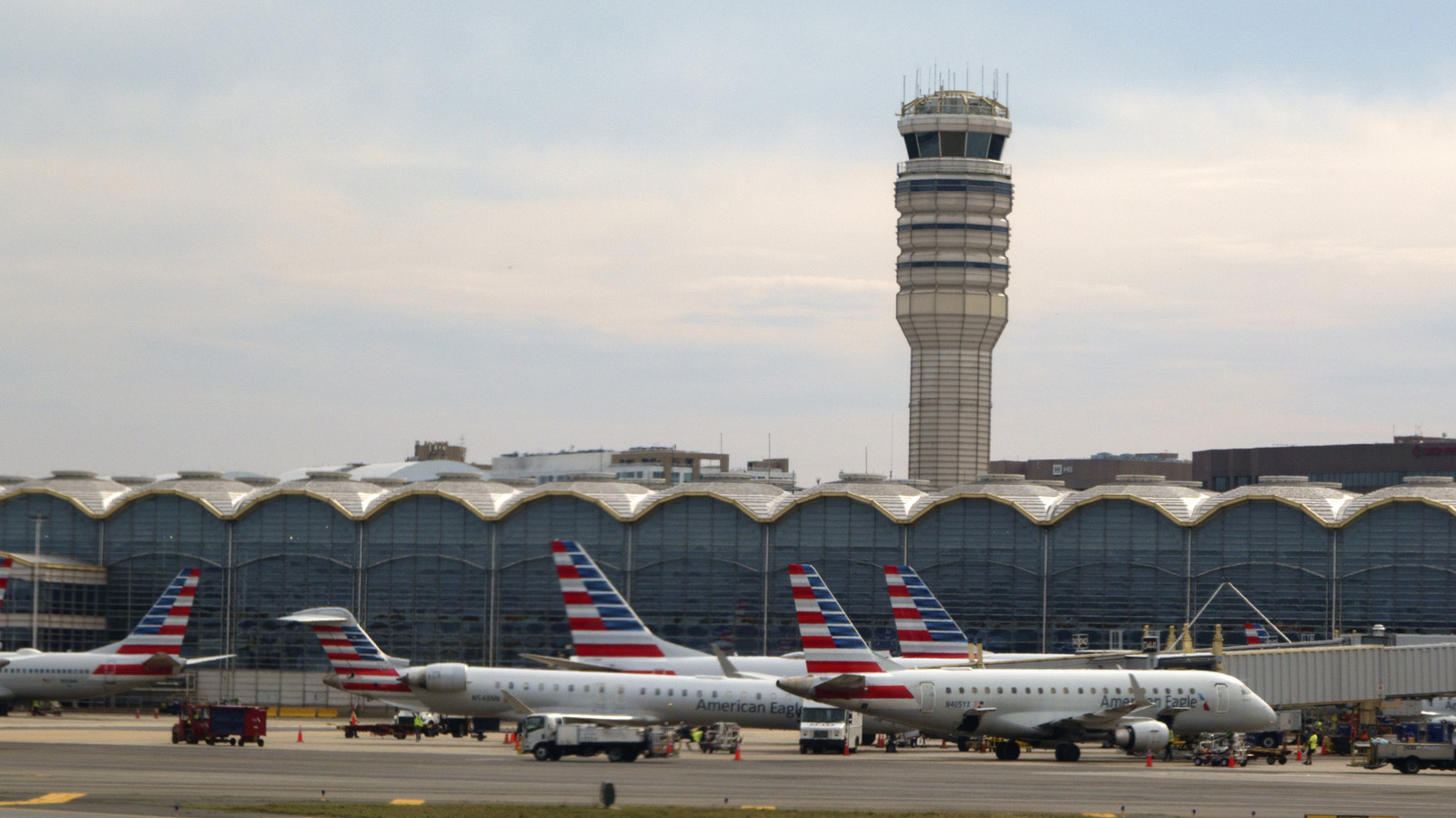
It’s probably been two decades since you’ve used a floppy disk — unless you’re managing air traffic or preparing to launch intercontinental ballistic missiles. The Federal Aviation Administration, a bit behind the technology curve, announced Thursday that it will finally phase out 3.5-inch floppy disks at air traffic control facilities. The agency aims to rid itself of the antiquated technology by the end of 2028. In its place, air traffic controllers will have a modern, fully digitized system at their disposal.
The FAA plans to replace four legacy systems that date back to the 1980s with the Enterprise Information Display System (E-IDS) at 435 locations. The transition has already happened at Atlantic City International Airport, Nashville International Airport, Greater Rochester International Airport, and a pair of data processing hubs in Atlanta and Salt Lake City. These older systems were simply no longer sustainable to operate. Air traffic control currently depends, in part, on Compaq computers running on Windows 95. According to Reuters, the agency has resorted to eBay to procure spare parts. Sony, the last major holdout, stopped manufacturing floppy disks in 2011. FAA Administrator Bryan Bedford said:
“E-IDS gives air traffic controllers the information they need to make timely decisions and keep the flying public safe. We’re moving away from outdated, manual processes and replacing technology that once relied on floppy disks with a modern system that allows controllers to instantly share critical flight alerts, restricted airspace schedules and pilot reports across the National Airspace System.”
Air traffic control infrastructure is in dire need of total overhaul
The FAA can’t afford to wait to modernize its air traffic control infrastructure. Two fiber-optic cables have been severed in the past two months. After a major circuit blew in September at the Philadelphia Terminal Radar Approach Control facility, the backup system failed. An NJ Transit construction crew inadvertently cut the backup system’s fiber-optic cable that runs alongside Amtrak’s Northeast Corridor, linking the facility with Newark Liberty International Airport. The outage forced an hours-long ground stop at Newark and other New York City area airports. A similar incident happened in October at Houston’s George Bush Intercontinental Airport. The resulting ground stop lasted for 90 minutes.
The price tag for the FAA’s modernization efforts seems to rise every month. President Donald Trump’s “Big, Beautiful Bill” allocated $12.5 billion to the project last year. That number was seemingly nowhere near the mark. Transportation Secretary Sean Duffy requested an additional $30 billion from Congress in September. Alongside facility modernization, that figure would also fund the development of AI air traffic control tools. I know improving aviation safety is vital, but we shouldn’t let mission creep turn this worthwhile effort into an AI-driven boondoggle.
