

No, the Chevy El Camino wasn’t the first to combine a two-door car with an open bed truck. The first production vehicle to do that was a Ford, but possibly not the one you’re thinking of. A design engineer named Lew Bandt, then with Ford of Australia, developed what’s often considered the original factory-made ute — the 1934 Ford Model 40-A Light Delivery. Depending on exactly how you define a ute, some folks point to the 1927 Volvo OV4 as well.
Of course, it was the 1957 Ford Ranchero that truly inspired the El Camino. The Ranchero was built on the Blue Oval’s full-size platform of the time, and it became both relatively popular and relatively profitable for the automaker. In fact, it was successful enough that Chevy was inspired to get in on the ute action with its full-size 1959 El Camino. Originally a short-lived model only in production for that year and 1960, the El Camino would get a second chance at life in 1964. That’s when the Bowtie brand revived the name and brought it back in slightly downsized form on the same platform as the intermediate-class Chevrolet Chevelle.
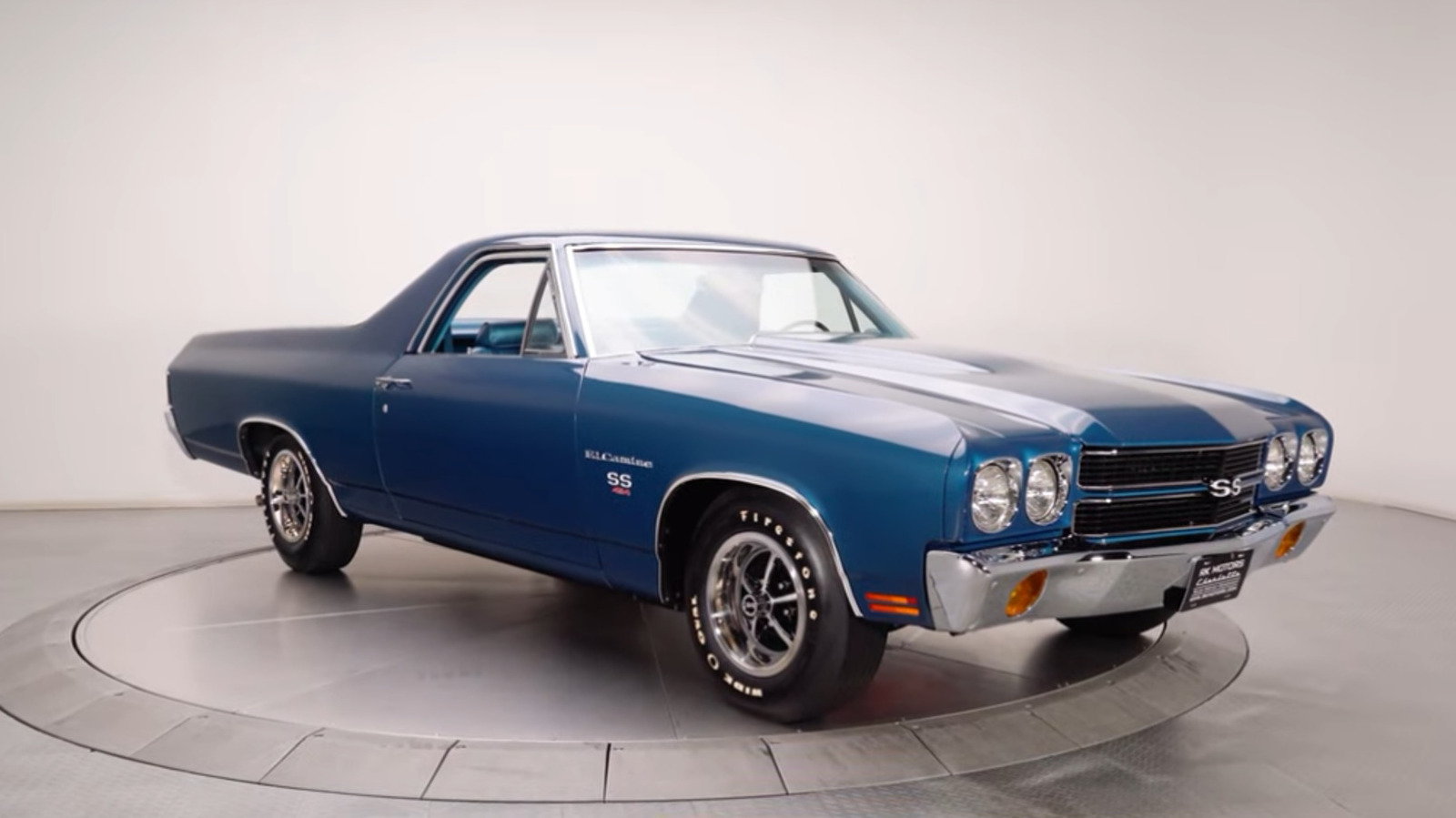
This is where things start to get interesting for gearheads. In 1970, Chevrolet introduced a 454-cubic-inch LS6 V8 that was reserved for both the Chevelle and its platform mate. With that mill standing out as the most powerful unit of the year, the former became a muscle-car legend and one of Dom Toretto’s rides in the epic 10-movie “Fast and Furious” saga. Meanwhile, the latter turned into perhaps the most sought-after El Camino of them all, the 1970 El Camino SS LS6 454. Keep in mind that this was a whole different engine than the LS6 in the 200-mph 2027 Chevrolet Corvette Stingray.
Why is the 1970 El Camino SS 454 in such high demand?
There are two key reasons that enthusiasts crave this machine. Right off the bat, the 1970 El Camino SS 454 was a one-year wonder — its exact powerplant was the aggressive LS6 V8 that would be dropped from the El Camino for 1971. True, Chevy sold a 1971 El Camino SS 454, but that mill was the less-powerful LS5. As far as actual production numbers for the 1970 model, those are hard to come by. Hemmings says 4,475 Chevrolets in total were sold with the LS6 for that year, but they were spread out among both Chevelles and El Caminos.
The second major selling point here is the outrageous driving experience offered by these rides, and for that, credit also goes to their incredible engine. Factory rated at 450 horsepower with a whopping 500 pound-feet of torque, this motor featured a cast-iron block and heads along with an 11.25:1 compression ratio. Also adding to the muscle are a four-bolt main block, a four-barrel Holley carburetor, and a high-performance camshaft. The outcome was that both the El Camino and Chevelle could serve up more horses than not just the 1970 Corvette, but all other production cars, too.
As further proof of just how hard people are jonesing for the 1970 El Camino SS LS6 454, an example may hold the record for the highest auction price for any El Camino — the car went for $275,000 at a Barrett-Jackson sale in 2023. Just remember auction values can change quickly: one 1970 Chevelle LS6 lost its owner a million dollars.
