

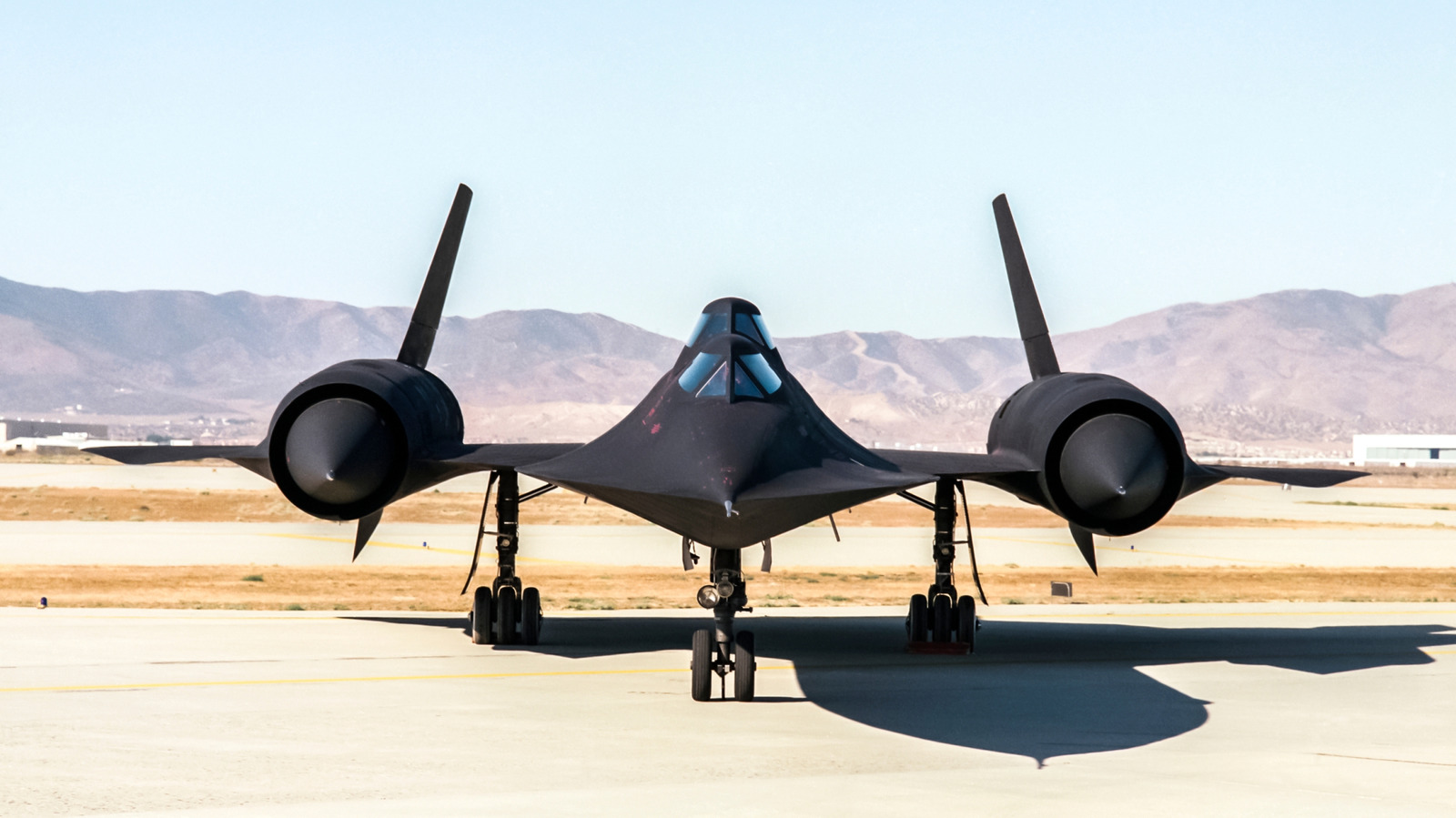
The Lockheed SR-71 Blackbird spy plane is capable of flying 2,193.2 mph with a ceiling above 85,000 feet. To achieve those feats, it packed a pair of Pratt & Whitney J58 turbojets to enjoy a combined 50,000 pounds of thrust, and it even used a new kind of fuel that could withstand the friction from those blistering speeds. However, getting those mighty motors to turn over in the first place was no simple task, which is where the Buick Nailhead comes into play. It might not have directly powered the plane, but its earliest flights were only possible thanks to the engine.
A turbine engine requires a certain amount of airflow to ensure the fuel first ignites properly, and it has to reach a certain speed before the combustion process can sustain itself. As a result, the turbojet engines need to begin spinning even before they’re operating on their own. But these are massive mills weighing in at 6,000 pounds each, so a simple electric starter like the one in a traditional car wouldn’t have the strength to get the job done. A pair of Buick engines, on the other hand, would be enough to give its turbines the power they needed.
The mill used to get the Blackbird’s own engines spinning was a 401-cubic-inch Nailhead, which can pound out 325 horses and 445 pound-feet of torque. The Air Force used a pair of those motors on the Blackbird’s original start cart, yoking them together with a 12-inch-wide belt joining their transmissions. The combined output was then fed to the jets via mechanical linkage, spinning them up to their proper running speed. The pilot would then ignite the engines, allowing the Blackbird to run on its own from there.
Which Buick cars used the 401-cubic-inch Nailhead V8?
We’ve previously explained how the Buick Nailhead V8 got its name; the tops of its vertically oriented valves looked like, well, nailheads. The first-gen motor from 1953 had a displacement of 322 cubic inches, and an example with 264 cubic inches came to be when the brand introduced the Buick Special the next year. That latter setup had a pretty short life, as it was out of production after 1955. The Nailheads then began their climb up the displacement ladder. From 1957 to 1961, Buick raised the bar to 364 cubic inches. There was also a 425-cubic-inch Nailhead V8 on the roster from 1963 to 1966, backed by 360 horsepower with its optional dual-quad carburetor setup.
The 401, though, was especially popular. Among the first cars with this engine under their hoods were the 1959 Buick Invicta and Electra. It’s also worth noting that, in the Invicta, the motor gained the Wildcat 445 nickname for its impressive torque rating. The Invicta Wildcat that premiered in 1962 (and became the Buick Wildcat in 1963) relied on that mill to help boost the brand’s performance credibility.
The striking first-generation Buick Riviera would boast the 401 Nailhead in 1963, as would the Skylark Gran Sport when it arrived in 1965. The Skylark GS represents the point where Buick went all-in on the 401’s performance potential — at least from a marketing standpoint. Even though its engine’s output was unchanged from previous Buicks, the Skylark GS is considered to be Buick’s first muscle car. Production of the engine itself would meet its end by the next year, but its use in the Blackbird would continue for a much longer period of time.
Were other engines used to start the SR-71 Blackbird?
The Buick Nailhead engines would go on to power plenty of dragsters, too, building a proven track record for delivering low-end torque. Remember, that Wildcat 445 exceeded a pound-foot of twist for every cubic inch of displacement. When you also consider the Nailhead’s reputation for long-term reliability, it’s no surprise that it worked so well on Blackbird duty.
Yet, after roughly a decade on the start cart, the Nailheads would be retired in the 1970s and replaced by two other power-packed GM V8 engines. These were 454-cubic-inch big-block LS7 V8s that had originally been engineered to bring 460 horses to the 1970 Chevrolet Corvette. A combination of circumstances kept that motor out of regular production entirely, but that didn’t prevent the Air Force from snagging a pair. (As a side note, those LS7 big-blocks were unrelated to the more recent LS7 Corvette engine that defied small-block limits in the C6 Z06.)
Finally, in the 1980s, the Air Force would move to a technology that had been around since about three decades prior: the pneumatic starter. Rather than bringing the turbine up to operating speed with a direct mechanical connection, these work by forcing high-pressure air through the turbine blades — like blowing a stream of air across a pinwheel. The Blackbird relied on pneumatic starters from then on, until its retirement the 1990s.
