

Good morning! It’s Friday, November 20, 2026, and this is The Morning Shift, your daily roundup of the top automotive headlines from around the world, in one place. This is where you’ll find the most important stories that are shaping the way Americans drive and get around.
In this morning’s edition, Elon Musk knows he blew $500 million on the 2026 midterms, General Motors wants to double the money it makes off the war machine, Japan’s largest automakers are banding together to standardize some processes and Mercedes-Benz says some German plants are in jeopardy as work stoppages spread.
If you’d like a recap of the latest auto news sent to your inbox each weekday, you can sign up for Jalopnik’s free Morning Shift newsletter here.
1st Gear: Elon knows he set nearly $500 million on fire during the ’26 midterm elections
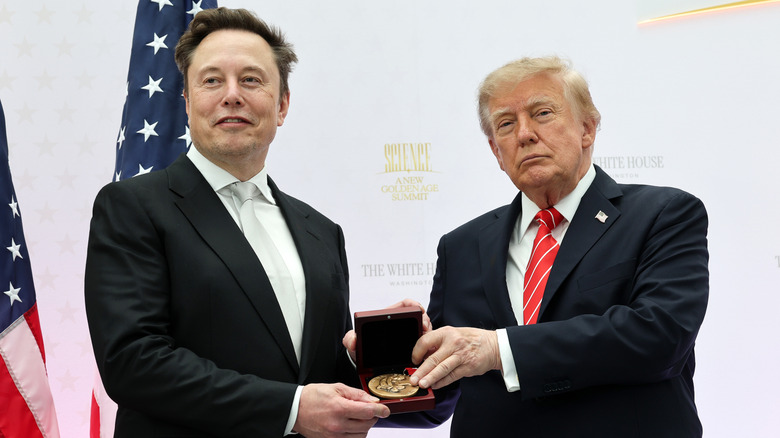
It’s no secret that Republicans across the U.S. went through an all-time drubbing during the midterm elections earlier this month, and while there were many losers, perhaps none was as big as Elon Musk. The Tesla CEO and Republican version of George Soros dropped over $445 million during the election cycle in a futile attempt to get his candidates into office. That very much didn’t work, and now he has buyers remorse.
In truth, it’s possible that the garish sums of money Elon spent on the election may have hurt the candidates he backed more than helped them, providing opponents with easy targets to latch onto. I mean, it’s not hard to claim that the guy you’re running against is back by Big Money when the world’s richest man is bankrolling their campaign.
In any case, Elon really wishes he could turn back time, and he’s about to have a hell of a lot more to answer for when it comes to his companies as emboldened Democratic leaders vow to investigate Trump and his buddies. From Bloomberg:
“I feel pretty foolish about having spent so much money and not seeing much for it,” the billionaire said late Wednesday at the New York Times’ DealBook Summit. “Probably, if I could rewind the clock, I would have spent less money.”
[…]
Musk’s political money overwhelmingly went to lost causes. Two super political action committees he funded — America PAC and Texas PAC — spent heavily to back Republican Senate and House candidates who lost, Federal Election Commission filings show. Ken Paxton’s unsuccessful bid to win Texas’ open Senate seat drew the lion’s share of the money, at some $229 million.
Democrats also won major races further down the ballot in Texas, where Musk has built much of his corporate empire. Tesla has a sprawling factory near Austin, SpaceX launches rockets from its coastal hub reincorporated as Starbase, and the two companies plan to jointly build a chip factory called Terafab.
Texas Governor-elect Gina Hinojosa has taken issue with departing Governor Greg Abbott agreeing to award $1.7 billion in tax breaks for the Terafab project and singled out other state grants SpaceX has received. She called for an immediate moratorium on data center development during her campaign and accused developers of raising utility rates and depleting water supply.
Musk nevertheless downplayed the likelihood of any conflict with Hinojosa, saying he expects her to be “quite moderate.”
“I don’t think she’s a far-left governor,” he said. “Based on everything I’ve heard about her, I think things will be fine in Texas.”
[…]
When asked about the top Democrat on the House Oversight Committee telling Trump and unspecified corporate actors to lawyer up, Musk said some in the party were being “a little over the top.”
[…]
During his appearance over a livestream from China, Musk sought to distance himself from the Make American Great Again movement, describing himself as ideologically moderate. “I’m not MAGA,” he said.
Technically, Musk is correct. He’s not MAGA. As he told supporters in 2024, he is actually “Dark MAGA.”
2nd Gear: GM wants to double what it makes off defense
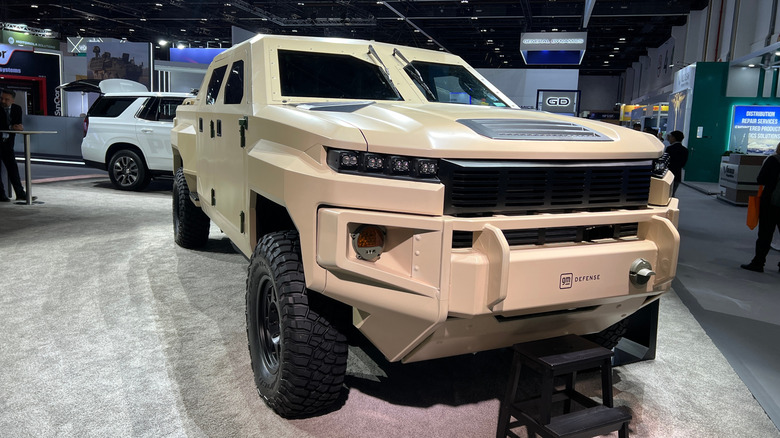
General Motors wants to expand the money it makes off of wars by more than doubling its defense revenue to $2 billion in the next few years. It looks to take advantage of global defense companies turning to its automotive technology to accelerate their weapons production.
Back in August, GM delivered its first batch of Patriot missile components to Lockheed Martin within 22 days of the two companies entering a partnership in weapons manufacturing — something championed by the Trump administration. Several other large defense companies with governmental ties have also lined up to sign deals with GM. From the Financial Times:
“We have massive manufacturing capabilities to build defence equipment components. We have so many defence companies coming to us and saying help us,” Stephen duMont, head of GM Defense, said in an interview in London.
In recent years, companies including Volkswagen, Jaguar Land Rover and Renault have diversified into the defence sector in search of new sources of revenue as profits become squeezed in the traditional automotive business due to cut-throat competition and higher costs.
Jim Farley, Ford’s chief executive, confirmed earlier this year that it was also in discussions with the US government on defence-related projects, while Stellantis last week agreed to sell its Brampton plant to Canadian armoured vehicle maker Roshel and explore “global collaboration”.
GM’s ties to defence stretch back decades. It played a pivotal part in America’s “Arsenal of Democracy” campaign during the second world war, converting all of its US plants to support the war effort. The group sold its defence business in 2003 and later re-established GM Defense as a subsidiary in 2017 after Mary Barra became chief executive.
“Mary recognised from early on the opportunity to leverage GM’s investment in the automotive business for profitable growth of the defence business,” said duMont, a former Raytheon executive.
The defence unit, a separate subsidiary that now has about 500 to 600 employees, was “like a start-up”, allowing for quicker decision-making and operational changes.
In the grand scheme of things (read: General Motors), the defense unit is minuscule. It only generates about $1 billion in revenue every year, which isn’t exactly nothing, but when compared with the group’s total revenue of $185 billion, it’s sort of small potatoes. That’s why CEO Mary Barra wants to expand it.
It isn’t just parts of weapons, either. It’s also vehicles. The U.S. Army recently increased orders for Infantry Squad Vehicles from an initial 649 vehicles to nearly 12,000 — which could lead to a $1 billion contract. In addition, it’s looking at getting in on the defense business in Europe and the UK.
The business of war is booming, and GM wants in on the action.
3rd Gear: Japans largest automakers are standardizing components to fight China
Japan’s largest automakers, including Toyota, Honda and Nissan, are starting a new initiative to compete less and collaborate more as a way to deal with cheap Chinese competition. The first three things they’ll do are harmonize quality criteria for steel, unify recycling protocols for plastics, and create a universal color-coding scheme for wire harnesses, but more steps are on the way. The Japan Automobile Manufacturers Association says these and any other big changes are coming to any suppliers doing business with Japanese automakers. From Automotive News:
Discussions will begin with Japanese suppliers but soon encompass international ones.
JAMA Chairman Koji Sato, who is also vice chairman of Toyota Motor Corp., launched the campaign after taking the helm of the industry lobby group in January. Leaders announced an agreement on steel, resin, and wire harnesses at the group’s last regular meeting of the year here to set the stage for implementing harmonization from 2027.
The urgent efficiency drive is one of the most ambitious attempts yet to reshape a sprawling supply base spanning Toyota, Nissan, Honda, Mazda, Subaru, Mitsubishi and Suzuki. The goal: sharpen Japan Inc.’s edge amid an onslaught of new technologies and cutthroat new competitors from China by cutting costs and channeling the savings into innovation.
“We all share this strong sense of crisis, creating a momentum for change,” Sato said. “Based upon our sense of a crisis, we decided to choose these three areas.”
A JAMA task force leading the push has been working all year to formulate a framework. They decided on steel, resin and wire harnesses partly because they are areas of the vehicle that go unnoticed by customers and do not directly impact brand value or differentiation. The areas also account for a large portion of a vehicle’s input costs, allowing for a large immediate impact.
JAMA said about 70,000 variants of wire harnesses are a prime candidate for consolidation.
[…]
Japan will consolidate and rationalize low-volume steel materials.
The group will standardize steel requirements that used to be specific to each carmaker and work to implement these new standards with the Japan Iron and Steel Federation.
[…]
Japan will standardize what kind of plastic and resin materials are recycled and how the materials are evaluated. This will help secure domestic sourcing through recycling.
Standardization will focus on sorting methods, traceability and design for easy disassembly.
Even beyond the idea of fending off Chinese competition, I think collaboration like this is a solid approach. If this type of shared componentry doesn’t materially change the car, there’s no real harm, and it cuts down on the supply chain waste of having every manufacturer have its own supply chain and specifications.
4th Gear: Mercedes says German plants aren’t safe from closure
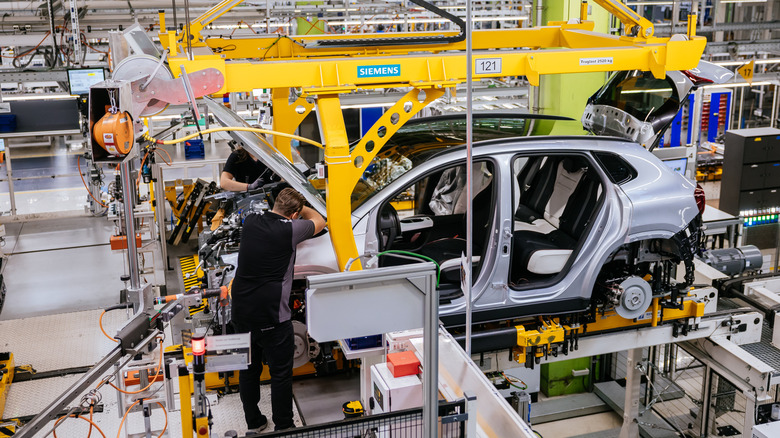
A senior labor leader in Germany is skeptical of Mercedes-Benz’s plan to solve the company’s problems by simply forcing staff to work longer hours — adding that the future of its plants would still be uncertain. Even a deal that would extend the 35-hour work week would leave underutilized factories and unresolved questions over the automaker’s model lineup, according to IG Metall’s Barbara Resch. From Bloomberg:
“We need a management board that believes in Germany as an industrial location — and demonstrates that with firm commitments on products and investment,” said Resch, who also sits on the carmaker’s supervisory board. Regular rounds of cost-cutting and unreliable commitments are eroding trust and the company “needs to take responsibility and say what future it plans for its German sites,” she added.
With worker representatives holding half the seats on supervisory boards at large German automakers, labor holds significant sway over decisions including factory investments and restructuring. Powerful works councils and collective bargaining agreements add another layer of involvement in changes to jobs, working hours and plant operations.
That influence is being tested as Germany’s auto industry confronts one of its most difficult periods in decades. Manufacturers are struggling with weak demand in Europe and China, intense competition from Chinese rivals and the costly transition to electric vehicles, while high labor and production costs have increased pressure on German factories.
These challenges have intensified a debate over who should shoulder the burden of restructuring. Automakers argue they can no longer afford long-standing benefits, while unions and works councils say employees are being asked to pay for strategic mistakes.
At both Mercedes and Volkswagen AG, management is seeking to extend the 35-hour workweek without extra pay and freeze wages for two years. IG Metall officials at VW have called the demands a “catalog of horrors,” saying the company also wants to cut profit-sharing, scrap supplemental payments and eliminate a paid break for some shift workers.
The union’s sharper rhetoric coincides with a wave of 24-hour stoppages it has organized Friday, part of a separate nationwide dispute with manufacturing companies over pay, benefits and working hours. The escalation is set to disrupt activity at companies already under pressure from weak demand, high costs and tougher global competition.
The union’s rhetoric comes with a wave of 24-hour work stoppages that it organized on Friday as part of a nationwide dispute with companies over pay, benefits and working hours. It’s something we actually told you about yesterday, and the escalation is expected to disrupt activity at companies that are already under pressure from weak demand, rising costs and strong global competition.
Reverse: Stop… or go… or get ready to stop
 History.com
It’s hard to imagine what the world of vehicle travel would be like without the tree-position traffic light, but the car itself predeates it by nearly 40 years. Kudos to Morgan for coming up with something that has very much stood the test of time. I mean, traffic lights of today are just about the same as they were 103 years ago. If you want to learn more, head over to History.com.
The Fuel Up
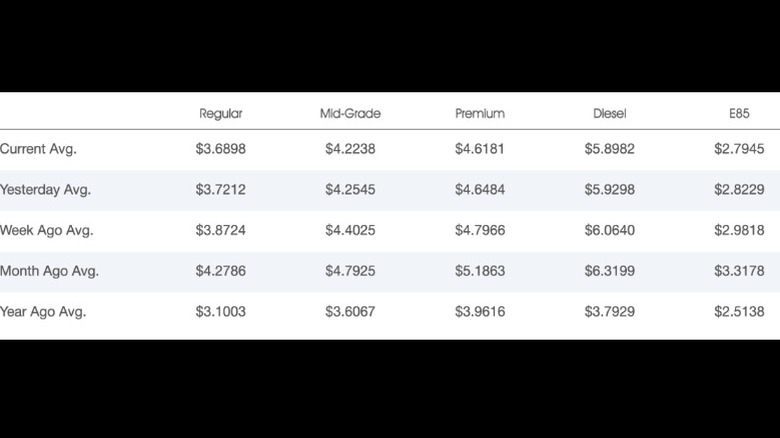
Folks, we’ve never been more back. Fuel prices continue to fall, and it couldn’t come at a better time as millions of Americans prepare to hit the roads ahead of Thanksgiving. Of course, they’ll have to pry themselves away from their PlayStations and Xboxs and their new girlfriends, Lucia, but that’s another matter. In any case, WTI Crude Oil futures and Brent Crude prices are slightly down, sitting at $82 and $91, respectively, at the time of publication.
The average price of a gallon of regular gas dropped another 3 cents overnight to $3.69 (nice), according to AAA. Diesel saw a similar 3-cent retreat and is now sitting at $5.89, and that means you’ve got more money in your pocket for Lucia.
On the radio: Radiohead – Everything In Its Right Place
Last night, I saw an advanced screening of “Artificial,” and let me tell you, it’s quite a bummer. It also might be the best movie of the year. I’m not sure what side of the AI fence you fall on (I asumme you can tell what side I fall on), but at the very least, you’ll come away from this movie realizing that this all-powerful tool certainly should not be controlled by a few dork clowns in California we didn’t ask to be put in charge.
Oh, and this song was in it. That’s the connection. Also, “Kid A” is a perfect album.
