

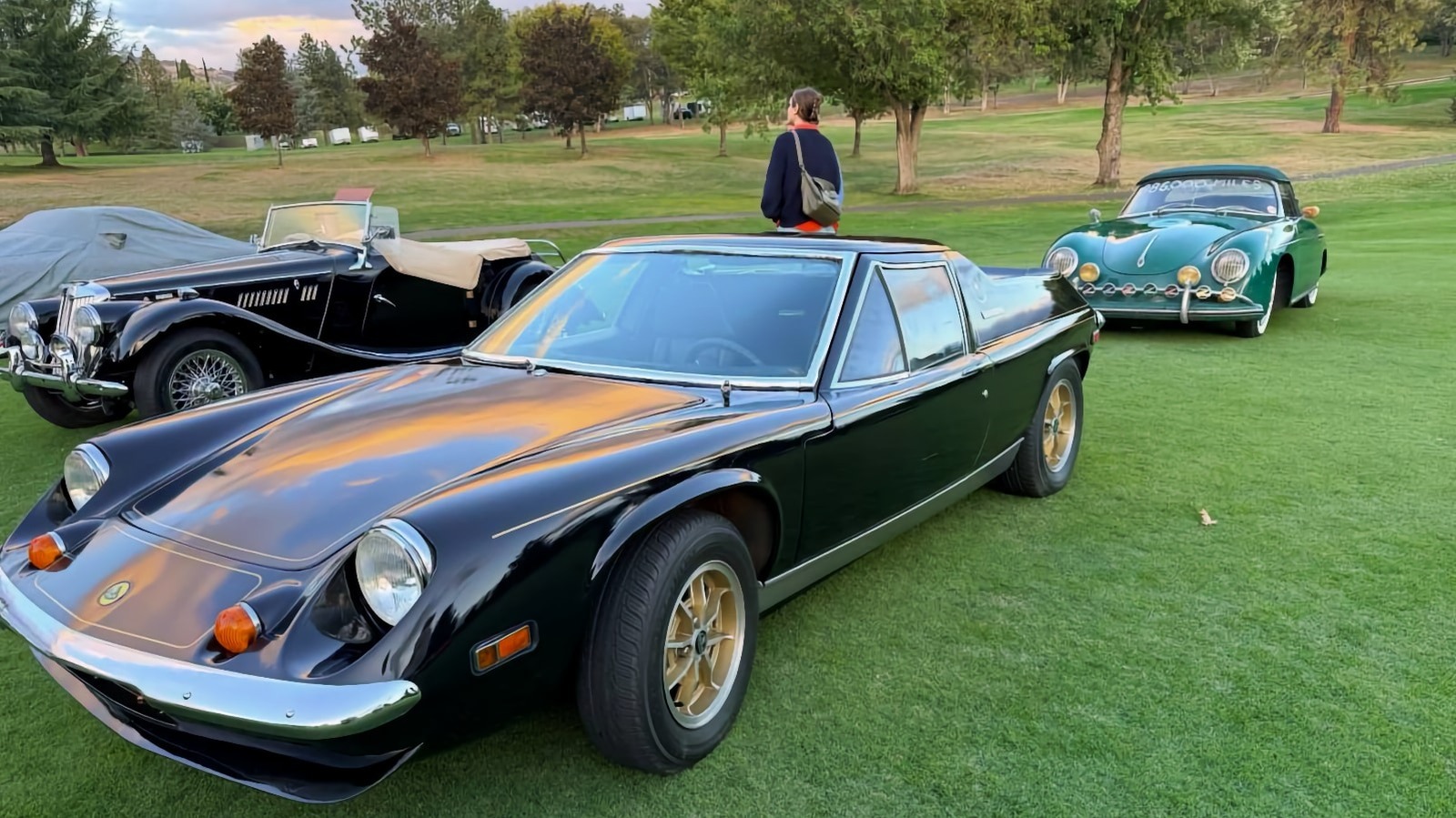
According to the ad, the first owner of today’s Nice Price or No Dice Europa owned the car for more than 51 years. That’s some dedication, and the car shows the love they obviously had for it. We’ll have to decide if we love the price the current owner has set for its sale.
At some point in one’s life, it’s best to take the road less traveled. The well-beaten path may be the safest, but the less popular way might just offer unexpected, memorable adventures. The 2004 Nissan 350Z we looked at on Monday is probably not everyone’s first choice when it comes to used sports cars with a semblance of panache. The easy answer is Porsche’s Boxster or a Mazda Miata, but that’s part of what makes the 350Z such a rogue option.
Capable and seemingly in as-new condition, our 350Z came with a six-speed stick, a top that drops, and a $12,500 asking price. That’s plumb right in the middle of 986 Boxster territory, but offering more power and potentially cheaper running costs. That concept didn’t escape you all. Comments on the car ranged from “not for me, but a good deal for someone,” to “if it were closer to me…” In the end, the vote went the Nissan seller’s way, too, earning the Z a solid 76% ‘Nice Price’ win.
Almost a Ford
Nissan has never offered a mid-engine car for sale here in the States. In fact, of the major Japanese manufacturers, only Toyota and Honda (through Acura) have gone the (rear) mid-engine route here.
In the early 1960s, mid-engine layouts were all the rage in racing, with F1, Indy, and GT classes moving to place the driver ahead of the drivetrain. Britain’s Lotus was at the forefront of this movement, debuting the mid-engine Type 18 Formula 1 racer in 1960. That car brought Lotus its first F1 checkered flag and World Champion title.
Lotus also dallied with mid-engine GT racers, designing a chassis and body that the company hoped would be bought by the Ford Motor Company (Lotus had a close relationship with Ford at the time) for the Americans’ assault on Le Mans. Ford chose the already race-tested Lola Mk 6 chassis for its GT40 racing program, leaving Lotus with significant engineering expense and little to show for it. Instead of initially building a race car from the proposed chassis, Lotus took the more lucrative route and built a road car: Hethel’s first mid-engined model.
The resulting Europa leveraged a design first used on the Elan: a stiff, folded and welded center backbone with the drivetrain and suspension bolted in place, and a fiberglass body mounted atop that in saddlebag fashion. The earliest cars had Renault engines and transmissions, while later cars, like this 1973 Europa Special, used the Ford Kent-based Lotus Twin Cam engine.
Don’t smoke, kids!
Not only does this Europa have the most powerful engine offered in Federalized form, but that 115-horsepower 1,557cc four-cylinder is backed by a standard five-speed manual, still sourced from Renault, originally designed for the French company’s 16 model.
This isn’t just a “Big Valve” (denoting a reworked twin-cam head) Europa; it’s also one of 100 John Player Specials built to commemorate Lotus’s 1972 F1 Championship win. The cars were wrapped in black paint with gold trim, emulating the cigarette pack design of the racer’s sponsor, Nottingham, England’s John Player & Sons. It’s an iconic bit of 1970s chic, and very British. This car still wears its commemorative dashboard plaque, indicating it’s number 90 of the 100 cars built.
While the basic Europa design is a bit odd with its bread van back end, this one appears to be in exceptional condition. Also, being a later edition (dubbed Type 47 by Lotus), it has a reworked engine cover and rear end providing better visibility out the back and slightly improved proportions.
Your papers, please
Not only does this Europa appear to be in near-show car condition, but it comes with extensive documentation from the moment it was built (March 1973) to the present day. That paperwork details title transfers between all three owners (the second owner held on to the car for more than half a century), along with all the work that has gone into keeping it on the road and winning awards at car shows. As far as turnkey classics go, there’s not much to complain about with this Lotus.
On the exterior, the black-and-gold color scheme still looks as elegant as ever, right down to the original gold anodized alloy wheels. All the badging, lights, and chrome are present and in excellent shape, which is a plus since parts are getting increasingly hard to find. The interior is just as nice, showing just some scuffing on the driver’s seat side as evidence of the car’s age.
According to the ad, the engine underwent an extensive rebuild and documentation just 2,000 miles ago, and now runs well when warm. Both the engine and gearbox are numbers-matching for the car. How cool is that after all these years?
The ad notes a clean title and mileage documented at 34,526. It also touts the car as a “once in a lifetime chance to own a fully documented Lotus.” It should be noted that, while advertised in the Los Angeles Craigslist classifieds, the car is actually located a few hundred miles away on the California/Oregon border.
A bargain classic?
Some classic cars come with a story. Some come with a past veiled in mystery. This Europa comes with a dossier that would make a CIA agent proud. Not only that, but it’s a prime example of a significant model in its final, some might argue, most desired form. What might something like that be worth?
The seller has set a price of $27,000, and since the ad for the car has been posted for almost a month, we now need to give that asking price some thought. What’s your take on this original mid-engined marvel out of Hethel and the seller’s cash-and-carry price? Is it really worth $27,000? Or is a fairer price yet to be documented in the car’s records?
You decide!
Los Angeles, California, Craigslist, or go here if the ad disappears.
Help me out with Nice Price or No Dice. Hit me up at robemslie@gmail.com and send a fixed-price tip. Remember to include your commenter handle.
