

One of the most loved Japanese sports cars of the 21st century is the Nissan 350Z, partly because it was one of the badass villain cars in “The Fast and the Furious: Tokyo Drift.” But there’s more to it than just that. While looks are subjective, it’s hard to deny that it has aged rather nicely. It’s also still genuinely affordable, making it one of the cheaper alternatives to Japanese performance cars that have skyrocketed in value.
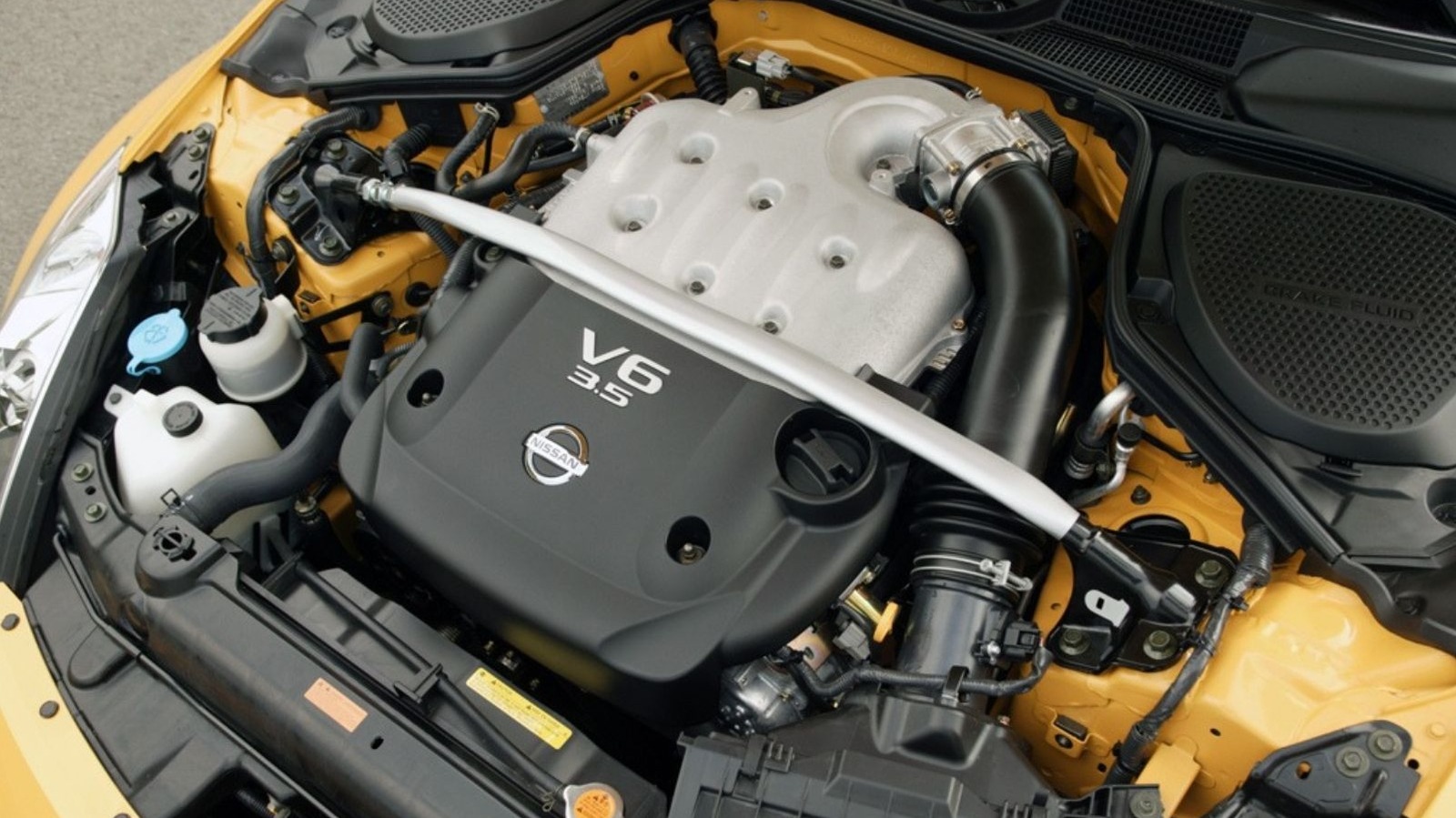
But perhaps the main reason for its celebrated status is its engine: Nissan’s VQ35. In essence, it’s a 3.5-liter naturally aspirated V6 that produces around 287 horsepower in early 350Zs (or closer to 300 hp in the Nismo versions). Even by today’s standards, the 350Z is quick: in Car and Driver’s testing, 0 to 60 miles per hour took 5.4 seconds, and it didn’t top out until 156 mph. That’s fast enough to red-face some of the greatest sport sedans of all time.
The good news doesn’t stop there either, because the VQ35 is also famed for its reliability, despite oil consumption issues. As with anything mechanical, it does depend on how well you treat and maintain it, but do so properly, and you’re likely in for one hell of an ownership experience.
What makes the VQ35 so reliable?
Nissan made a few sound decisions right off the bat, like opting against turbocharging and keeping the engine naturally aspirated. (Of course, a naturally aspirated engine has fewer moving parts and is therefore generally considered better for durability.) The VQ35 also uses timing chains rather than timing belts. Timing chains are generally considered to be more durable than timing belts – they don’t have a defined replacement period and can often last as long as the engine itself.
Thanks to a crankshaft and connecting rods made of forged steel, the VQ35 can deal with high-RPM loads and long-term wear and tear better than engines that use regular cast-metal internals. On top of that, the engine block and cylinder heads are made from aluminum alloy, which is famous for both its thermal conductivity and its resistance to corrosion. The pistons are also coated with a molybdenum-based lubricant, which helps reduce friction.
Which cars use the VQ35 engine?
Aside from the 350Z, another notable host of the VQ35 is the Skyline. No, we’re not talking about Nissan’s most famous performance car ever, but about the subtle sedan that began life in 2001 as the 11th-generation Skyline, and eventually spawned a sportier GT-focused version called the 350GT. In North America, it was sold under the Infiniti badge.
Other famous Nissans to use the VQ35 include the second-generation Stagea 350RX, which is arguably one of the best wagons of all time, and the Nissan Maxima, which used this superb engine right up to its final model year (2023). You might also be interested to know the VQ35 made its way into several racing cars, albeit with some major alterations. Those include the 2009 Renault Megane Trophy and even Dallara’s T05 and T08 open-wheel cars from the Formula Renault 3.5 Series. So, gained some more respect for this old buster?
