

Back in 2022, Mercedes-Benz brought a chosen group of collectors to its Museum for a secret auction, at which one of the two 1955 300 SLR Uhlenhaut Coupés was sold for a record-breaking €135 million, about $143 million according to exchange rates at the time. Most people, myself including, thought there was no way Mercedes would have ever sold one of the Uhlenhauts, not to mention many of the other slightly less rare and iconic cars in its collection. Now that it had auctioned off its most valuable car, it opened up so much speculation: What could be next?
Turns out the next thing is another completely unexpected sale. On Tuesday night, at an event kicking off the week’s Rétromobile New York festivities, Mercedes-Benz announced that in just a few months it will be selling one of its groundbreaking C111 prototypes. This will be the first time Mercedes has ever sold a C111, and unlike the Uhlenhaut, it will be a public auction held at RM Sotheby’s Rétromobile Paris sale in February, with all proceeds going towards funding the future of the Mercedes-Benz Museum.
While I don’t think the C111 will touch the Uhlenhaut’s record hammer price, you really should never say never. There’s no precedent for how much this car could go for, especially given that Mercedes-Benz has promised it won’t sell or auction off another C111 for at least 25 years. If you want one, now might be your only chance, and the C111 in question is perhaps the best one of the bunch.
There’s only 13 left
As a bit of a memory refresher, the first C111 was introduced to the public at the 1969 International Motor Show in Frankfurt, though a few were already built by then, and an updated version was shown the following year in Geneva. It was strictly an experimental vehicle, a testbed for future technology, design and powertrain ideas. Prospective customers handed Mercedes blank checks to get a C111 of their own, and Mercedes says there was “enormous public interest,” but the C111 was never put into production. The company cites the 1973 oil crisis, new emissions standards and high production costs as the reasons why, but that didn’t stop Mercedes from continuing to build more new versions.
 Mercedes-Benz
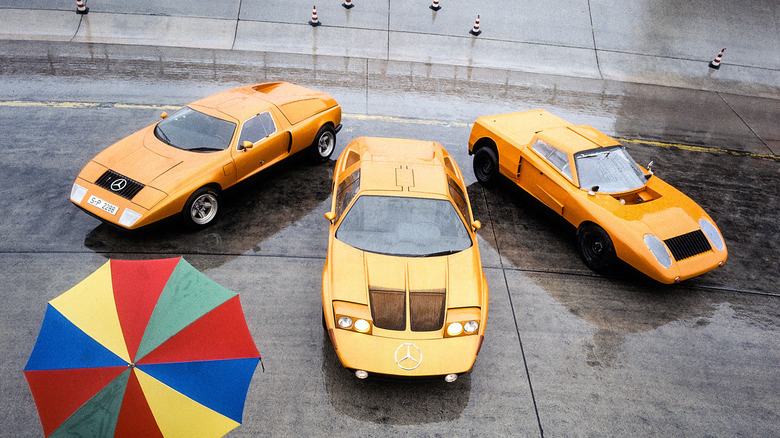
Between 1969 and 1978, Mercedes built 17 different C111s across three iterations of the model: the C111-I, the C111-II, and the C111-III. The C111 was originally conceived with a rotary powertrain, first a three-rotor Wankel with later versions getting a four-rotor engine. One was built with a V8 and another has since been converted to have a V8, and the last few C111-IIIs had five-cylinder turbodiesels with which they set a bunch of records at Nardò. Three of the C111s were dismantled after testing, and one was destroyed in crash testing; the rest have remained in Mercedes’ collection ever since, with only a couple of them being still functional.
As Mercedes continued building new iterations of the C111, the overall design and various details evolved, but every C111 was spectacular and clearly part of the same family. The company had never made a mid-engined sports car, not to mention anything such a wild wedge shape, so it’s no surprise they were show-stoppers everywhere. Some C111s had their glass-fiber-reinforced plastic bodywork originally painted white, and the last few were metallic silver, but the cars are best known for the Weißherbst paint worn by the vast majority of them — “white autumn” in German, named after a traditional copper-tinted rosé.
It was in Playboy
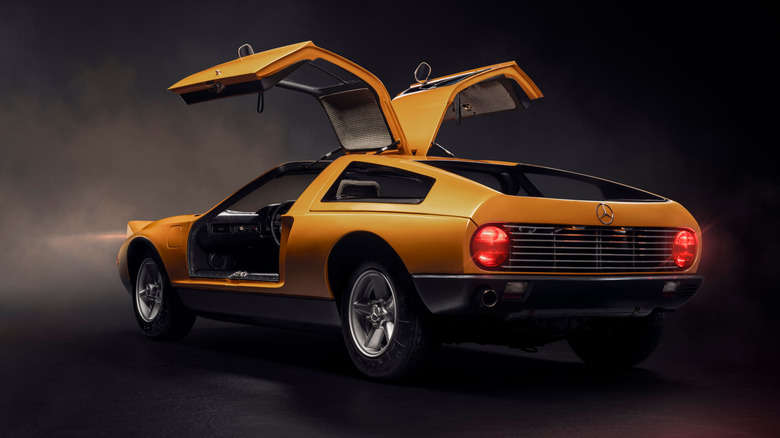
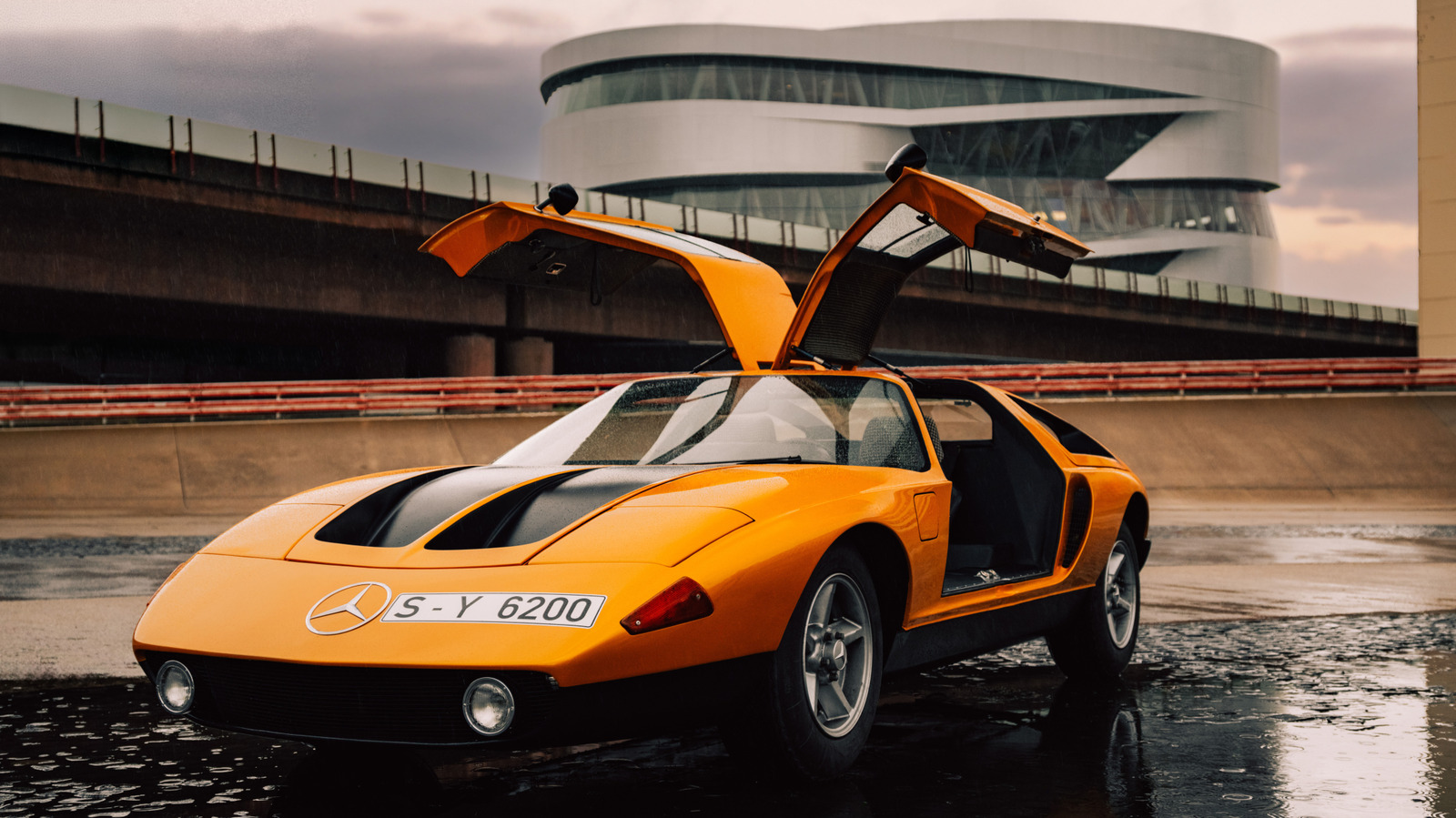
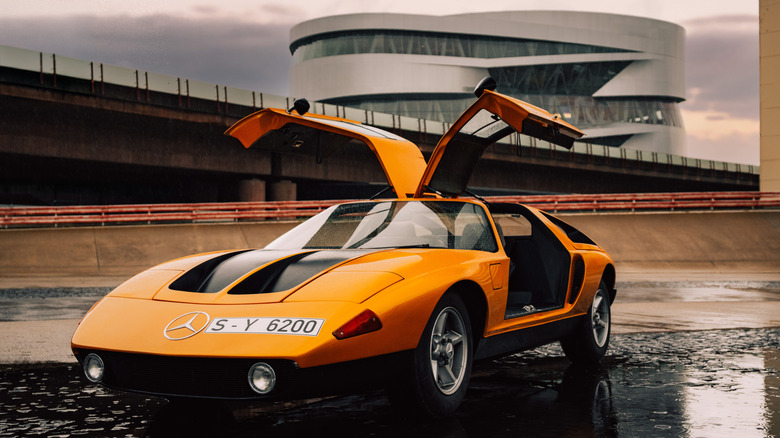
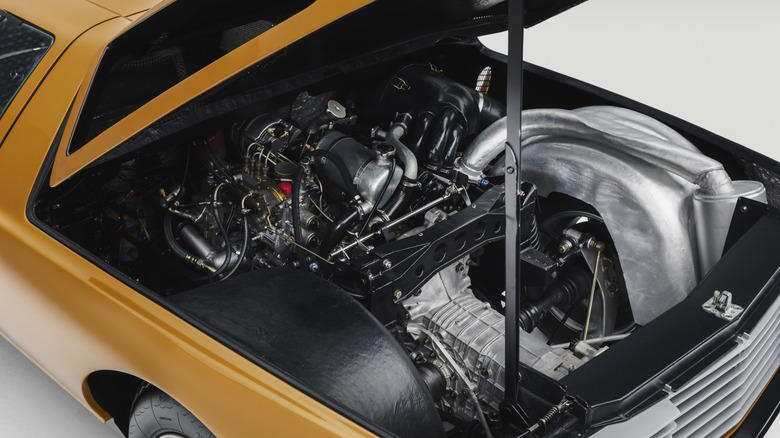
The C111 being sold is a C111-II, car number 33, which Mercedes says is “only of internal significance.” Production began in March 1970 with the car being completed in August, when it became the second C111-II to go into the test fleet. It was fitted with a 2.4-liter four-rotor Wankel engine that produced a massive 345 horsepower and 289 pound-feet of torque, sending the 2,734-pound car from 0 to 62 mph in 4.8 seconds and on to a top speed of 186 mph (300 km/h), making it the fastest car in the world at the time. In fact, chief test engineer Hans Liebold once hit 188 mph on the Autobahn heading towards Baden-Baden.
Mercedes says Car 33 “was used to test a fluidic component designed to ensure even emptying of the two side fuel tanks, which have a combined capacity of 30.6 gallons, to carry out temperature measurements in the rear trunk, and to conduct test drives at the Hockenheimring.” It was featured on the first German issue of Playboy in 1972, and since 1975 it has been retired, part of Mercedes-Benz’s collection. When the museum opened in 2006, the car has been on display in the Fascination Design area, floating on a plinth surrounding a curved staircase.
 Mercedes-Benz
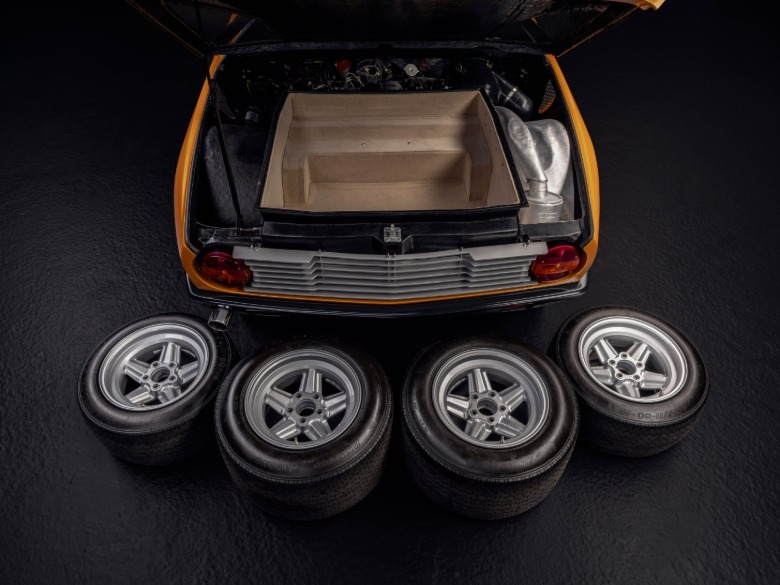
In 2024, the Mercedes-Benz Classic team in Fellbach gave Car 33 a full restoration, making it one of just a couple C111s that actually still run, and the only running car with a rotary engine. The mechanical restoration was completed without messing up the car’s lovely patina, the only addition to the car being a fire extinguisher. It has the original paint and houndstooth cloth seats, and a Becker Europa radio that actualy works.
There are 24,766 kilometers on the odometer (about 15,389 miles), and Mercedes says that while Car 33 was used to test anti-lock braking systems, the ABS currently doesn’t work. The car comes with its original magnesium racing wheels, sized 10×15-inch in front and 13×15-inch in the rear, but they are “not only suitable for display purposes,” so Mercedes created a new set of 8×15 light alloy wheels that the car can actually be driven on. The rear trunk tub, which is designed to hold luggage, is fitted and able to be removed.
There’s nothing like the rotary
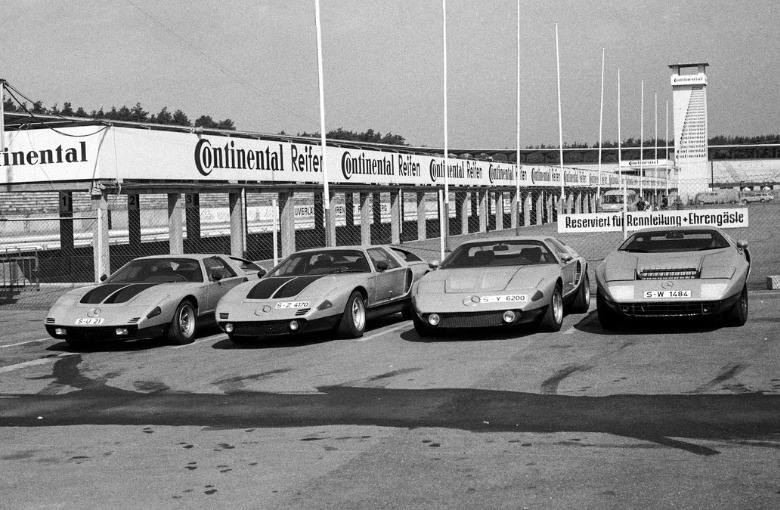
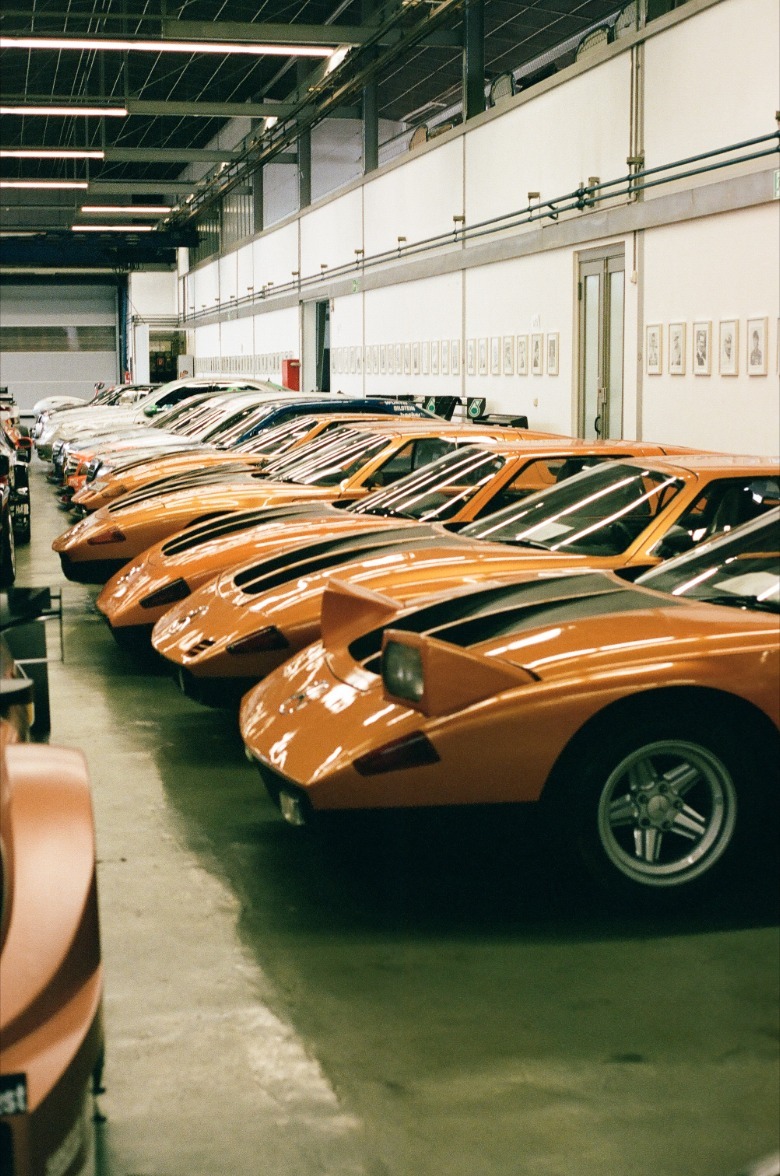
I’m particularly excited to see how much this car goes for because I’ve had a few very special experiences with C111s, including this specific one. Mere days before the world shut down in 2020, I was given a tour of Mercedes’ secret “holy halls” warehouses in Germany, where I saw half of all the C111s all lined up together. (The photo you see below, which Mercedes graciously let me take on a film camera.)
 Daniel Golson/Jalopnik
At Monterey Car Week in 2022 I got to ride shotgun the V8-powered C111 on the Tour d’Elegance, which was incredible even when we were stuck in traffic and slightly overheating. In 2024, I got to ride up and down Big Sur in this particular car, number 33, fresh off its restoration with a fully functioning rotary engine. The V8 C111 already felt extraordinary, but the four-rotor motor’s totally unique buzzy sound and character really takes it to the stratosphere. There’s no other car in existence quite like it.
Apart from other C111s, of course. Yes, it’s pretty nuts that Mercedes is selling one of these things, but it will still have 12 others in the collection. I’m sure now that the Classic team got this one working, it will be able to restore one of the other rotary-powered C111s in the collection. Don’t think this is the last the world will see of this C111, either. Part of the buyer contract for the Uhlenhaut was that its new owner must bring the car to events and shows, and that Mercedes gets to use it for things when it wants, and I’m sure the same will be the case for this sale.
Whoever buys it really should use it, too. For all of its fantastical styling and engineering, it’s a proper car. Sure, the rotary doesn’t really like sitting around at low speeds, instead egging you on to keep reaching the red mark at 7,000 rpm on the tachometer, and there’s no air conditioning so your only respite from in-cabin heat is to open the small vent windows (or just open the gullwing doors). It’s pretty comfortable, though, and pretty easy to get in and out of. The engine isn’t so loud that you can’t hold a conversation with your passenger, and the interior just feels like any other Mercedes from the ’70s.
Now’s your chance
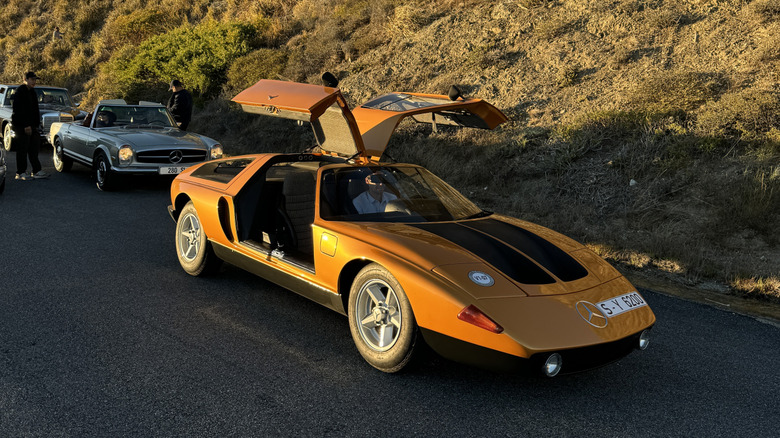
The C111 be will be sold on February 3, 2027, at the Salles du Carrousel underneath the Louvre, where RM Sotheby’s typically has its Rétromobile auction. RM Sotheby’s says bids can be placed by phone or in person at the auction, after reigstering ahead of time of course, and if you’re interested you can go to the Mercedes Classic Center website to learn about “the terms and conditions of participation, bidder registration and opportunities for pre-inspection.” Given the C111’s existence as a forward-thinking experiment, I think it’s fitting that the money goes toward making the automaker’s museum even better for future generations. Says Mercedes:
The aim of “Mercedes-Benz Museum 2.0” is to bring the brand’s unique heritage to life for future generations and make it accessible worldwide. To this end, Mercedes-Benz is continuously developing both the Museum in Stuttgart and its virtual offerings. A key component is the Museum’s digital twin. This makes the Museum experience accessible regardless of physical location, thereby extending its reach far beyond Stuttgart. It will give people all over the world greater access to the Mercedes-Benz brand heritage. The virtual twin is being developed in collaboration with The Classic Car Trust (TCCT) and its digital platform, Roarington.
“With ‘Mercedes-Benz Museum 2.0’ , we are consistently taking our Museum to the next level. We are continuing to write our company and brand history right up to the present day, creating new exhibition experiences and providing space for topics that are of particular interest to our visitors – from more recent classic cars to the latest innovations. With a digital twin, we are also opening up the Museum to people all over the world. Visitors can also experience the exhibits interactively here. The first results will be visible as early as 2027.” -Bettina Haussmann, Director of the Mercedes-Benz Museum
So, how much could it go for? Who the hell knows. The collector car market is so absurd these days — McLaren F1s are $35-million cars now — and there’s no prior sales of cars that you can really compare the C111 to. Last year the Indianapolis Motor Speedway auctioned off a Mercedes-Benz W196 R race car that become the second-most-expensive sale ever, also in parnership with the automaker and RM Sotheby’s. The most expensive public sale of a Ferrari 250 GTO has been just under $52 million, while private sales have been rumored to exceed $70 million, and I think the C111 could easily clear that mark.
For its part, Mercedes says that “for at least 25 years, this will remain the only opportunity: Mercedes-Benz has contractually committed not to sell any further C111s during this period.” That’s definitely an incentive for people to keep raising their paddles. I’m also going to take this sale as confirmation that Mercedes is definitely working on a C111-inspired supercar in the vein of the Vision One-Eleven concept from a few years ago.
