

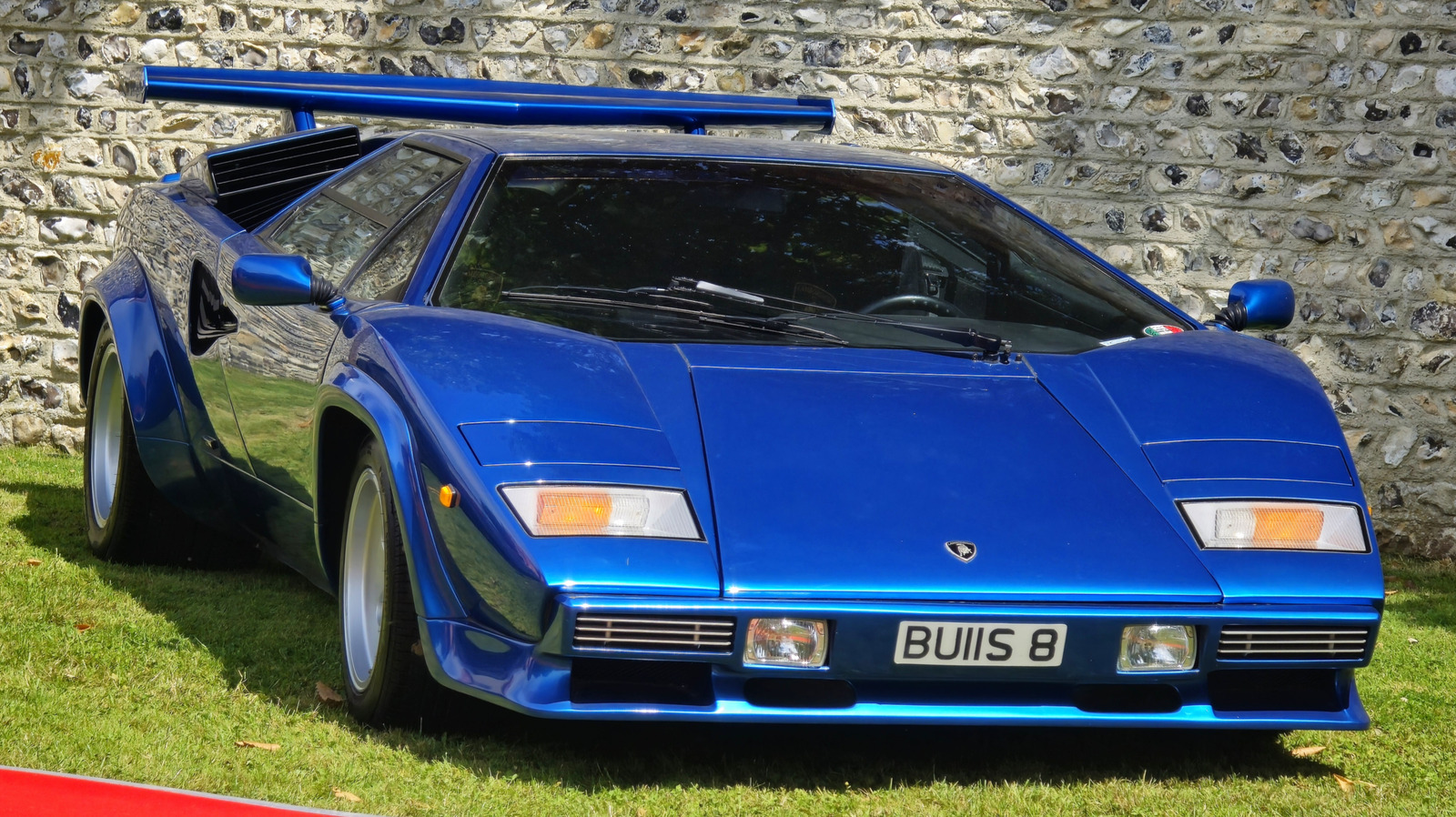
There are various examples of people and manufacturers in the automotive industry being a little sly or cunning. Mitsubishi, for example, falsified the fuel economy data for an estimated 600,000 vehicles it sold in Japan over 25 years. Toyota, on the other hand, was one of five manufacturers that posted inflated safety scores to boost its cars’ certifications.
Now, what if we told you Lamborghini also did something similar in the past? You might think of the famous raging bull in the same vein as a newborn puppy: incapable of wrongdoing, and anybody who dared say otherwise should be sent to the gallows. Well, sorry to burst your bubble, but Lamborghini has –- on more than one occasion –- fabricated top speed runs at the famous Nardo test circuit in Italy. Those aren’t our words but those of its dashing former head of vehicle testing, Valentino Balboni.
Perhaps the most famous example of this was in 1986, when Lamborghini hosted the editor of Fast Lane magazine, Peter Dron, at its headquarters in Sant’Agata. The purpose was to prove that the ultimate version of its Countach, the LP5000 QV, was capable of hitting the mind-melting speeds it said it could.
Dron rode shotgun to F1 ace Pierluigi Martini, who hit an average speed of 195.1 mph in the QV. In fact, the motoring journalist even claimed to have seen the speedometer crack 201 mph at one point –- and remember, the Ferrari F40, which is widely considered to be the world’s first 200-mph-plus road car, wouldn’t debut until the following year. As it turns out, Lamborghini did something pretty sly, tinkering with the engine to boost the output and top speed, and also streamlining the Countach’s exterior to better cut through the air.
The test car had a spate of modifications
Various non-production-car changes were made to perfect the QV for its big press adventure, and one of those was a custom airbox that significantly improved the car’s high-speed airflow, as well as its high-rpm efficiency. Then there were the intake spacers, which were built specifically for this car and punched the V12’s output up from a factory-rated 450 horsepower to … well, who knows how much.
According to Balboni, Lambo also had a habit of streamlining its cars as much as possible for these top speed tests. With the Countach, for instance, the rear wing was removed to improve high-end performance, and apparently, its makers even removed the wipers and side mirrors. Every little helps, right? It even went as far as optimizing the tires and suspension components — anything goes when publicity is on the line. Even if the product wasn’t playing by the rules, though, this vintage “60 minutes” episode shows how unhinged Lamborghini testing used to be.
The Countach was never officially the world’s fastest car
The Countach is considered by many to be the car that made Lamborghini what it is, and this LP5000 version was celebrated by readers and press alike for being among the fastest production cars in the world. When it was officially released at the 1985 Geneva Motor Show, its biggest threat came from the Ferrari 288 GTO –- a recent example of which pushed millionaires to battle on Bring A Trailer. The GTO had a top speed of 189 mph and was not only the halo car for Ferrari’s lineage of most hardcore road racers, but arguably the world’s maiden hypercar.
Then came the super-intelligent Porsche 959. Its 2.9-liter flat-six was derived from the 956 and 962 Group C racing cars -– the Dauer version of which earned an impossible shot at Le Mans glory -– and propelled it from 0 to 60 mph in 3.6 seconds and on to a top speed of 199 mph. Okay, we need to stop. Talking about all these glorious old supercars is giving us that weird fizzing sensation James May talks about. But before we go, we want you to tell us if the Countach LP5000 QV is your favorite from the era, or if something else rules your roost.
