

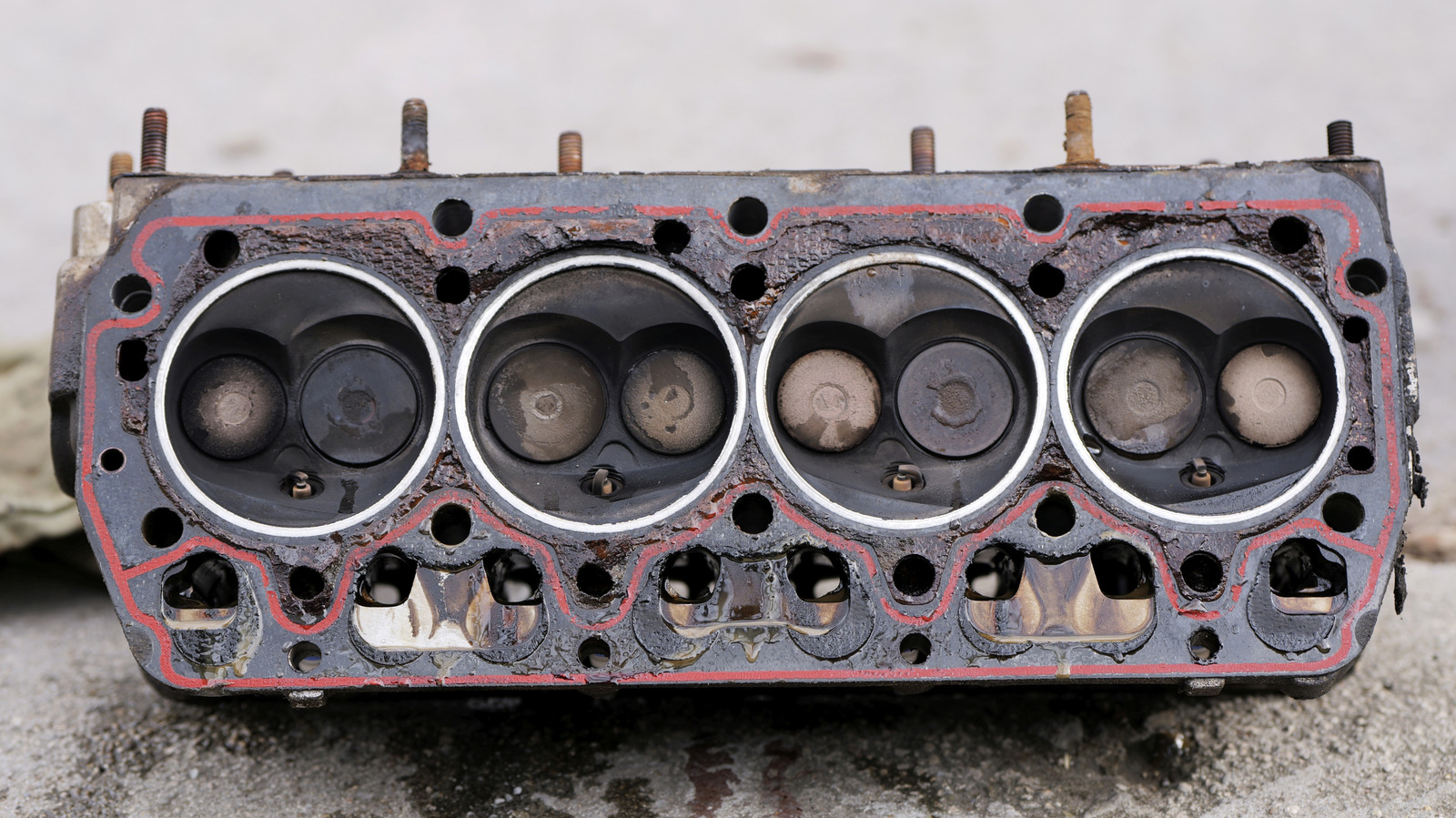
Four-cylinder engines come with their own set of pros and cons, just like six-, eight-, ten-, and even twelve-cylinder designs. Today, four-cylinder engines are the workhorses of the industry, powering everything from inexpensive daily drivers to luxury cars and high-performance models. Their appeal lies largely in a balance of efficiency, packaging, performance, and cost — but that same appeal means they’re built in enormous numbers and pushed through a huge range of operating conditions.
In addition, engine development has grown increasingly complex in the modern age. Forced induction, hybrid systems, and sophisticated electronics have all added layers of engineering that simply didn’t exist to the same degree a generation ago. But even without these factors, designing an engine capable of running flawlessly for decades is an extraordinarily difficult task.
Every engine contains components that eventually wear out, and the line between an expected maintenance item and a genuine engineering or manufacturing defect can sometimes be hard to draw. In other cases, though, the problem is impossible to ignore. Excessive oil consumption, failed head gaskets, damaged bearings, overheating, and catastrophic internal failures can turn an otherwise promising engine into one owners learn to avoid.
Because the engine is the heart of any vehicle, major failures can quickly damage the reputation of both the powertrain and the company that built it. And since four-cylinders are generally known for their reliability, the bad ones stand out even more. That’s why some four-cylinder engines have become especially notorious for recurring defects, expensive repairs, and widespread owner complaints. Here are our picks of the five biggest offenders.
Hyundai/Kia Theta II 2.0L and 2.4L GDI
One Theta II engine problem from Hyundai and Kia is a prime example of the worst things that can go wrong. In 2015, Hyundai recalled (15V-568) around 470,000 units of the 2011/2012 Sonata equipped with either the 2.0-liter or the 2.4-liter Theta II inline-4 engine. Hyundai built the affected engines at its Alabama plant, where machining work on the engine’s crankshaft left metal debris behind.
NHTSA’s filing ties that debris to potential connecting rod bearing failure, and lists a knocking sound or an illuminated CEL as the warning signs before the engine dies. To say the least, customers didn’t take that well since it led to an approval of a massive $1.3 billion settlement. For example, on CarComplaints, the 2016 Sonata’s engine complaints carry a severity rating of “Really Awful,” with an average failure mileage of just 24,456 miles and more than 1,000 complaints filed against the engine alone.
On the same site, the 2011 Sonata’s seized engine ranks as the No. 1 Sonata engine problem, costing an average of $5,100 to fix at around 96,000 miles. J.D. Power’s 2014 Vehicle Dependability Study, which surveyed owners of three-year-old 2011 models, also placed Hyundai among the bottom five brands, with a disappointing 169 problems per 100 vehicles, on average. Separately from the civil settlement, NHTSA announced consent orders against both Kia and Hyundai in 2020, penalizing them a combined $210 million.
These penalties followed an NHTSA review that concluded the recall covering the 1.6 million-plus Theta II vehicles had come too late, compounded by paperwork Hyundai and Kia filed with the agency that didn’t hold up. This engine’s reputation is so severe that enthusiasts on Reddit point to the Theta inline-4s as among the least reliable engines, and we even included it in our list of the worst engines of all time.
Ford 1.6L EcoBoost
Do you know what’s worse for an engine than metal shavings? Fire. This is exactly what plagued Ford’s 1.6-liter EcoBoost. NHTSA’s 2012 filing for a recall (12V-336) covered roughly 9,320 Escapes with an engine compartment fuel line that may have been damaged during assembly. However, that was not enough to fix the problem of engines bursting into flames. Two months later, a separate recall of 6,146 examples was issued (12V-431) over a different issue entirely: escaping antifreeze that could ignite. One would think that this would be it, but it was not. Three months later, another recall (12V-551) expanded the fire recall to more than 80,000 Escapes and Fusions over coolant leaks reaching the hot exhaust system.
By November 2013, Ford issued two more recalls on the same day. One (13V-583) covered 139,917 Escapes for yet another failure mode: overheating cracking the cylinder head and letting oil find its way out onto hot surfaces. The other (13V-584) covered the same vehicles from the original 12V-336 recall, because the replacement fuel line had, in some cases, been installed incorrectly the first time. Then, in 2017, another recall (17V-209) was issued for fire problems, covering 208,584 vehicles powered by the 1.6-liter.
It is not all about recalls though. The 1.6-liter is also prone to coolant intrusion, which Ford Authority called “very common with EcoBoost four-cylinder powerplants” after its tech found it in a 1.6-liter 2014 Escape. Plenty of owners on forums are dissatisfied, too, with one Bronco Sport Forum member echoing that “it’s not a matter of IF but WHEN you will get coolant intrusion and have to do major engine work.” Ford, it seems, is back at it with problems – five Ford models were just recalled for an EcoBoost engine problem, this time over faulty piston manufacturing in the 1.5-liter and 2.3-liter units.
Nissan/Infiniti 1.5L and 2.0L VC-Turbo
The 2017 Nissan’s VC-Turbo was the world’s first production engine capable of adjusting its own compression ratio on the fly, but its positive reputation crumbled soon after. In June 2025, Nissan filed the first recall tied to the VC-Turbo family. 25V-437 covered 443,899 Rogues, Altimas, and Infiniti models, spanning both the 1.5-liter three-cylinder and 2.0-liter four-cylinder versions of the engine, over bearings that can fail outright.
That wasn’t the end. Eight months later, in February 2026, Nissan filed two more recalls. The first one (26V-080) covered 323,917 Rogues and pinned the blame on heat and the oil itself degrading under high running temperatures. NHTSA’s filing warns the consequences can go beyond a stalled engine, noting “a bearing failure may cause a breach in the engine block, allowing hot oil to be discharged, increasing the risk of an engine fire.” The second recall (26V-081) covered 318,781 Rogues for a gear inside the electronic throttle body that can fracture during startup. Across the three campaigns, Nissan has recalled more than a million VC-Turbo vehicles, though the two 2026 recalls overlap with some vehicles already covered by the 2025 campaign.
Owners have also complained about the VC-Turbo. One 2022 Rogue owner wrote on CarComplaints, where the VC-Turbo is rated “Pretty Bad,” said that the dealer told them, “The engine is completely shot and needs to be replaced. Total cost $14000.” Enthusiasts have soured on it as well over the years. According to Endurance Warranty, mechanics warn about ticking or knocking noises, which could indicate worn bearings and cost more than $5,000 in out-of-warranty repairs for VC-Turbo-equipped Rogues and Altimas.
We’ve previously covered Nissan’s reliability, citing Consumer Reports, pointing to “ongoing issues with the clever but problematic variable-compression VC-Turbo engine” as one of the factors pushing Nissan down to eighth place among the most reliable used-car brands.
Jeep 2.0L 4xe (PHEV)
The hybrid Jeep 2.0-liter turbo-four didn’t fail because of a design flaw; it failed because sand does not mix well with engine internals. NHTSA’s filing for the November 2025 recall (25V-766) covered 112,859 of these PHEV SUVs after Chrysler identified a supplier quality lapse: the debris from the engine-block sand-casting process was never fully removed before the blocks went into production.
Left inside, that sand works its way through the engine and can eventually cause a fire or a dead engine. Chrysler didn’t have a fix at the time of the recall and only started offering software updates and, where needed, engine block replacements in May 2026. These same 4xe hybrids had already been recalled once before over a separate battery fire risk.
Chrysler’s 2.0-liter PHEV has stumbled before that, too. A 2022 recall (22V-865) included 62,909 Wrangler 4xe models over the engine just shutting down. The vehicle’s own diagnostics can misread a communication fault and decide to just power off the vehicle while driving. This has led to two accidents and one injury. RepairPal also ranks the Wrangler 25th out of 26 compact SUVs when it comes to reliability, though that rating covers the whole lineup, not just the 4xe.
What’s even worse is that the same problem resurfaced three years later, this time in the Grand Cherokee. The September 2025 recall (25V-576) covered 91,787 more PHEVs after Chrysler traced another defect to the hybrid control processor, which is a very similar problem description to the 2022 recall, just on a different model. One JL Wrangler Forums member said oil dilution had their 4xe asking for an oil change after under 310 miles. And if the engine goes bang, one owner got quoted $7,500 for a replacement 2.0T from the dealer.
Chevrolet Vega 2300 2.3L
Back in 1971, Chevy rushed the Vega’s development into just 24 months to hit a deadline set by GM president Ed Cole. To save weight, engineers skipped the cylinder sleeves that a block like this would normally need. Instead, they bet on a hardened Reynolds Aluminum alloy carrying enough silicon to serve as the bore surface on its own, bolted to a conventional cast-iron head. It held up under normal use, but severe heat degraded that silicon content, and the pistons would then scuff against the weakened bore walls.
Aluminum and iron don’t handle heat the same way, either, and that mismatch is what finally cracked the head gasket. Chevrolet made the problem worse — early Vegas shipped with a radiator too small for the engine’s needs and no way to recover coolant once lost. Cracking valve stem seals let oil into the cylinders too, and since oil also carries heat away from the engine, that only makes overheating worse.
The car’s other systems fared no better. In April 1972, Chevrolet recalled roughly 129,000 Vegas (72V075000) after backfires ruptured the muffler and ignited leaking gasoline. Less than two months later, another recall (72V112000) covered 350,000 more Vegas whose idle-stop solenoid bracket could jam the throttle open. Enthusiasts were also very critical, as one Ford-Trucks forum member described the original Vega in a thread on the worst GM engines: “You didn’t change the oil every 3,000 miles. You replaced the block.”
By 1974, overheating had become bad enough that Chevy notified 1.3 million owners it would cover damage under warranty. A real fix didn’t come until 1976’s “Dura-Built 140” engine — new long-life valve stem seals, and hydraulic valve lifters, a beefed-up head gasket, and new cooling passages for the engine. Chevy even covered it with a massive five-year/60,000-mile warranty.
