

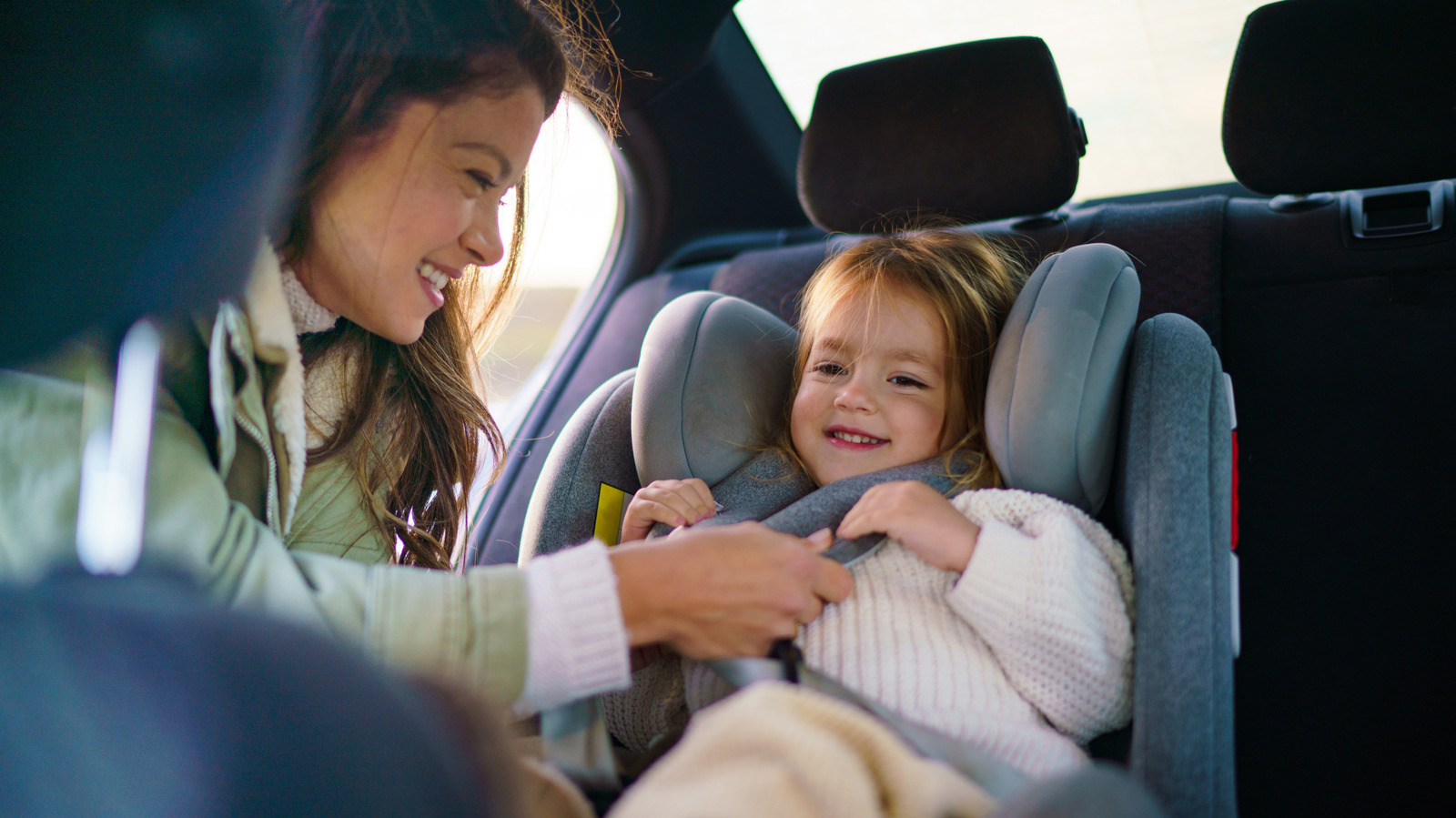
Hundreds of kids are killed or injured in car-related incidents every year. In 2024 alone, about 800 children aged 13 or under were killed in car accidents across the U.S., according to data from the Insurance Institute for Highway Safety (IIHS). This covers kids who were passengers in cars, on foot, or riding bicycles.
That same year, a further 39 children under the age of 15 died from being left in hot cars. It’s a worrying statistic, but far fewer kids are being killed on U.S. roads nowadays than decades ago. For instance, the IIHS analysis puts the total number of children killed in 1975 (passengers, pedestrians, and bicyclists) as 3,643, meaning car-crash deaths among children were down around 78% in 2024 compared with 1975.
The decline is largely due to the wider adoption of features that make modern cars better than older models not only at protecting kids in an accident but also at preventing one from occurring in the first place. They range from standardized anchoring systems like LATCH (known internationally as ISOFIX) to rear-seat reminders, side-curtain airbags, electronic child safety locks, and more.
Rear-seat reminder systems
Children’s bodies heat up three to five times faster than adults. As a result, being left alone in a parked car during hot or moderate weather often poses a severe risk of heatstroke death to any child trapped inside. To stop forgetful parents and caregivers leaving children behind, General Motors introduced the rear-seat reminder system in 2016, fitting it to the 2017 GMC Acadia.
The feature notes whether the rear doors were opened before the car was started or during a trip, and reminds the driver to check the rear seat at the end of a journey by chiming both visual and audible reminders on the dashboard. Owing to its effectiveness, the technology soon caught on with other car manufacturers, and some, like Hyundai, have gone a step further by improving it.
While basic rear occupant alert systems rely on door-opening and closing data after the car is turned off, the more advanced rear occupant sensing alert system found in Hyundai, Kia, and Genesis vehicles uses ultrasonic or, more recently, radar-based sensors to detect movements in the back seat after a car has been locked. Upon detecting that a child has been left alone in a car, the system will typically sound the horn and flash the hazard lights to alert the driver or passersby.
Mobile app notifications are also often sent to the driver’s smartphone, reminding them of a child in the back seat. While not available in the U.S., automaker BYD is integrating child presence detection systems with the car’s HVAC system, allowing cars such as the BYD Dolphin electric hatchback to automatically turn on air conditioning to keep the cabin at a safe temperature.
Electronic child safety locks with safe exit assist
If you have young children who are physically developed enough to begin exploring the world around them, you’ll find electronic child safety locks to be quite helpful. Once engaged, they can prevent dangerous situations on the road by stopping children from accidentally opening car doors or windows from inside while the vehicle is in motion.
Safe exit assist systems with door opening control features, for their own part, are helpful when you are parked. They utilize radar sensors to detect when another car or bicycle is approaching close enough from behind to collide with the door when exiting.
In such a situation, the car will automatically keep the door locked and sound an alarm or display a warning message in the driver’s display screen to alert you to cancel the opening of a door. Safe exit assist comes standard on models such as the BMW iX3 as well as vehicles from manufacturers such as Hyundai, Kia, Genesis, Subaru, Audi, and Lexus.
Camera systems
Blind spots are among the biggest contributing factors in pedestrian accidents, with at least 50 American children believed to be injured or killed due to back-over incidents every week. So, as part of efforts to reduce blind spot risks and enhance safety, carmakers offer vehicles with a wide and varied range of cameras, including blind-spot monitors and backup cameras. These features help you see the area around you and reduce driveway tragedies, but they’re not quite the game-changer the 360-degree camera system has been.
A 360-degree camera captures every angle of your environment, helping you to spot pedestrians, whether you’re driving forward, reversing, or maneuvering into tight spots. The only real drawback here is that some carmakers tend to limit the feature to higher-end trims. However, if you want one for an older car or a lower-end trim, you can look into aftermarket options, which can cost between $200 and $1,000 before labor.
LATCH system
Child safety seats reduce fatal injury by 71% for infants and 54% for toddlers, according to the National Highway Traffic Safety Administration (NHTSA). However, a car seat can only keep your child safe if it’s fitted correctly. Before the LATCH (Lower Anchors and Tethers for Children) child car seat attachment system became mandatory in 2002, parents and caregivers relied on adult car seat belts to secure baby seats.
But seatbelt anchor points and seat shapes varied so much between cars that getting a secure, consistent fit wasn’t always easy. As a result, approximately 70% of child seats installed using the vehicle’s safety belts are done incorrectly. An improperly secured car seat can come loose in an accident, reducing the chances of it protecting a child.
The LATCH system corrected these issues by introducing a universal anchorage system with fixed metal points built into the car’s structure. The LATCH connectors from your child safety seat fit on to these, helping to reduce the risk of incorrect installation, with up to 95% of LATCH child seats found to be properly installed.
