

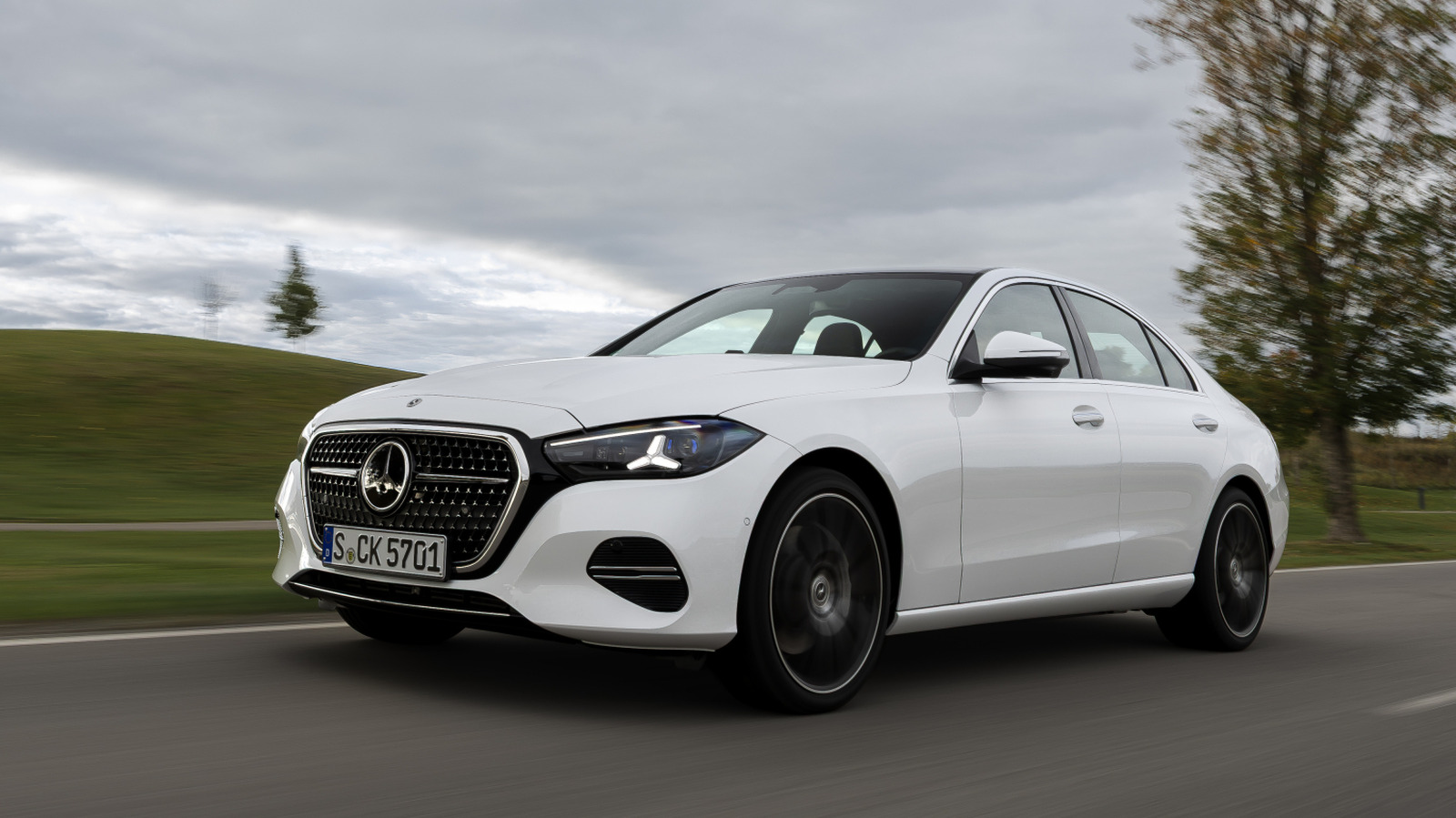
As computers get cheaper, electronic features more important, and new automakers enter the U.S. market, it’s harder to understand where each luxury brand positions itself. BMWs were traditionally the sporty ones, but with an adjustable suspension, you can make a sporty BMW feel luxurious. Is Genesis a value brand or a design brand? Who buys an Audi and why? Mercedes, however, remains pretty easy to pigeonhole. It’s the tech and luxury brand, whether you buy a six-figure GLS or a more affordable alternative, like the facelifted Mercedes-Benz C-Class.
If you don’t like screens and wish Mercedes would go back to building the kinds of cars it did in the late 1980s, I’m sorry. The new C-Class probably isn’t for you. Mercedes is looking forward, not back, and that means packing as much tech into its cars as it can. That may not be to your personal taste, but it does give Mercedes a clear identity. So even if you haven’t driven the new C-Class, in some ways, you already know what to expect. You’re going to get a comfortable, spacious luxury car with big screens, more features than you need or may even be able to remember, and all the refinement Mercedes can muster. It just doesn’t hide its secrets.
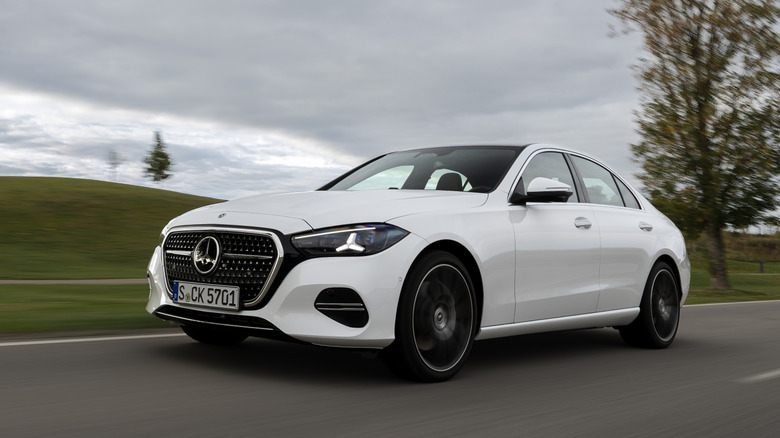
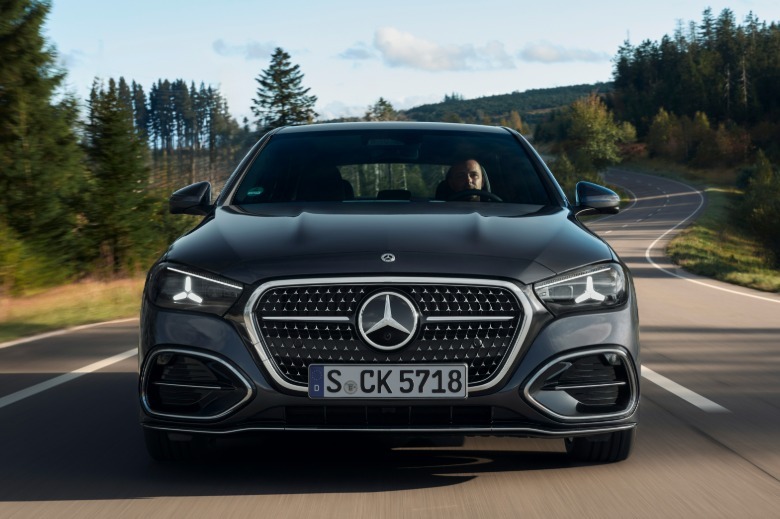
Mercedes likes to call its cars “new” any time it updates them, but really, this is a refresh. That was also to be expected, since this W206 generation that first went on sale for the 2022 model year still hadn’t received a mid-cycle refresh. Sometimes, an update means significant styling changes both inside and out, but here, Mercedes takes a more restrained approach. You get a bigger grille and the star headlights and taillights that we first saw on the CLA, but pretty much everything else about the exterior styling looks familiar. The new C-Class makes it clear from the start that you won’t find too many mysteries or wild changes inside.
Full Disclosure: Mercedes-Benz wanted me to drive the new C-Class so badly, it bought me the necessary flights and train tickets, booked two different hotel rooms for me, fed me and kept me hydrated, provided transportation to various locations, and regularly offered me snacks. I then crashed from exhaustion when I got back, got sick, and have finally gotten my thoughts together about the new C-Class. And yes, you read that right, I got to ride on a European train!
AI and supercomputers
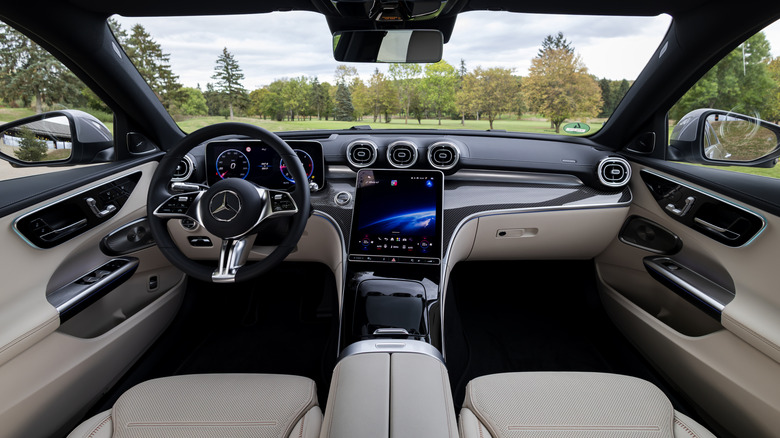
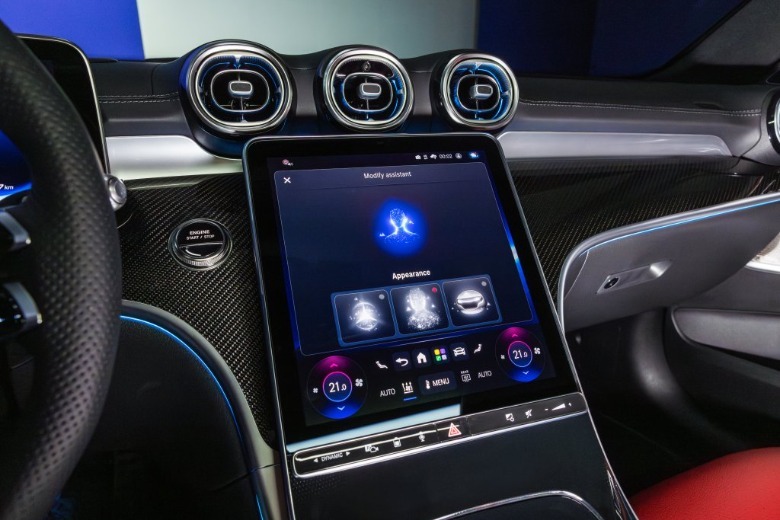
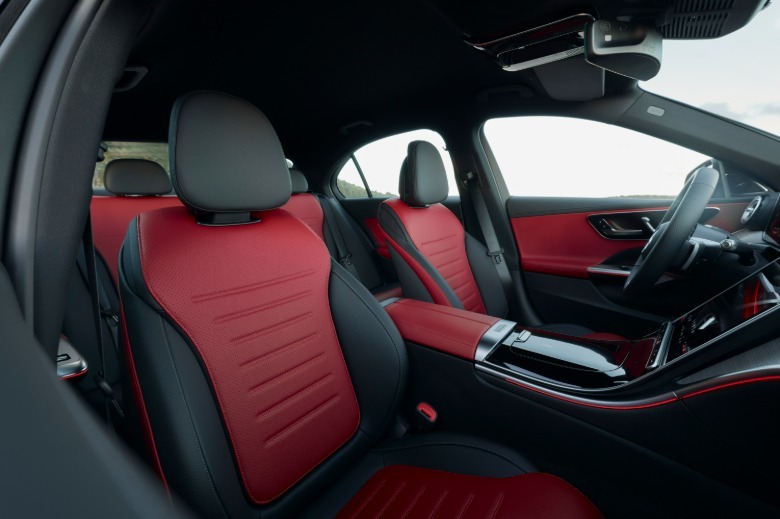
The car keeps its word, too. If you’ve driven the pre-facelift C-Class, you’ll be right at home in the new one’s largely unchanged cabin. That does mean it’s time for the big screen haters to look away from the screens they’re reading this on, because yes, Mercedes kept the 12.3-inch driver display and 11.9-inch infotainment touchscreen from the outgoing model. The big change is that it now features Mercedes’ latest MB.OS infotainment system, which has AI built in. In fact, the new C-Class has multiple AIs built in, allowing you to get use ChatGPT, Gemini, or (for some reason) Bing.
The AI integration doesn’t really add much to the experience, but if you use voice commands, the AI does process language more naturally and is more helpful as a result. Of course, you’re still using AI, and that comes with a whole host of other ethical issues, but functionally, yes, it is better than before. Anyone who gave up on voice controls that were more frustrating to use than they were helpful may want to give them a try, though, because we’re finally at a point where it isn’t always easier to find the screen controls yourself.
 Mercedes-Benz
The bigger story is the engineers upping the C-Class’ processing power to the point that it qualifies as a supercomputer. That makes it possible for Mercedes to offer a more advanced version of its augmented reality head-up display, and it needed to upgrade the processing power before it could add its MB.Drive Assist Pro “Level 2++” advanced driver-assistance system that should rival Tesla’s so-called Full Self-Driving, only made by a company that cares about safety. Still, if you’re familiar with the previous version, the C-Class’ infotainment system should feel incredibly familiar, so no need to worry about getting lost in menus or being forced to use the voice controls after giving up.
While the exterior styling helps keep the C-Class in line with other Mercedes models, and the software updates help keep the cabin current, you could also forgive someone who didn’t know for not realizing Mercedes even updated its compact sedan. Still, I can’t imagine that person would have any complaints about the fit and finish of the cabin, how comfortable it is, or how little noise intrudes once the doors are closed and the windows are up, which will be even more appreciated if you spring for the optional Burmester 3D surround-sound system with Dolby Atmos.
Set your C-Class to mildly sporty
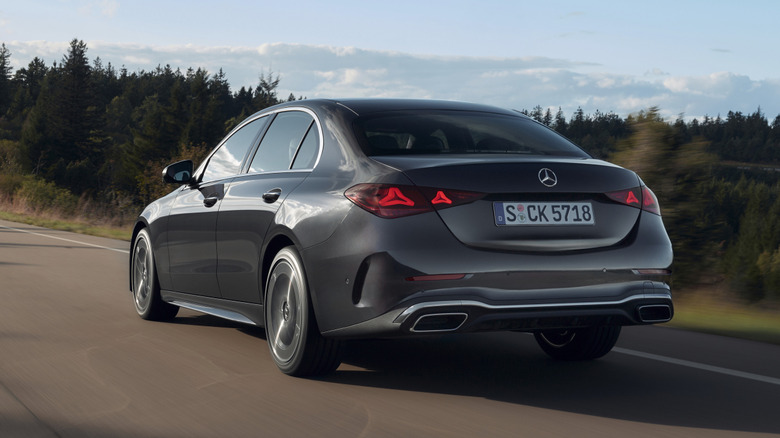
Since we were in Europe, Mercedes had us driving European models, which meant I had access to the wagon, a plug-in-hybrid powertrain, and more. The U.S., however, only gets the C350 for now, with a turbocharged 2.0-liter inline-4 making the same 255 horsepower and 295 pound-feet of torque as the pre-facelift C300. Mercedes promises a 5.8-second 0-to-60-mph time with the help of its familiar 9-speed automatic transmission. That’s not especially quick, but Mercedes-AMG will have more powerful versions coming before we know it — in fact, the brand has already confirmed the old four-cylinder C63 will be replaced by a six-cylinder model.
And let’s not get too jaded here. Nearly 300 pound-feet of torque is more than enough to enjoy in a daily driver, and you now get a 48-volt mild-hybrid system with an integrated starter-generator that produces 23 hp and 151 lb-ft for better responses and smoother operation, plus a new electric auxiliary compressor that promises a near-instant boost of 27 hp for up to 20 seconds whenever you want it. It’s also 0.2 seconds quicker to 60 mph than the outgoing C300, so it works, too.
 Mercedes-Benz
As a luxury-focused luxury sedan, the C350 isn’t the car you want if you live up in Blue Ridge, Georgia, and spend most of your time driving on winding mountain roads. It’s exceptionally quiet and solid, comfortable enough that I would have happily driven it to Paris if we could have gotten away with it. While it may not encourage you to drive faster through the corners, the C350 is plenty competent when the road gets less straight. If you accidentally turned onto Topanga Canyon Road, you’d be fine. In fact, you’d probably have fun, but you’d be wishing you had performance brakes and a performance suspension, at the very least. Having driven a few sedans on roads that made me regret my decision, it’s at least nice that the C350 brings some handling to the table.
Gas engine, diesel sound
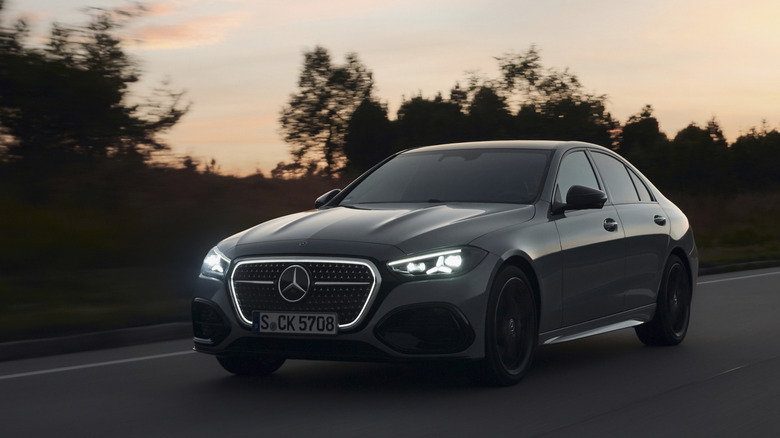
The C350 may not inspire you to drive more aggressively, but it could cause you to take more road trips, because a nice, smooth cruise is where it’s truly the happiest. You want gentle sweepers, rolling hills, and maybe even some forest, not plunging cliffs and switchbacks. Around town, you’re more likely to notice bumps and potholes compared to, say, an S-Class or GLS, but once you find the right road, the C350’s mix of mild sportiness and extra comfort delivers the kind of driving experience that has, “I could just keep driving,” written all over it.
However, one decidedly non-luxurious thing about the C350 I drove was the engine’s sound. At one point, I had to ask my co-driver whether we’d ended up with a diesel, but nope. It had a gasoline engine. It just sounds a lot more agricultural than you’d expect from a four-cylinder sold by a brand that prioritizes the luxury experience. Then again, I’m also willing to admit that the overwhelming majority of people who care how an engine sounds will simply wait for one wearing an AMG badge.
 Mercedes-Benz
Driving the other versions that we don’t get here, on the other hand, left me far more disappointed than the lack of exciting updates for me to write about. Plans may change as we see how the political landscape shifts in the coming year, but it’s incredibly disappointing that Mercedes doesn’t currently plan to bring the plug-in-hybrid C-Class to America. Not because of how much I care about the planet, but because it’s just a better luxury car. The C400e has a total of 395 horsepower and 479 lb-ft, with the larger electric motor’s torque making acceleration smoother and near-instant. Its 19.53-kWh battery gives it a range of 62 miles on the European WLTP cycle, too.
I can’t get too mad that Mercedes has no plans bring the wagon version to a longroof-averse country like the U.S., since car companies have to sell vehicles if they want to stay in business, but I’m definitely disappointed we won’t get the PHEV version that drives better and will be cheaper to operate. Then again, I’m one of those car-hating lefty auto journalists who likes the feel of instant torque. As we all know, real car enthusiasts would rather wait to accelerate. (If you do want electric power, you can always go for the C-Class EV, which is its own car entirely.)
Smooth cruisin’
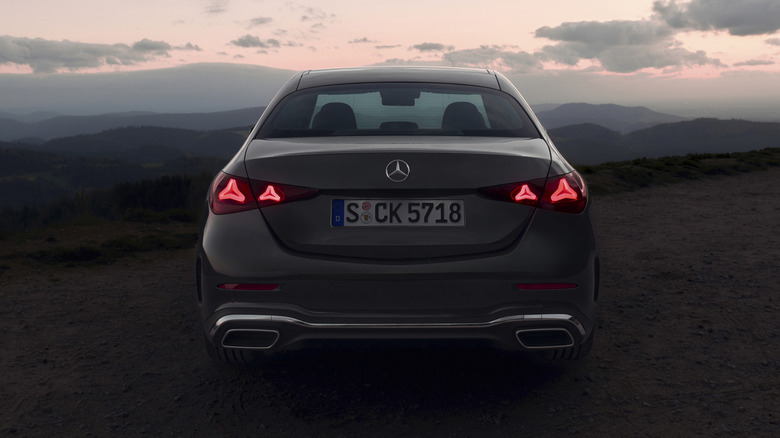
Unless you drive the new C-Class back-to-back with the old car, you may not notice many changes aside from the lights, but that doesn’t mean they aren’t there. Like the electric turbocharger, they tend to be present only in the background. In a lot of ways, that feels like the car’s attitude in general. It just wants to disappear. Don’t think too much about the car while you’re driving it. Just get from one place to the other in comfort. Need to give some friends a ride? They’ll be comfortable, too. Headed out on a road trip? As long as your luggage fits, take the C350.
So while I can’t say that you desperately need to experience the C-Class’s incredible handling for yourself or anything like that, I can tell you that if you just want the most comfortable and tech-forward compact luxury sedan you can buy, it’s going to be hard to beat the updated 2027 Mercedes-Benz C-Class. What it will cost you, however, remains to be seen. The current C300 starts at exactly $51,000 with destination, and the ’27 C350 is so similar, don’t expect the price to climb too much higher. As for when we’ll be able to buy the new C-Class in the U.S., expect deliveries to begin before Q3 of next year.
