

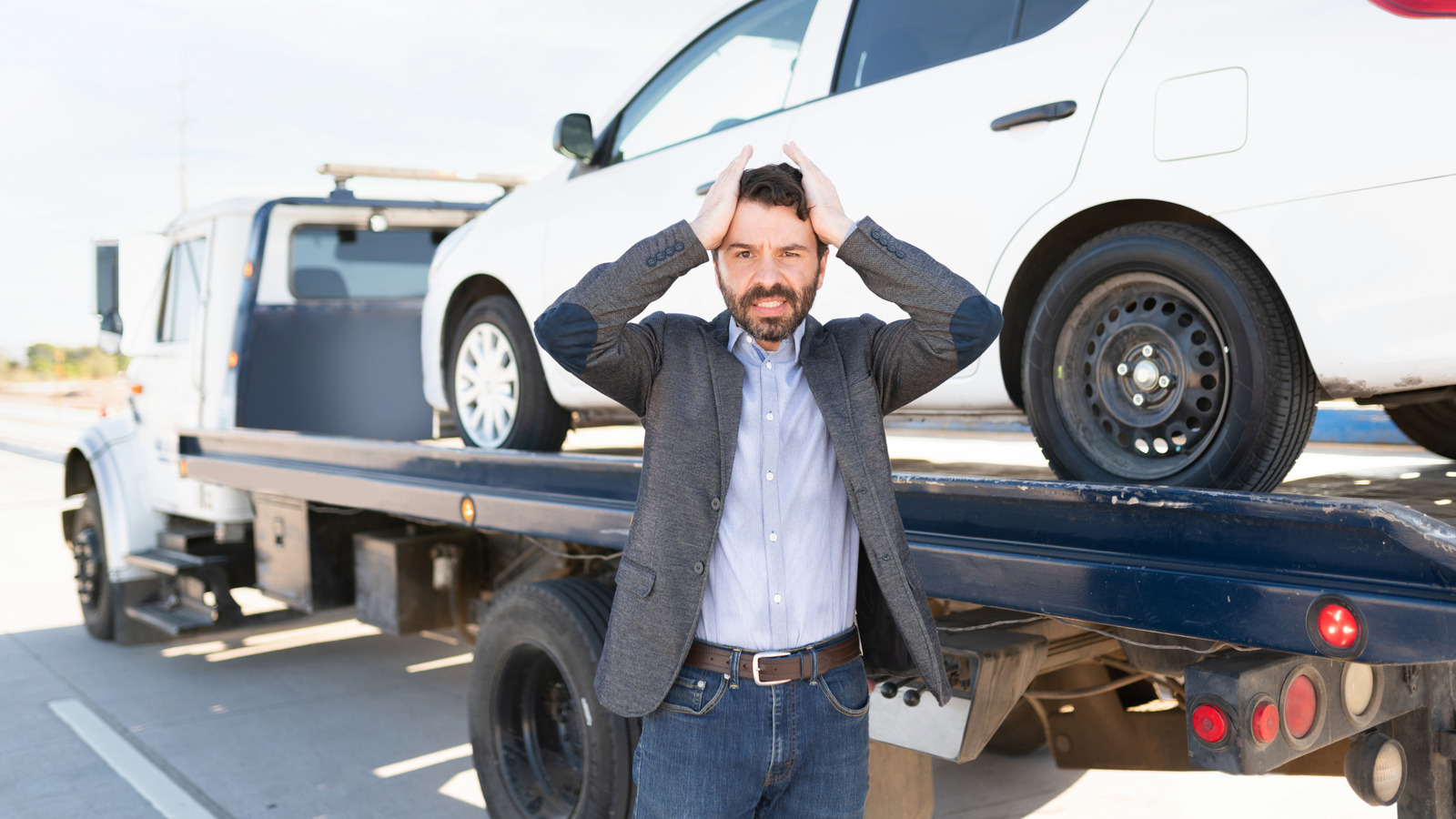
Getting in a car crash can be stressful enough, and even if no one’s injured, your bank account can still feel the pain. But it’s not just paying for repairs that can be expensive. The wrecker that conveniently comes along to haul your vehicle away can cost you plenty as well. In fact, that’s what bandit towing companies are all about. They prey on accident victims by arriving unsolicited and using high-pressure tactics to get vulnerable drivers to agree to a tow. Next, they essentially hold those rides for ransom through outlandish fees and sky-high charges.
In one especially egregious case, Los Angeles police discovered a bandit towing company running an elaborate scam. One person would first claim to be a crash witness at the scene. The “witness” would claim to have video evidence of the accident and offer to text it to the driver involved. Once the driver passed over their digits, though, someone else would call pretending to be from their insurance company and telling them to use the scammer’s truck when it showed up. It all seemed legit right up until the hapless drivers tried to get their vehicles back from those folks. In the LA example, police eventually found about 145 cars that had been illegally impounded. It was yet another case of a towing company ignoring laws meant to help people.
Nor is bandit towing limited to the West Coast. Windy City Jalopniks may be aware of Lincoln Towing Service — aka the Lincoln Park Pirates — a towing company so infamous a 1972 folk song was written about it. More recently, the National Insurance Crime Bureau (NICB) reported that predatory towing claims jumped 89% nationwide in the span from 2022 to 2024.
How to avoid bandit towing
First off, let’s be clear: It’s illegal in California and other states for a tow truck to roll up to an accident scene uninvited and looking for work. In Michigan, for instance — and subject to a few disclaimers — the state’s vehicle code says that “a person shall not travel to the scene of a motor vehicle accident or a disabled vehicle located on public property, property open to the public, or a state trunk line highway and solicit business for a wrecker, recovery, or towing service.”
With that in mind, your obvious first step is to stay in control of the situation by only working with a towing company you’ve contacted yourself. As the NICB puts it, “if you didn’t request the tow, say no.” The major exception to this rule is if law enforcement needs your vehicle for an investigation. In that case, what happens to the vehicle is up to the authorities. You just have to hope a bad Flock doesn’t lead the police to tow the wrong car. Also a good idea: Confirm that the truck that arrives is, in fact, from the service you requested.
Be sure to get all the details about the towing company you can, too, and if at all possible, do not fork over any cash upfront. The NICB notes that “legitimate towing companies” accept checks, credit cards, and other kinds of “traceable payment methods.” Here you need to keep in mind that, per the Better Business Bureau, Venmo and similar digital payment services don’t really qualify. In the context of consumer protection, paying with these services is basically like paying for cash. Otherwise, we could be seeing you in our next edition of Jalopnik readers’ worst tow-truck experiences.
