

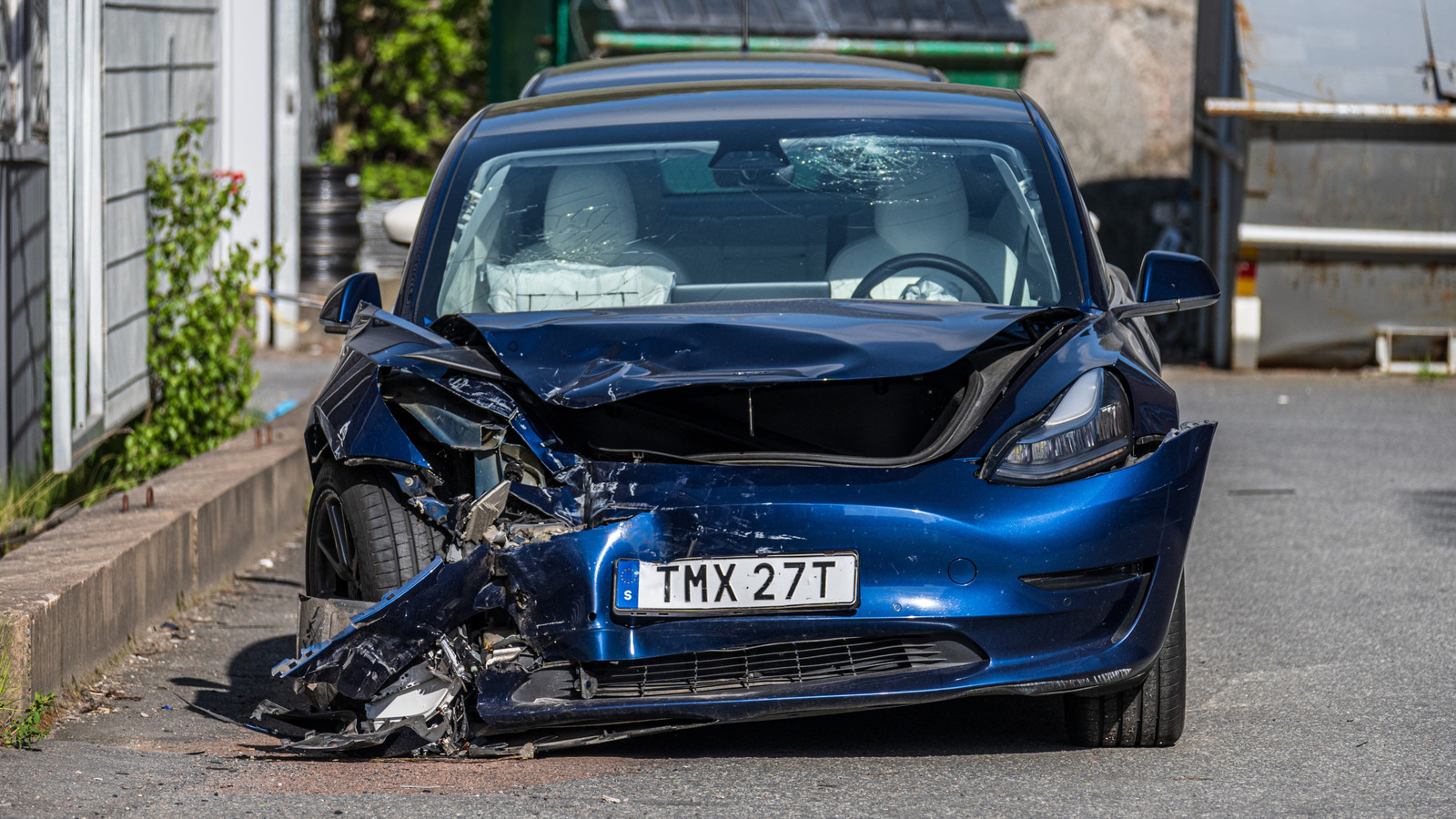
Humans are imperfect, so at least in theory, robotaxis are supposed to save us by doing all the perfect driving we aren’t able to do. Of course, had we poured every dollar that’s been spent on robotaxi development into improving public transportation, self-driving cars would feel unnecessary. But the bigger problem is, after all those billions of dollars and years of development, Momentum Mag reports that a recent test of Tesla’s so-called “Full Self-Driving” software found that it loved to speed through neighborhoods, illegally pass cyclists, and break other traffic laws. So basically, it drives like your least-favorite neighbor.
Woke 3 already killed the Cybertruck, so Tesla’s school bus-passing software could be next on the chopping block after liberals figure out how to make every man a little shorter every time he disappoints a woman. Until then, it’s important to know how good or bad the software controlling some of the most popular new cars actually is, which is why Belgian mobility organization johanna.be put the software to the test and found it frequently breaks speed limit laws in areas where drivers are most likely to hit pedestrians or cyclists. So that’s not great.
Additionally, while there aren’t many places in the U.S. where drivers can’t legally pass a cyclist, that isn’t the case in Belgium. You’d think fine-tuning the software to account for changes in laws between countries would have been a pretty basic part of Tesla’s development, but nope. In johanna.be’s testing, it found that Tesla’s FSD system “repeatedly tries to overtake cyclists in cycle streets, something that is explicitly illegal in Belgium.”
Coincidentally, right around the time johanna.be published the results of its Tesla safety test, the European Transport Safety Council shared the results of a separate safety test. The ETSC found that Tesla’s “speed offset” and “contextual max speed” features don’t follow United Nations or European Union rules regarding safety, and it’s called on member states to reject both features later this year when the EU plans to hold an important vote on advanced driver assistance system regulation.
No excuse
The ECF is also asking the EU to create a European Road Safety Agency that would act as “an independent EU body able to investigate issues involving automated systems and share the subsequent findings with other Member States.” Even before the ETSC got involved, johanna.be’s findings were concerning enough to warrant some serious attention from international regulators that Elon Musk wasn’t able to gut. As the ECF put it, Tesla’s so-called “Full Self-Driving” software (emphasis is the ECF’s):
- Sped through 30 km/h zones in 55% of cases tested, averaging 44 km/h.
- Misinformed the driver about the speed limit in 90% of those zones, showing “50 km/h” on the internal screen even when the system had correctly read a 30 km/h sign moments earlier.
- Sped in 5 of 12 residential zones (woonerven) (these are spaces where the law allows children to play across the full width of the street)
- Failed to correctly recognise the speed limit in all the cycle streets tested, and repeatedly attempted to overtake cyclists despite this being prohibited under Belgian traffic law. One test drive recorded four separate overtaking attempts on the same cyclist, all aborted by the supervising driver.
If a human loved to drive at 150% of the posted speed limit, regularly told people the speed limit was higher than it was, and kept trying to make illegal passes, we’d take their license and tell them to take the bus. With robotaxis and cars with driver-assist systems, it should be the same. Until they can prove they actually follow the rules of the road, there’s no reason to let them on our roads. We also shouldn’t allow automakers to sell driver-assistance systems that haven’t been proven safe, either. Even if you disagree, I don’t think you need a PhD in traffic safety to understand the argument there.
That said, it’s entirely possible that safety researchers are criticizing Tesla for mistakes that every automaker’s software makes. The problem with that argument is that johanna.be ran the same test with a Citroën C3 that managed to correctly identify all seven speed limit signs. For comparison, the Tesla got six of the seven speed limits wrong. It only got one correct. Imagine not only being wrong, but being more wrong than the French. Self-immolation is probably the only option.
While we wait to see how the EU’s member states vote, the ECF also noted that otherwise docile behavior is no excuse for Tesla’s software behaving badly in other ways. As it noted:
the study also found that FSD behaved cautiously and courteously around pedestrians and cyclists in general, yielding early, giving space, and even slowing for a sleepy cat in the road! However, this should not compensate for a pattern of speeding and illegal overtaking in streets that are primarily designed for safe walking and cycling
Exactly, ECF. Exactly.
