

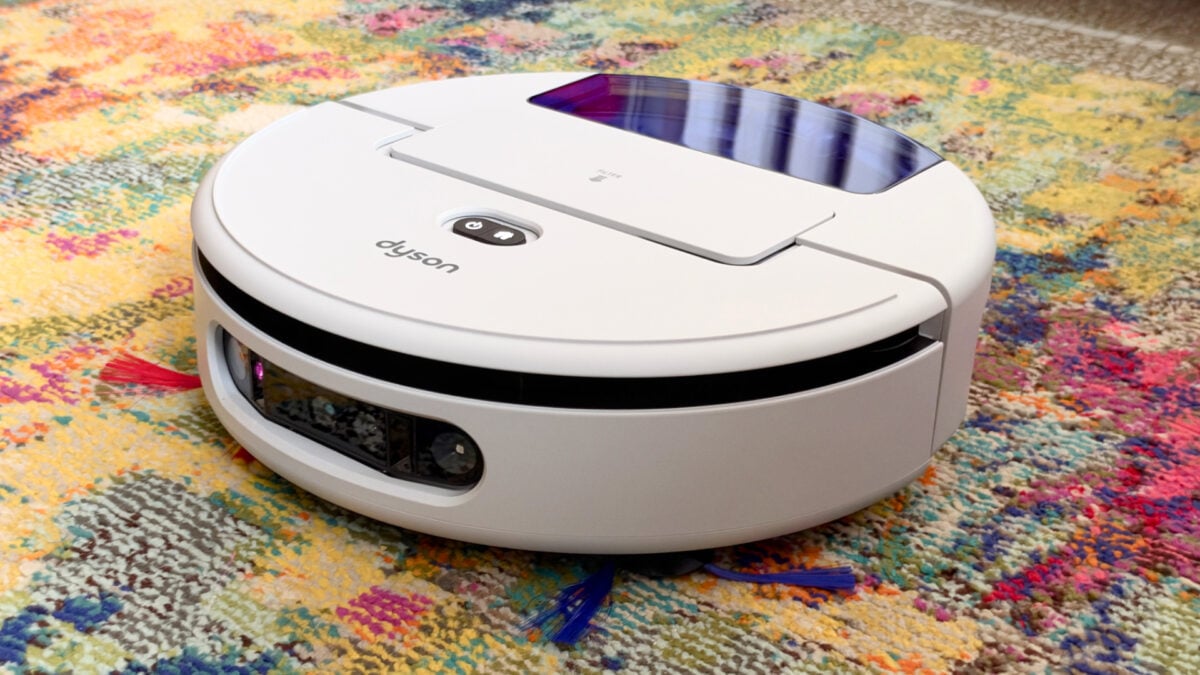
Dyson is no stranger to robot vacuums. In fact, the company almost launched one in the early 2000s called the DC06. That plan was scrapped, though, and a Dyson-branded robovac didn’t hit the market until the 360 Eye in 2016. The company has released others since then, and, like that first robot vacuum, most have totally eschewed the hockey-puck-like design used by iRobot’s Roomba. Last year, though, Dyson finally got in line with the Spot+Scrub Ai, its first puck-style floor-cleaning bot.
I guess that worked, because the company is back with three more robot vacuums, including the gray-and-purple, $1,200 Nurovi R3 Spot+Scrub UV that I’ve been testing over the last week. Like the Spot+Scrub Ai, it’s a lot closer in size, design, and functionality to most of the $1,000+ cleaning bots you can buy now. It sweeps and mops, and when it’s done, its dock handles all the maintenance of emptying the robot and washing its mop for you.
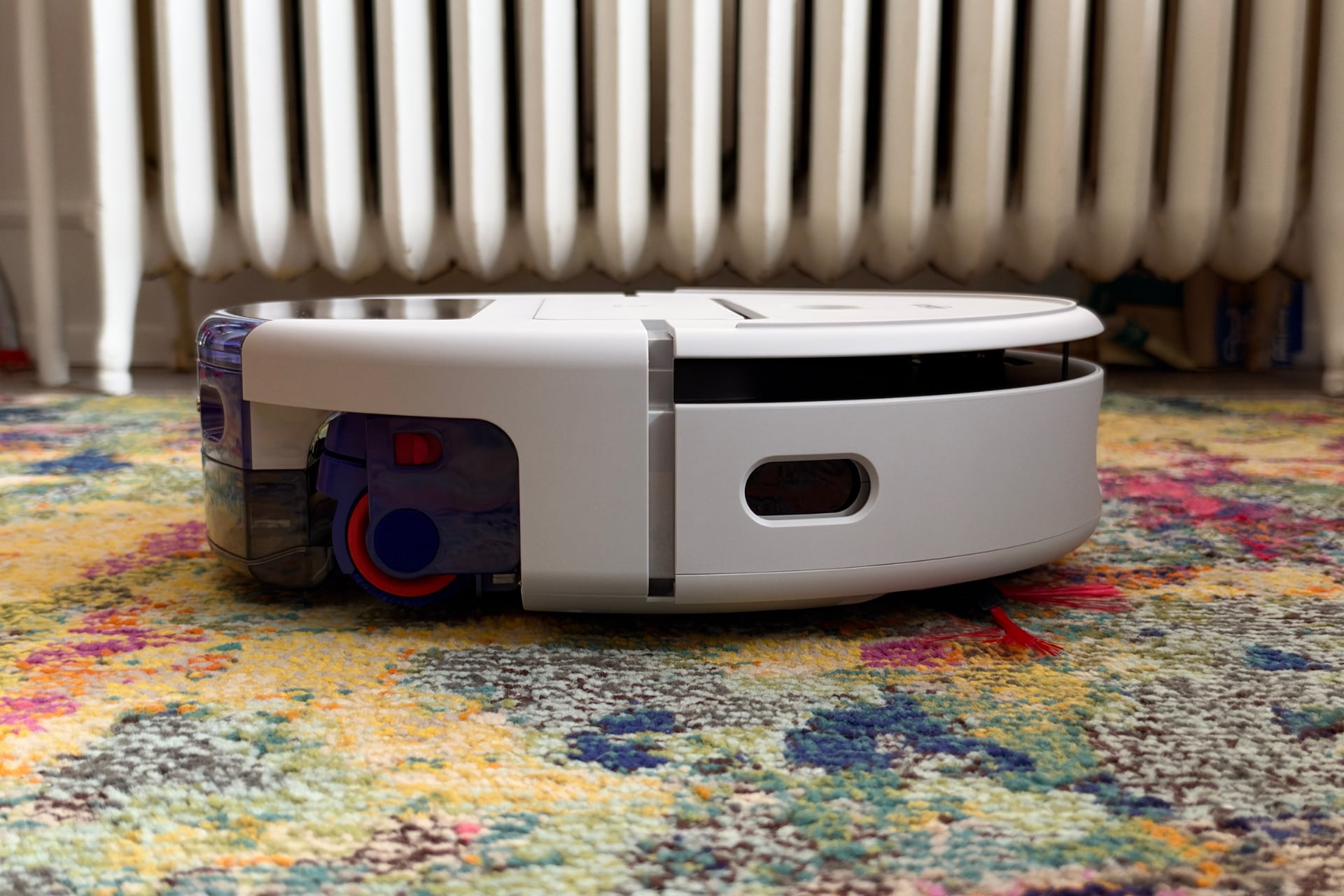
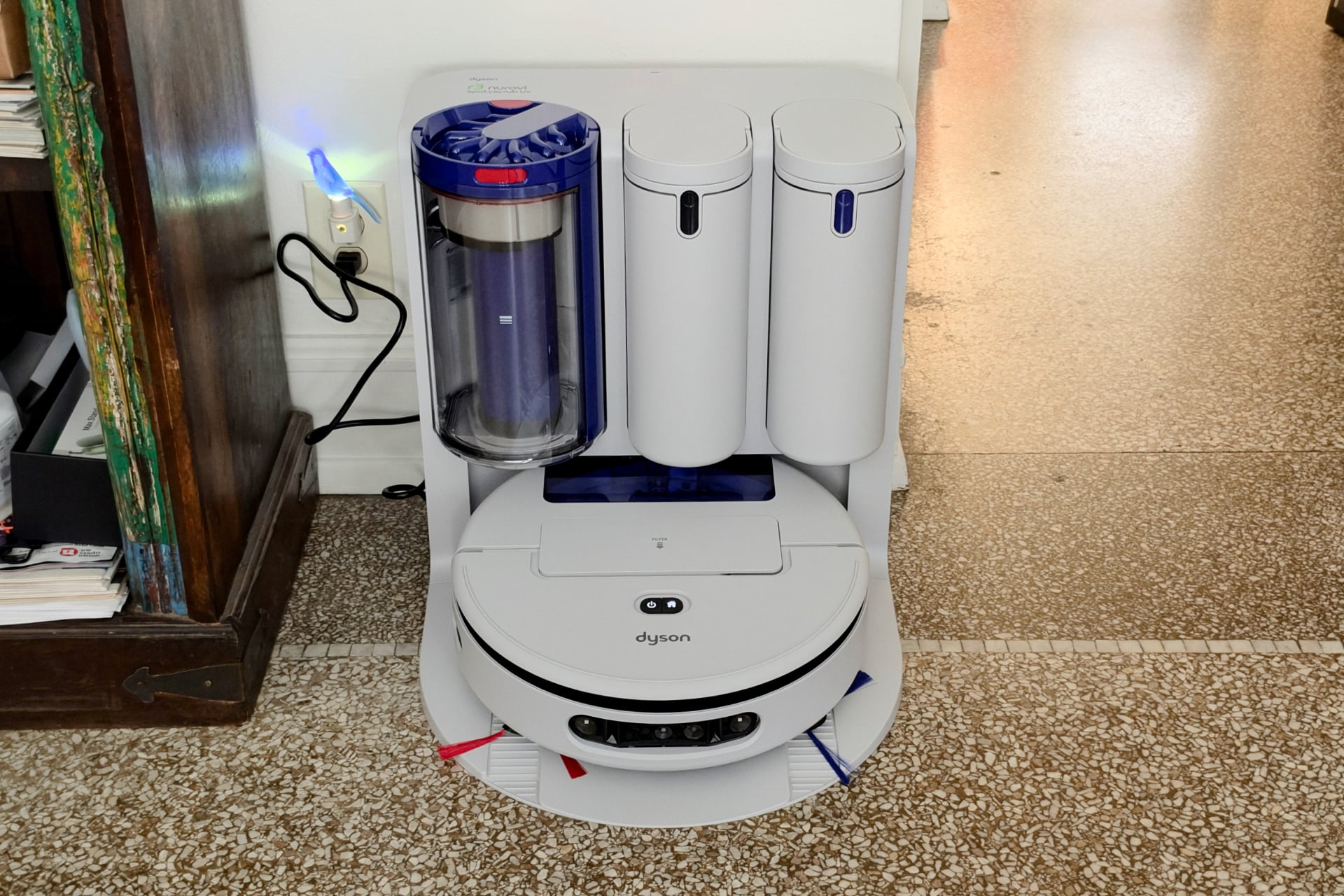
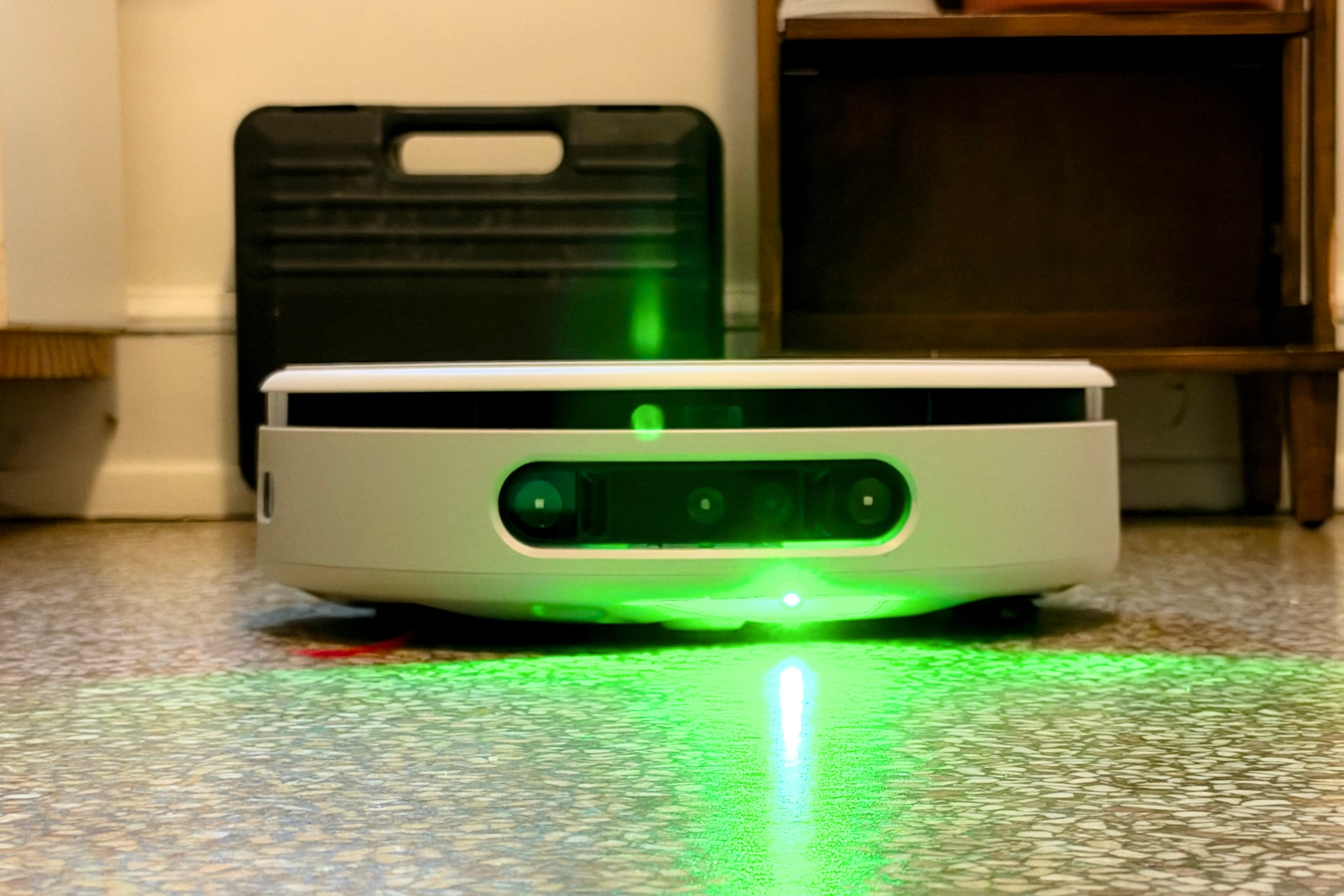
It seems Dyson can’t be content looking just like the competition. This model, like its predecessor, has a unique dock with three rounded canisters on the front—two for clean and dirty mop water and one for its cyclone-equipped dustbin. The bot and its dock are notably large, which I suppose befits their Gray Hulk color scheme, and both have clear bits to show you some of what’s going on inside. It even beams out neon-green light to illuminate dirt and other debris from the side, making it easier for the robot to spot them. But does any of this give it a leg up over its competition? Well, it’s better than some, worse than others. It sits, hulkingly, in the middle, though there might be reasons to go for it, like the look of its dock or its bagless dustbin.
Dyson R3 Nurovi
A hulking robovac with a cool dock and good vacuuming/mopping, but nothing that can outdo Anker’s comparably priced Omni E35.
- Unique dock design
- Generally good vacuum/mop performance
- Doesn’t easily clog
- Good stain detection
- Short self-empty cycle
- Reusable dock dustbin
- Good navigation
- Intuitive app
- Pricey
- Could use more app features
- Difficult to precisely spot mop
- Can be noisy
- May not mop thicker liquids well
- Too tall for under my cabinets
A big boy
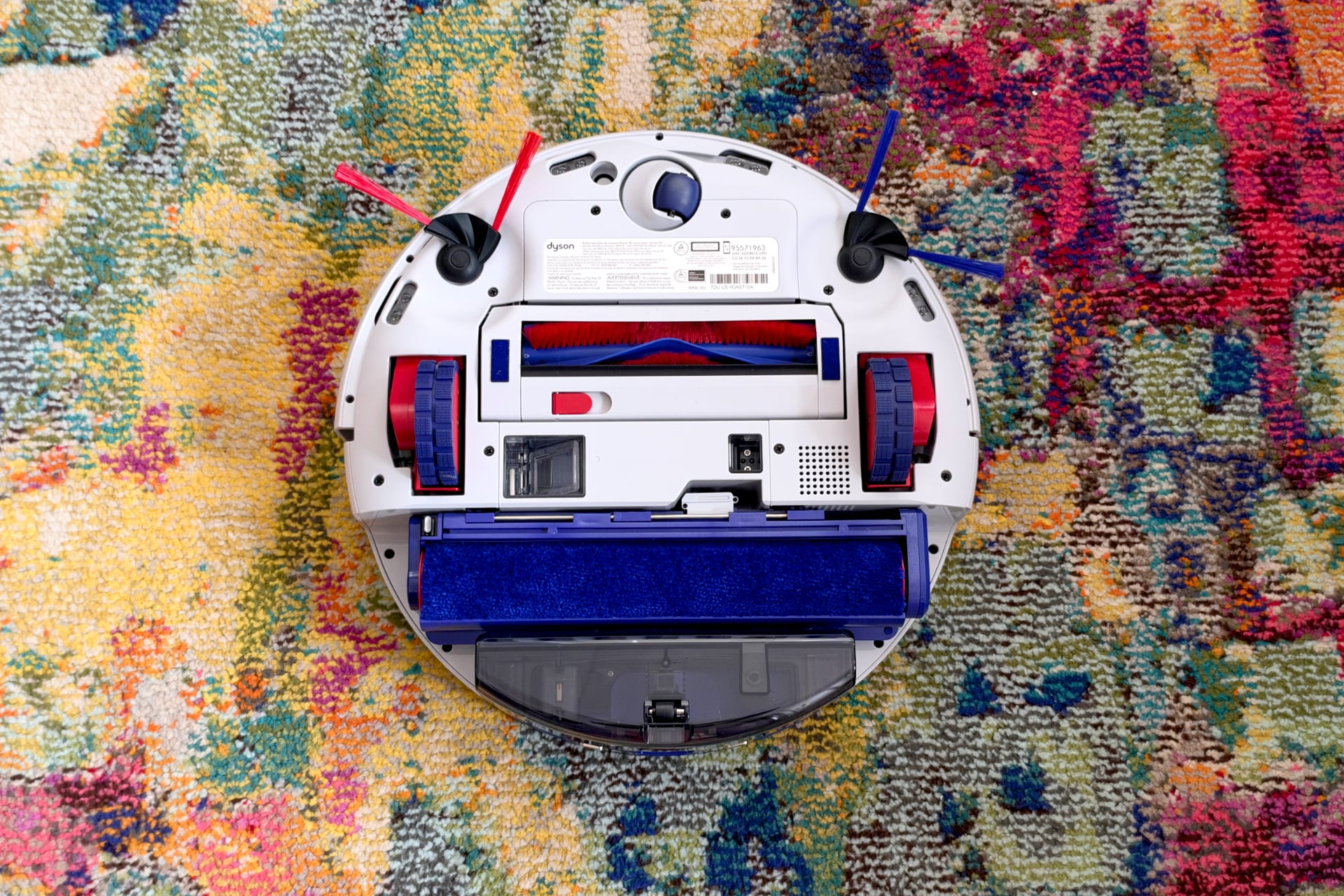
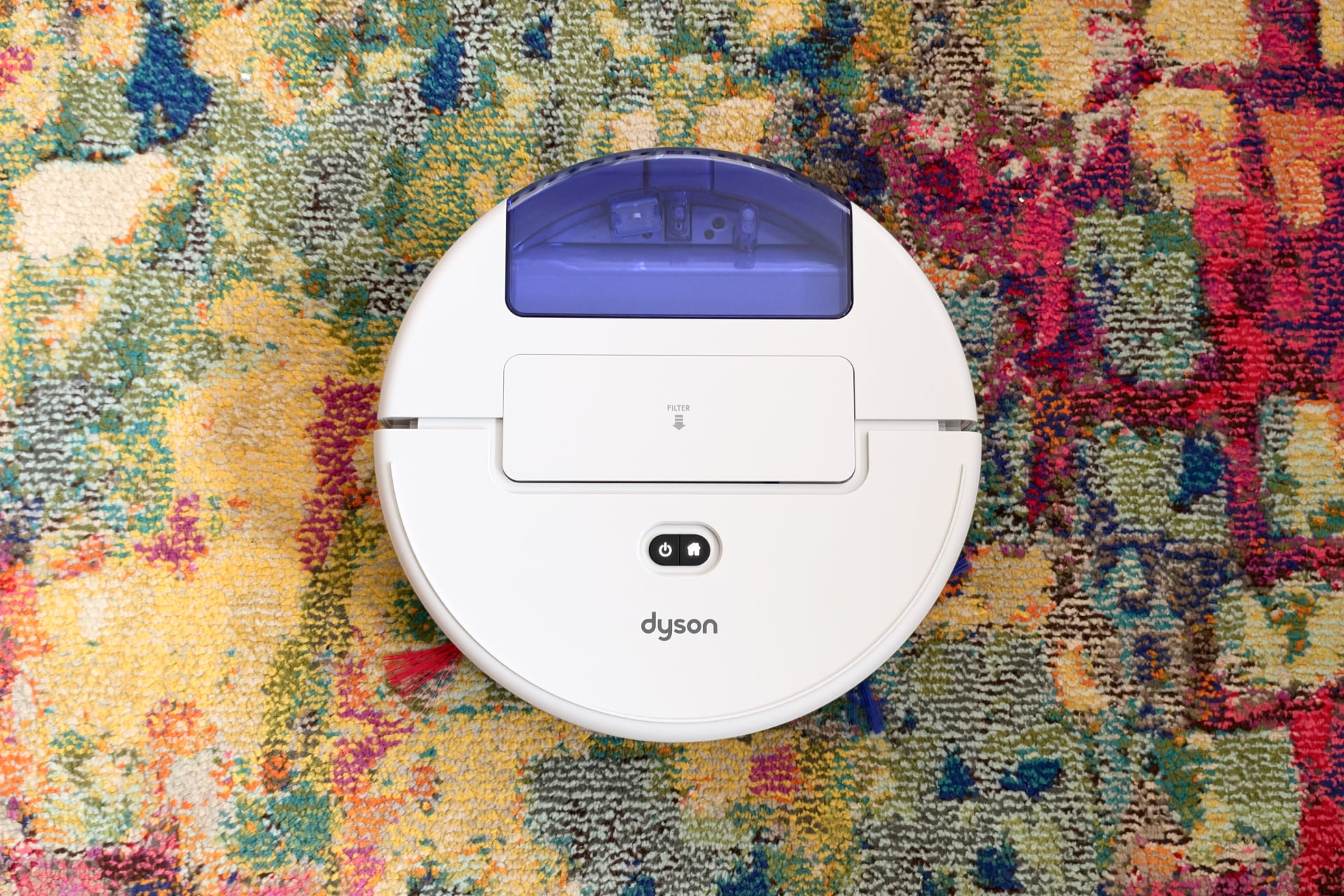
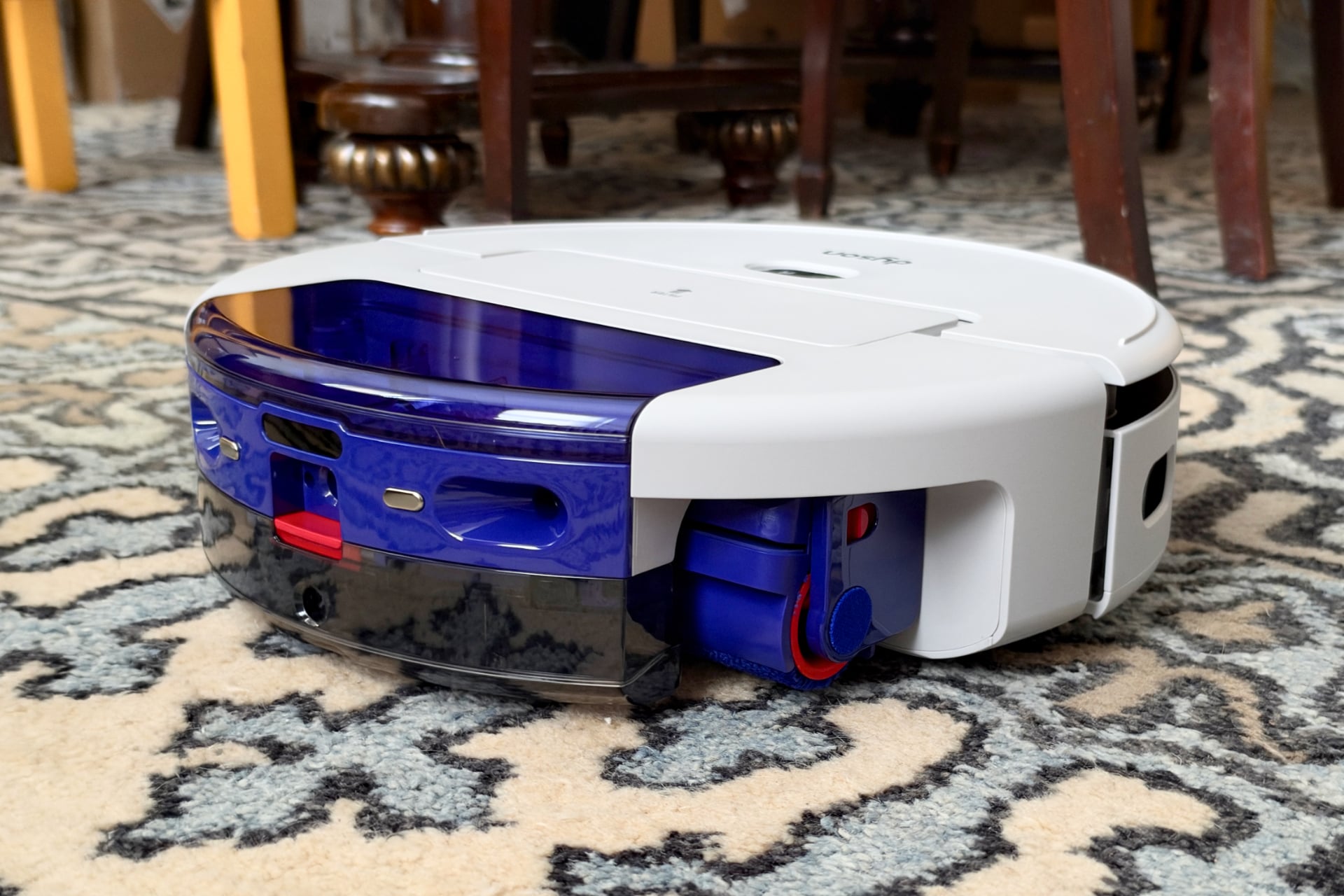
There’s a lot to like about the Dyson R3 Nurovi, even if it’s a little taller and wider (by half an inch to an inch in each dimension) than most of its contemporaries I’ve tried. I appreciate that it has a distinct look—most of the high-dollar robovacs I’ve looked at have this sort of flat, sharp design that makes them all blur together. The R3 Nurovi is a bit bulbous, mostly gray with some purple accents like its mop roller holder, and features a transparent panel over its mop-water compartment.
The dock’s dustbin, which has a cyclonic separator inside, is encased in see-through and purple plastic. That whole part is super practical because not only can you see when it’s full, but you can also empty it—most of these docks use disposable dust bags that you’re expected to regularly replace. And instead of looking like a mini fridge with a big compartment at the bottom, the dock is slimmer from front to back than most docks, with those three canisters I mentioned before breaking up the front. It’s a bit wider and taller than most robovac docks, but its design makes it feel less obtrusive.
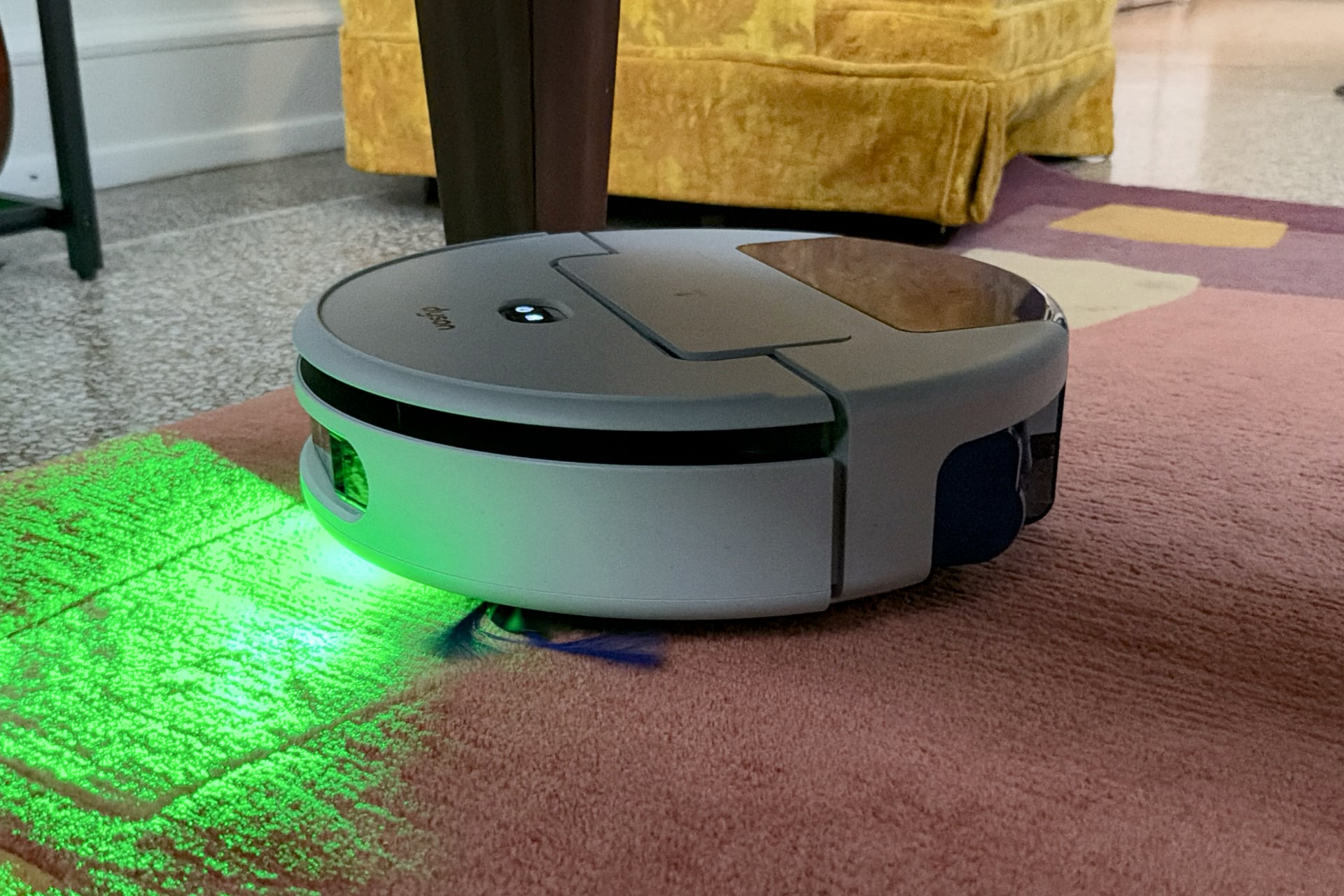
One standout feature of the R3 Nurovi is its light-based detection system. The robot floods the ground in front of it with both invisible UV light and a bright, mutagen-green light, which Dyson says helps it spot stains that would otherwise be invisible. This isn’t the only robot vacuum that uses UV to detect stains on hard floors—the $1,300 Shark PowerDetect UV Reveal launched earlier this year with the same capability—but that additional green beam is unique.
All that extra lighting from the R3 Nurovi seems to be genuinely functional. I watched the R3 Nurovi repeat-mop an area around my trashcan, where its green beam illuminated a small stain I couldn’t see in normal lighting. And when I dumped rice on the same floor to feed the robot, it appeared to notice some grains it had flung away and returned to suck them up. Overall, it performed about as well as the Eufy Omni E28 in this test, leaving behind about a teaspoon of the 1/8 cup of rice I’d dumped out. The Eufy Omni E35 and Matic have performed best on this test; both left behind so few grains that they were easy to count at a glance. That said, the only grains the R3 missed were those it had slapshot into the edge of the room, under my cabinets, which it then couldn’t fit beneath. (Most robovacs get under them without issue—that’s the one area where its extra height was a problem for the Dyson.)
In another test, the R3 Nurovi failed to clean a glob of ketchup I’d squirted onto my kitchen floor and slightly smeared. At first, it saw the ketchup as an obstacle and avoided it (which bodes well for dog poop encounters, at least). It did mop up the ketchup after I spread it around more to make it less gloppy, but it still left a thin, sticky layer behind. Otherwise, it made short work of a coffee spill and the dried stain by my trash can that I mentioned earlier. Ketchup test aside, its mopping was good; my floors felt clean underfoot and looked streak-free.
The R3 makes a good first impression when vacuuming—my rugs and hard floor looked and felt great after testing—but I began to doubt its long-term viability after finding hair wrapped around the middle of its roller brush. This sort of tangling has been a solved problem for all the high-end Robovac models I’ve tested over the last year. At worst, they get hair and string wrapped around the axle at the end of their rollers, which is both easy to deal with and has negligible impact on vacuuming. With the R3, you might have to spend more time cutting and removing hair to keep vacuum performance from nosediving.
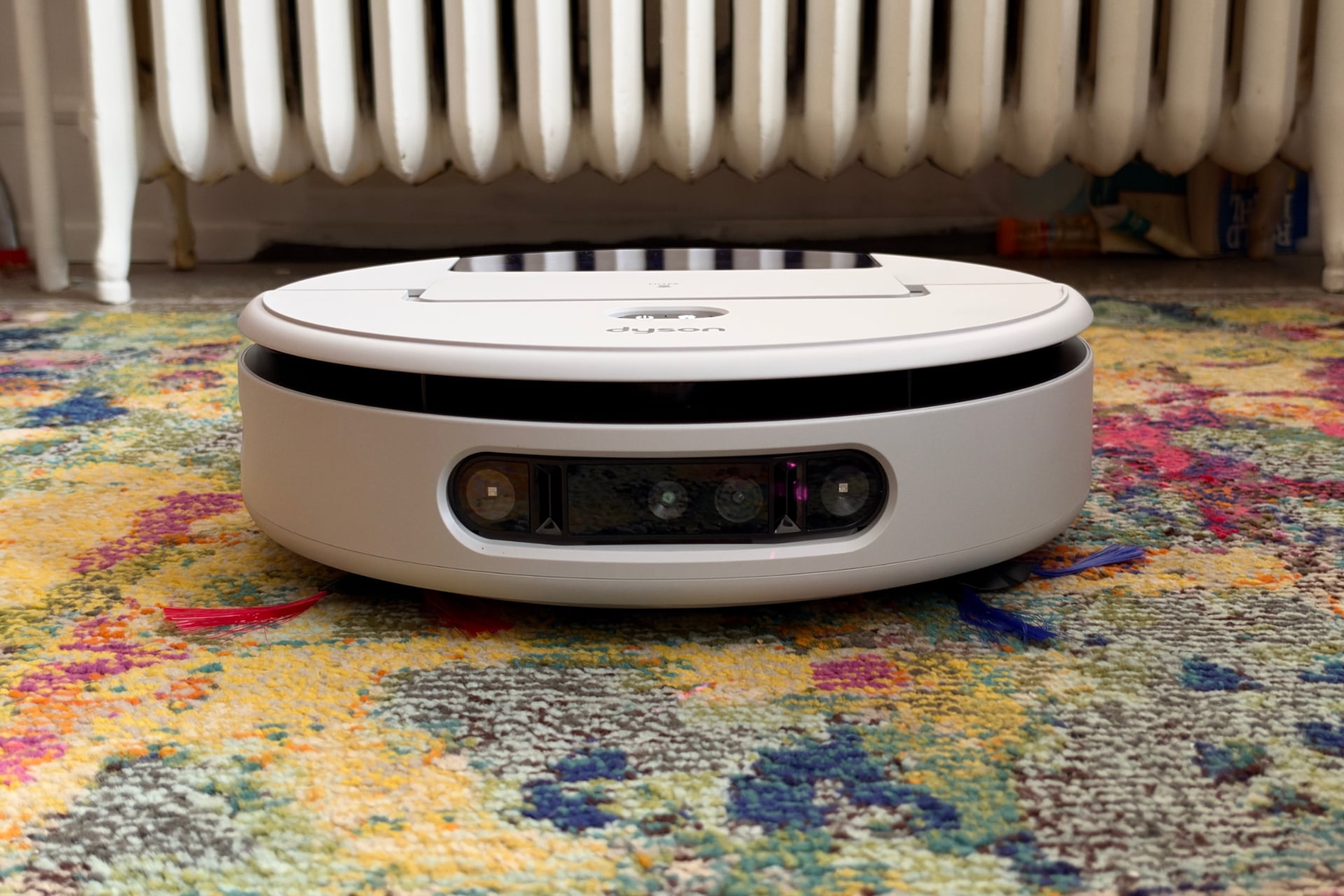
Things are brighter when it comes to navigation, where the R3 Nurovi excels. It deftly maneuvered around common household obstacles and was especially gentle near my feet, slowing down and avoiding them altogether most of the time. It stopped quickly when I put my foot down in front of it while it was moving, too. It seems to always treat shoes as if they had an actual foot in them, for better or for worse, and won’t quite get close enough to sweep the edges of them, but you know what? I’ll take that over a robot rudely running over my toes when I’m sitting on the couch.
One thing it struggled with was cords. While it didn’t trample any of the power cables tucked behind my couch or under my desk, it did fall into traps I intentionally set for it. When I stretched my usual sacrificial microUSB cables out on the floor—a white one on a dark rug and a black one under my couch—it avoided both for most of a clean but eventually drove over them in quick succession, dragging the black one out from under the couch and fully wrapping the white one around its roller brush, which eventually caused it to stop and the MyDyson app to notify me of a problem. That leaves the Matic and Omni E35 as the only robot vacuums I’ve tested that haven’t eaten a single cable.
While the R3 is vacuuming in its “Quiet” mode, you can easily carry on a conversation without raising your voice. Set it to “Boost” mode on hard flooring, though, and you probably won’t want to be in the room with the device: it produces a loud, high-pitched whine. Thankfully, most of the sound seems to come from beneath the machine, and thick carpet muffles it to a much more tolerable degree. The Matic, Omni E35, and Ecovacs Deebot X12 OmniCyclone were all much quieter. The dock itself is also loud when emptying the R3’s dustbin, though it only takes about 11 seconds to complete a cycle. Others I’ve timed take much longer—the Omni E35’s dock, for instance, takes around 50 seconds to do the same thing, although it’s significantly quieter than the R3.
Some final things to note: the R3 Nurovi never clogged in my testing, dropped balled-up hair or other detritus while vacuuming, or got trapped and needed rescue. I’ve seen all of those issues with other robot vacuums, some of which are much pricier than this model.
A different, but not necessarily better, robot app
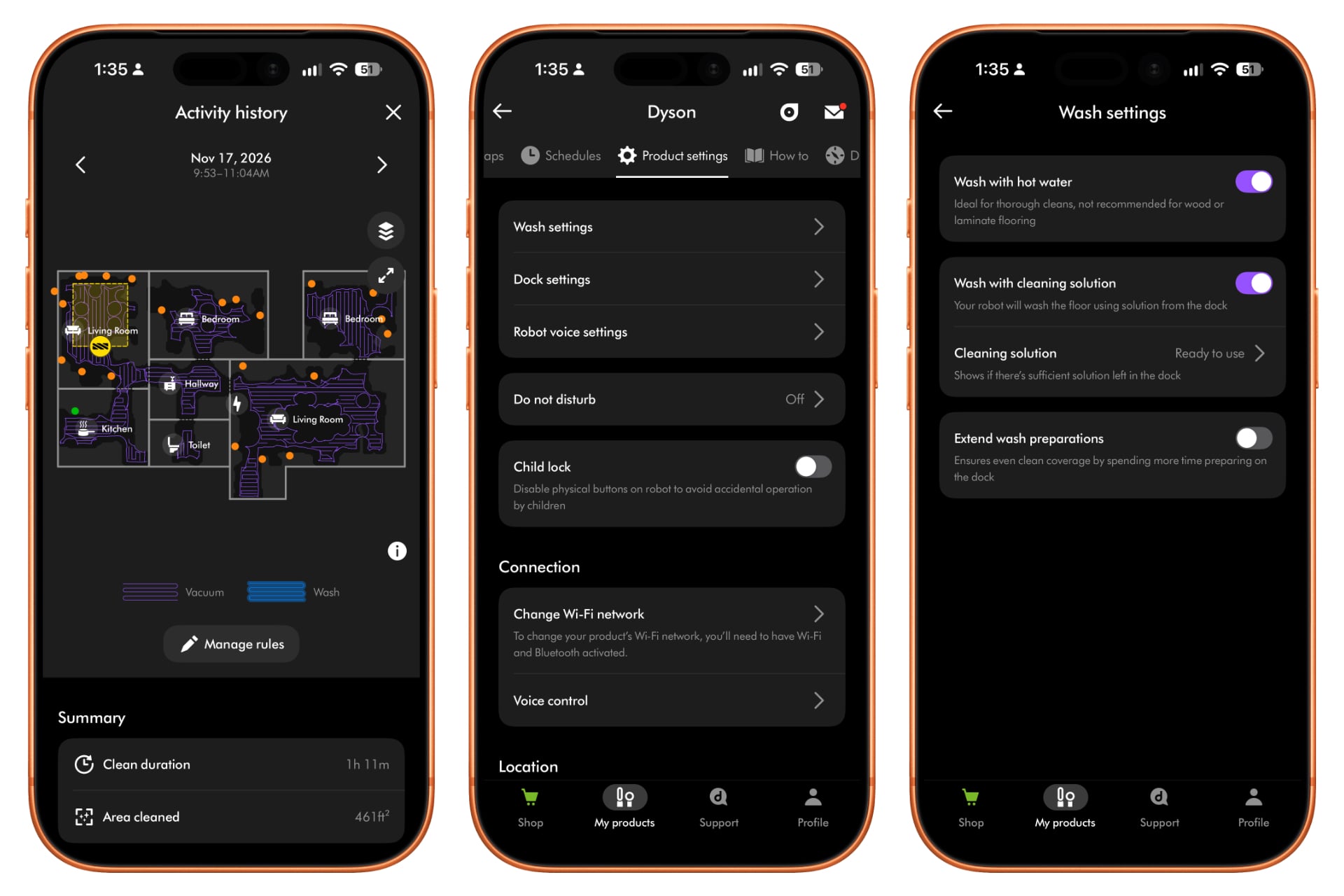
On the software side, the MyDyson app is somewhat refreshing, if only because it feels much more polished than other robovac apps. I’ve noticed a goofy arms race to introduce the most features when testing these things, whereas Dyson’s app keeps things simple. That’s to its detriment at times; for instance, you can’t change anything about a cleaning job without sending the robot back to its dock and waiting for it to fully reseat and empty itself. (Most other apps at least let you change the robot’s suction power mid-job.) Also, it has a fairly small number of rudimentary settings; it lacks options to adjust its object sensitivity or to set it to self-empty only when you tell it to. But it’s also really easy to get around the app—in addition to selecting where, when, and how you want the R3 Nurovi to clean, its home screen has tabs and buttons for setting cleaning schedules, managing your maps, controlling its dock, and accessing deeper settings. And there’s a mop-only setting, which most robot vacuums lack.
Setting up the R3 Nurovi is quick and easy. The app asks you to press the power and home buttons, connect the device to Wi-Fi, and send it off to map. And there’s a thoughtful screen in the midst of this process that invites you to turn off the robot’s voice. Praise be; the only robot vacuum I’ve ever wanted to hear from is the Eufy X8, a vacuum-only model that lets you replace its preset phrases with recordings of your own. I do a decent Patrick Warburton impression that sounds even more convincing coming from a crappy robovac speaker, and I keep that little guy around just for the fun of hearing Kronk from The Emperor’s New Groove update me on its next moves.
The R3 mapped my 750-square-foot apartment in less than 10 minutes, which is on par with most other robovacs. But it surprised me by accurately dividing my rooms and correctly categorizing all but one of them—I’ve never seen a robot vacuum app do either, let alone both. With others, I’ve always had to go back and either divide rooms it erroneously combined, recombine sections of a room it identified as separate spaces, or some mixture of both. And I usually have to rename two or three rooms that the app miscategorized. (The R3’s one error was identifying my dining room as a living room. To be fair, said dining room does contain a couch.)
If you’re interested in connecting the R3 Nurovi to a smart home ecosystem, you’re limited to Google and Amazon for now. Dyson tells me Matter compatibility is coming later, in a software update “scheduled for the end of November.” That’s great, because it means the R3 Nurovi should get offline control via third-party smart home apps at that time. For all other Matter-compatible robot vacuums I’ve tested, when my Wi-Fi network was disconnected from the internet, I was still able to send them to clean specific rooms through the Apple Home app. The same update will carry “a range of other improvements,” including to the app and the R3’s navigation, the company says.
The only big gripe I have with MyDyson is how its maps work. The app shows a simple floor plan-style map, as other robovac apps do. But it doesn’t display different floor types on this flat representation of your home, whereas the vast majority of the apps I’ve used for pricey models like this will show rough borders between rugs and hard floors. Those imprecise borders already don’t tend to align super well with the real-world edges of things like rugs, which makes it hard to send a robot vacuum to clean specific parts of a room, but no borders at all makes it even harder. I’ve written this before, but I would love to see other robovac companies adopt Matic’s approach of using onboard cameras to capture the actual color and shape of things and overlay those on the map, so you know exactly where you’re sending your floor-bot for spot cleans.
The R3 Nurovi has potential
The Dyson R3 Nurovi is not the best robot vacuum you can buy, but the company is clearly onto something. I found its performance impressive outside the targeted testing I use to probe its limitations; in day-to-day use, it’s a solid contender in the $1,200 price range. It has a rare level of polish in its app, navigation, obstacle avoidance, and overall design. And it has a bagless canister instead of a dustbag in its dock, which means one less regular accessory to replace.
But there are some issues worth keeping in mind. You might find yourself constantly ripping hair off of its roller brush, for one thing. And although I found the MyDyson app to be unusually intuitive and bug-free, it could benefit from a few improvements to how its maps are presented, what it lets you do while the robot is already cleaning, and the settings it offers. It’s also on the tall side and might not fit under your cabinets.
You might consider the R3 Nurovi if you know your carpet doesn’t tend to be filled with long hair, you don’t expect to send it on lots of spot cleans or changing its settings up often, and just want something that can navigate on its own without getting trapped (so long as you don’t tend to leave USB cables strewn around). Or if you just like the way it looks. I’d certainly recommend it over any standard, $1,500-and-up robovac I’ve tested. Its main problem is that the $1,300 Eufy Omni E35 is a better mop-bot, has a more flexible app, is quieter, doesn’t tend to eat cables, and can go some places the R3 Nurovi can’t. The E35 does use disposable dust bags, though; not having to buy that regular replacement part could push the R3 over the edge for some folks.
