

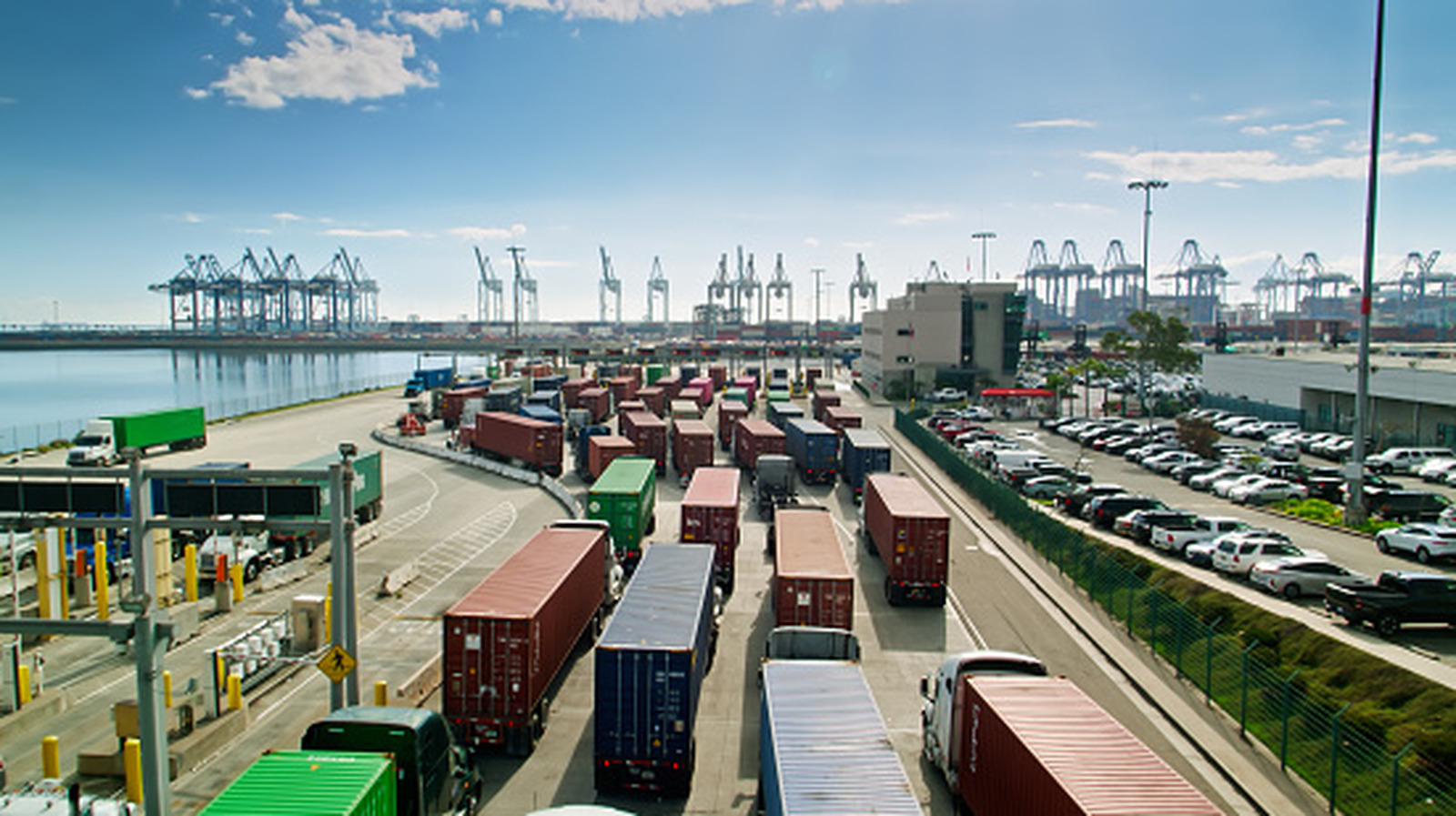
Paying higher prices can be a real drag, and the relationship also goes in the other direction: Drag — of the aerodynamic variety — can make a real impact on higher prices, too. The basic story starts with the fact that trucks continue to do most of the heavy lifting when it comes to moving stuff from one place to another. In the United States alone, they transport about 65% of all freight as measured by weight, according to Bureau of Transportation Statistics data.
Now, what they charge is based on a lot of different factors, but one of them is the need to cover their own operating costs. Next, we’ll note that fuel costs are among the biggest chunks of a trucking company’s expenses, and, as you might have noticed, those are way up. In fact, the cost of diesel has jumped $2.29 per gallon since this time last year. With modern semis able to manage an average of 7.43 mpg, according to the American Transportation Research Institute, that works out to an increase of more than $0.30 per mile. But the point is that anything affecting fuel expenses will affect overall operating costs, which will affect the price of shipping. And a key variable when it comes to fuel costs is fuel consumption. Here’s where achieving a low drag coefficient actually comes into play.
A typical heavy truck, traveling at 70 mph, spends about 65% of its energy simply to overcome wind resistance, according to research from Lawrence Livermore National Laboratory. This means an improvement in aerodynamics results in less energy needed to fight drag and less fuel needed to make that energy. Connecting the dots takes us from spending less on fuel back along the chain until we get to the part where shipping companies set their prices.
Top tips for aerodynamic trucking
With all that in mind, today’s trucks can further rely on a wide range of aero upgrades to help chip away at fuel costs. For example, we previously mentioned the tiny airtabs that can improve not only fuel efficiency, but also performance and safety for semi trucks. Yet there are also plenty of other new aerodynamic aids to help fight high fuel prices. These generally address three important areas of the truck/trailer package where improvements can be most effective. The first is the gap between the rear of the truck cab and the front of the trailer. Here, truck roof fairings and side extenders help keep air out of the gap.
For the tractor, roof fairings can be especially effective, and when combined with components like cab extenders, side fairings, and a front bumper dam, they can boost fuel economy by up to 15%, according to EPA. On the other hand, for trailers — responsible for about 50% of the overall drag on a Class 8 tractor/trailer traveling on the highway — skirts have become far and away the most common choice. These can achieve 5% or more in fuel savings as verified by EPA’s SmartWay program.
Moreover, the North American Council for Freight Efficiency (NACFE) recommends that truckers focus on overall aero packages, not just single components. There are some differences of opinion as regards what those bundles should include, however. SmartWay testing indicates trailer skirts combined with tail upgrades can help folks realize 9% or more in fuel savings — yet NACFE reports that the maintenance challenges of tail devices currently prevent them from being recommended.
