

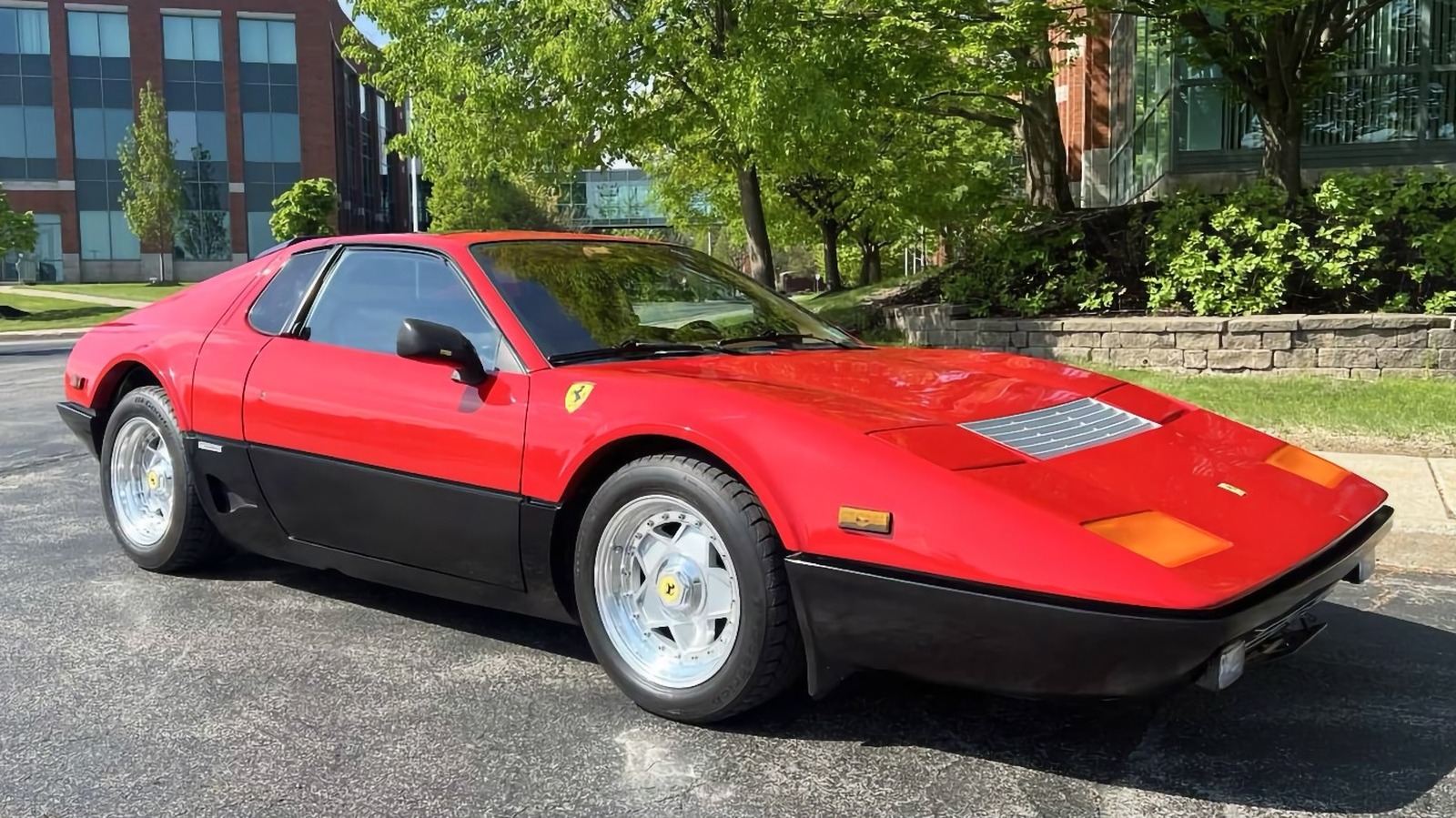
Before you ask, no, today’s Nice Price or No Dice 512BBi isn’t actually a Ferrari. Instead, it’s a Fauxrrari, one of 77 reputedly built by the Corson Motorcar Company on donor Pontiac Fieros. I know! You could have fooled me, too. Let’s see whether buying this faker would be a foolish move.
First, however, let’s look at what went down yesterday. When SCCA began the Trans-Am Championship Series in 1966, it was positioned as a more international-style road course competition, in contrast to NASCAR’s wide oval shenanigans. Over the years, the series extended to tracks as far away as Canada and Puerto Rico. Today, the series’ primary sponsor, Pirelli, maintains that international flair, though the number of competitions has been reduced and is now limited to tracks within the Continental U.S.
Starting in 1969, Pontiac celebrated the series by introducing the WS4 Trans-Am handling and appearance package on the company’s F-body Firebird. Almost immediately iconic, that model served as the Firebird’s performance vanguard until the model’s demise in 2002.
Yesterday, we looked at a fairly unique Trans-Am, a 1997 convertible with the added-output WS6 ram air induction package and the promise of a well-cared-for life. While the comments were peppered with declarations that it wasn’t the kind of car many of you would want to own, they also noted that the $13,000 asking price seemed in line with the description. Ultimately, that earned the Trans-Am a solid 66% ‘Nice Price’ win.
Plastic fantastic
In the 1970s, the ubiquitous VW Type 1 Beetle served as the basis for many a home-built kit car. Dune buggies, classics, and swoopy sports cars emerged from the burgeoning industry, standing in for the original utilitarian sedan bodies. By the 1990s, however, the Bug was no longer available in sufficient numbers, and was reaching classic status on its own. That sent kit car companies to seek another platform to bend to their will.
That platform proved to be Pontiac’s mid-engine Fiero, with its plastic body panels and monocoque steel chassis making the perfect canvas for all sorts of reimagining or imitation. It’s that latter idea that we’re looking at today.
That’s right, today’s 1987 Corson Ferrari 512BBi isn’t the real deal. Ha, ha, fooled you!
Instead, this is a copy of that classic Pininfarina-penned Italian sports car, wrapped around the Fiero’s mundane mechanicals and interior. And hey, it looks pretty convincing at first glance.
Too close for comfort
Built by Phoenix, Arizona’s Corson Motorcar Company, the Fiero-based Ferrari homage was, in fact, far too close to the original in looks. That saw Ferrari successfully sue the faker-maker, resulting in the cessation of production and, rumor has it, the destruction of the company’s molds. Something south of 80 Fieros were converted before the axe fell, including 5.7-liter V8 conversions and a small smattering of open-top Spiders.
This car, based on a 1987 Fiero, still has the stock 2.8-liter, 140-horsepower Chevy V6 sitting sidesaddle behind the driver, mated to a Getrag 5-speed manual. According to the ad, the engine has been updated with a “Custom exhaust” that the seller says “sounds great.” Other notable features include a sunroof, cruise control, working A/C, and power locks. The (possibly fake) two-piece wheels look to be in great shape and are fitted with BFG tires that have plenty of life in them. An additional set of spinner-style center caps will accompany the car in the sale.
Pure Pontiac underneath
Looking at the car gives you an uncanny-valley feeling. From some angles, it’s difficult to tell it from a real Berlinetta Boxer. From others, most obviously from the side, its proportions are sufficiently off to make the Fiero foundation obvious.
Like the real car, both the front and rear clips open fully for access to the spare and engine on either end. That likely made the fiberglass molding a lot easier as well. Other oddly real-appearing elements include the tail lamps, front grille and fog lamps, and the iconic orange turn signal panels on the nose. All the—questionably legal—badging is also present.
Inside the Corson, it’s all Fiero, all the time. A Ferrari-badged steering wheel has been fitted in place of the original, along with a wood-veneer kit for the dash and console. Also, this must have been a GT or Formula back when it was nothing more than a Fiero, as it sports the ancillary gauge pod atop the center stack. Everything, inside and out, appears to be in great shape. The car shows 78,716 miles on the odometer and will come with a clean, obviously Fiero, title.
What price, pretension?
According to classic.com, the current average selling price of a real Ferrari 512BB is $290,242. The cheapest sale that site shows on record was $188,770, meaning even the deals aren’t within the range of mere mortals. That’s why cars like this Corson exist: to let the riff-raff like us get a taste of what exclusivity might be like.
At $26,000, this Corson 512BBi is a far cry from what a real car would cost, and it serves the added purpose of probably ticking off those who can actually afford a real edition or two. Who wouldn’t want that?
A more important question is: who would want this fake Ferrari? What do you think? Is there a market for such a car, and does that $26,000 asking price put this car in play in that market? Or is that just too much for a game of “let’s pretend”?
You decide!
Buffalo, New York, Craigslist, or go here if the ad disappears.
Hat tip to Gregg Cleason for the hookup!
Help me out with Nice Price or No Dice. Hit me up at robemslie@gmail.com and send a fixed-price tip. Remember to include your commenter handle.
