

If you’ve been paying close attention to the collector car market in recent years, particularly since 2020, you’ve likely noticed that many golden era Japanese cars have started going for big bucks. Wealthy Gen X and millennial enthusiasts are pushing this nostalgia-fueled, Gran Turismo-inspired market well past what anyone might have thought possible in years gone by. With six-figure price tags no longer out of the ordinary, perhaps it’s time to put a finger on the market’s pulse and dig into the forces driving these massive prices. Are these cars really worth the spend, and will they continue to hold value into the future? It’s tough to say for sure, but I’ll give it my best shot.
Considering the comparative mass-market production numbers of some of these Japanese classics, maybe there isn’t enough rarity for these cars to command the numbers they do. Then again, these are some of the greatest cars of their eras, and no automaker on the planet makes anything today that can compete on a level playing ground with the best of years gone by. Perhaps these values are just a combination of “They just don’t make them like they used to” and “They aren’t making any more of them.”
At the end of the day, cars are only worth what someone is willing to pay for them, and in each of these cases it seems there are plenty of people willing to spend what it takes to buy them. Surely there are plenty of fools quick to part with their money, and there always will be. Some of these premium prices, however, are getting out of hand. Let’s pump the brakes a little and get realistic about what collectors are actually getting for their cash.
NA1 Acura NSX
I’ve spilled plenty of ink and burned plenty of internet pixels extolling the virtues of the flip-up-headlight Acura NSX. This is an incredible car and the driving experience is sublime. Perhaps the only problem with the NSX, especially now that Acura has started to reproduce many of the components needed to keep one alive, is that it’s too good. The NSX doesn’t have the sound or the fizz many of its Italian or German competitors from the era do. In that respect it’s perhaps a little on the sterile side. It’s so well-engineered that it just does everything you expect it to, which can’t always be said of those competitors.
The long and short of this car is that I love it dearly, and I kind of understand why people are willing to spend deep into the hundreds of thousands of dollars for one. According to Hagerty, a #1 conscours-condition car is valued at a quarter of a million on the high end. This is borne out in recent Bring A Trailer auction results, with 10 red first-gen NSXes selling in October alone, ranging from $72,000 on up to $156,000 for a low-mile example. In many cases that’s on par with, or even more than, Bring A Trailer’s current sales prices of its contemporary Ferrari 348 competitors.
Between 1991 and the end of NSX production in 2004, U.S. sales added up to 8,733 cars, and about 18,000 worldwide. That’s actually quite rare, all things considered, but there are always a few available. Buy a high-mile driver-grade NSX at a discount and keep driving it. These things are best once they’ve worn in a little.
S30 Nissan/Datsun 240Z
When Datsun debuted the 240Z in the late 1960s as a bargain-priced competitor to the premium European sports cars of the day, it was wildly successful and helped cement the brand’s place in the U.S. market. Why spend so much more for a Porsche 911 when a Datsun offered a similar level of performance and head-turning good looks? All these decades later, the 240Z is still a great low-priced vintage alternative to a vintage 911. Today the price gap is perhaps even higher between the German and the Datsun, though the maintenance and aftermarket parts support for both has continued to narrow.
Hagerty claims a #1 condition 240Z will command up to $181,000 at auction, but I don’t think anything near that is even close to accurate. I’ve seen perfectly restored examples trade hands recently for as little as $50,000, and driver-grade units sell on Bring A Trailer every couple of weeks for between 20 and 45 grand. Whatever your budget, and whatever your stomach for tinkering, there’s a 240Z out there for you.
Between 1969 and 1973 Nissan shipped 168,584 of these great little machines around the world. The vast majority of them (nearly 90%) ended up in the U.S., largely due to Europe’s restrictive post-World War II trade embargoes. It’s hard to call a 240Z overpriced, simply by dint of how many were built. There are plenty out there to sate collector demand, and prices reflect that. If you want one, go for it. As with any old car, beware of rusty, poorly restored cars, or any with a checkered past, as you’ll pay more to fix one with issues than the premium for a nice one.
AP1 Honda S2000
I am a Honda S2000 sycophant, convinced that this is the best driving experience that money can buy. If the Mazda Miata is always the answer, then the S2000 is the path to enlightenment. The early cars with an 8,800-rpm-redline 2.0-liter four-cylinder are pure driving joy. This is exhilaration, verve, and direct feel distilled to its most pure and uncut. If you’ve never driven one, you’ll never understand it. Unlike the NSX, the S2000 is all fizz and very little usability. It’s not great on the highway, isn’t particularly comfortable, and has no room for anything. It was built to make you feel something, and that’s pretty much all it can do. It’s a real one-trick pony, but that trick is sublime.
Hagerty pegs a perfect condition AP1 at just over $64,000, up 22% from three years ago. Real-world sales on Bring A Trailer show buyers tapping out at $50,000 on the high end, with nice driver-grade examples down in the low 20s. If you look you might be able to find some in the high teens.
It’s hard to call the S2000 rare, as Honda built over 110,000 of these little screamers across 11 years of production. I prefer the models built from 1999 to 2003; they’re a little lighter, rev higher and the handling is more like balancing on the edge of a knife. Honda built far more AP1 versions of the car than it did the later 2.2-liter AP2 models, as 72,684 of the former made it out into the world. I don’t think these will ever be purely collectible, just on the sheer number built, so don’t pay a premium for a #1 example. Buy a nice driver and enjoy miles on twisty roads and track days.
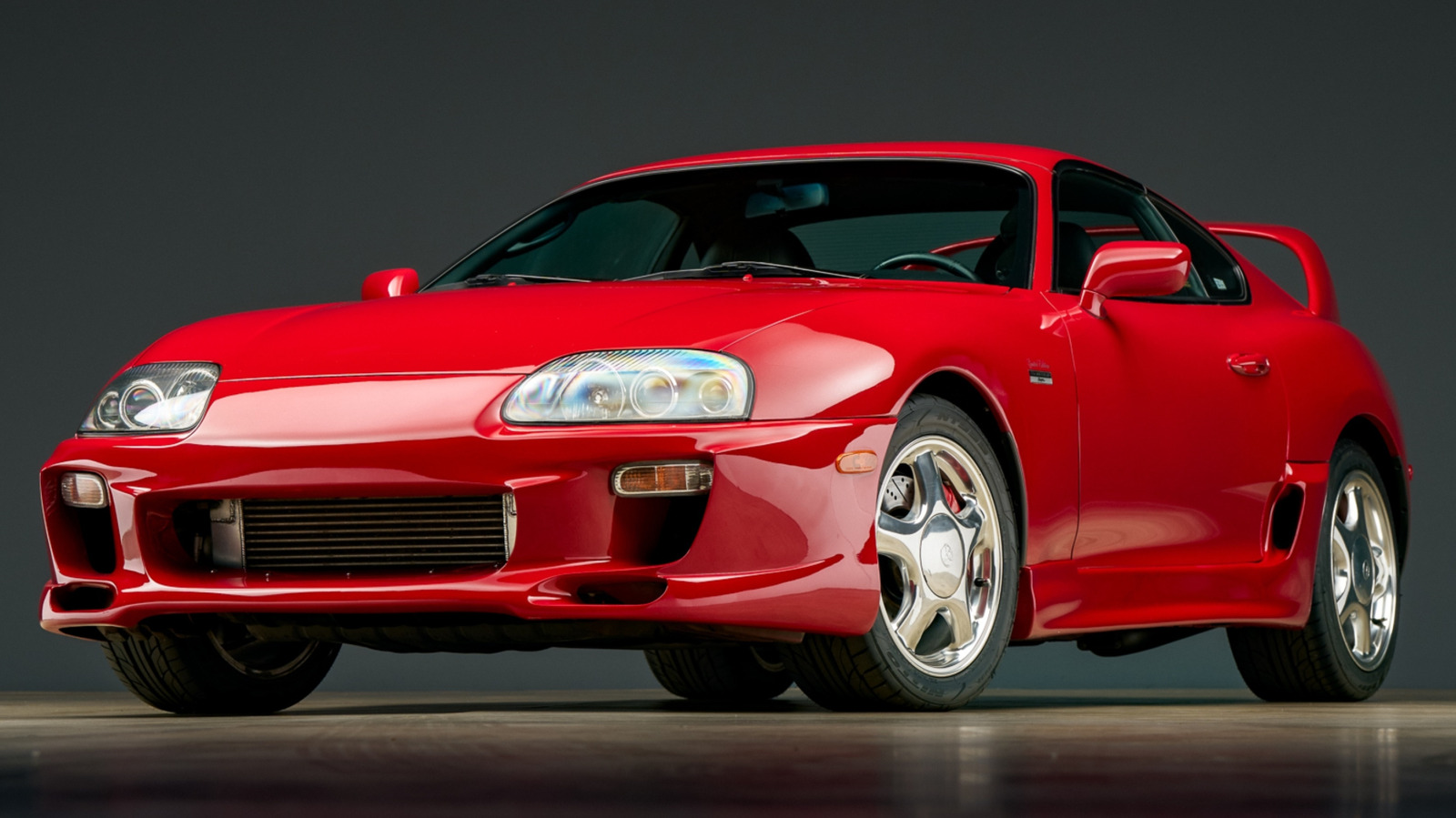
Mk4 Toyota Supra Turbo
As enthusiastic as I am about Honda’s ripper S2000, I remain perplexed by the stratospheric growth of JZA80 Toyota Supra Turbo love. Aside from its role as the star of “The Fast And The Furious” and some highly modified examples, it’s an entirely underwhelming ownership experience. Toyota designed the fourth-generation Supra around subframes, suspension, and drivetrain assemblies from the Z30-generation Soarer (sold in the U.S. as the Lexus SC), meaning it’s a highly competent, comfortable grand tourer, but a sports car it is not. If you’re after a high-speed long-legged highway cruiser, it’s pretty great, but it doesn’t really feel special to drive.
There’s something to be said for above-average ergonomics and a practically indestructible engine wrapped in simple, attractive bodywork? Of course, but is it a driving experience worth up to $297,000? According to Hagerty, a concours condition Supra could bring that sum at auction. I can’t recall having seen one trade hands for quite that much recently, but there are plenty of examples deep into the six figures, like this low-mile unit that went unsold on Bring A Trailer after a high bid of $209,000.
In every case I’d personally rather have a C5-generation Corvette, offering more power and more twisty-road-ready driving character for orders of magnitude less money. I’m excited that Japanese cars have been grabbing collector attention for the last couple of decades, but I’m positive you can find better cars offering more excitement behind the wheel than this. Japan, and indeed Toyota, has built better grand tourers and better sports cars (and cars that are better at both) since this car exited production.
Acura Integra Type R
The Acura Integra Type R is perhaps the car that best exemplifies the overpriced Japanese collector car. Don’t get me wrong, this is a magnificent machine with legendary driving character, but at its core it’s a pumped-up economy car. Even though it’s possibly the best front-wheel-drive experience, and punches well above its weight, it seems downright offensive that these occasionally command six- figure price tags. It’s got all the incredible characteristics of a fast Honda, including the reliability, tight steering, and wonderful shifter feel. It also comes with the downsides of a loud, buzzy interior, aesthetically underwhelming design, and a lack of low-end torque. It’s a lot of fun on a track or a twisty road, but not a very nice daily driving experience.
According to the Hagerty valuation tool, an Integra Type R in concours condition can expect to bring around $99,000 at auction on the high end. This one seems to actually be underselling the highs of the Integra market, as Bring a Trailer results show. Last summer a low-mile ITR traded hands for $204,204. While nothing has reached that high since, a 19,000-mile example sold for $88,500 in October. Many of these cars have a checkered past, as Integras were once the most stolen car in America, so if you find one with high miles or a rebuilt title, you can probably get the same driving experience for a major discount. A driver-grade car seems to sell in the $20,000-to-$30,000 range.
If you’re looking for a less expensive high-revving, great-handling front-wheel-drive economy-based car that works great when the road gets curvy, maybe try a Dodge Neon ACR instead. I put my money where my mouth is a couple years ago, and I never had any ITR jealousy.
Conclusions?
There are plenty of other cars from Japan in this conversation, but I don’t think this is an intrinsically Japanese collector car problem. In fact, cars from Japan tend to be overlooked by collectors, and have been for decades. There are plenty of reasons to buy a Japanese sports car, but as the market continues to trend upward, many enthusiasts are getting priced out of their dream cars. Still, some, perhaps even many, Japanese cars are still worth the money they command on the used market, especially in light of the lack of choices and driver connectivity in the new car market.
I typically don’t like to talk about collector car values, because it continues to prop up the cars-as-commodities trading industry. Buy what you love and what makes you feel good, and drive the wheels off the thing. What’s the point in having a car if you aren’t going to drive it as it was meant to be driven? You don’t get emotion or experience from storing value in your garage. Perhaps more than any other car-building nation, Japan understands experience and the interconnectedness between driver and machine.
If you’re buying one of these cars because you’re expecting it to go up in value and make you money, perhaps you’d be better served investing in the stock market or betting on the ponies. Cars are passion and craftsmanship, and they need to be driven to extract their full value to humanity. Go to a car show, a track day, or take one on a long road trip with friends. There are smiles to be found in those miles. Buy what makes you happy.
